Get your free personalized podcast brief
We scan new podcasts and send you the top 5 insights daily.
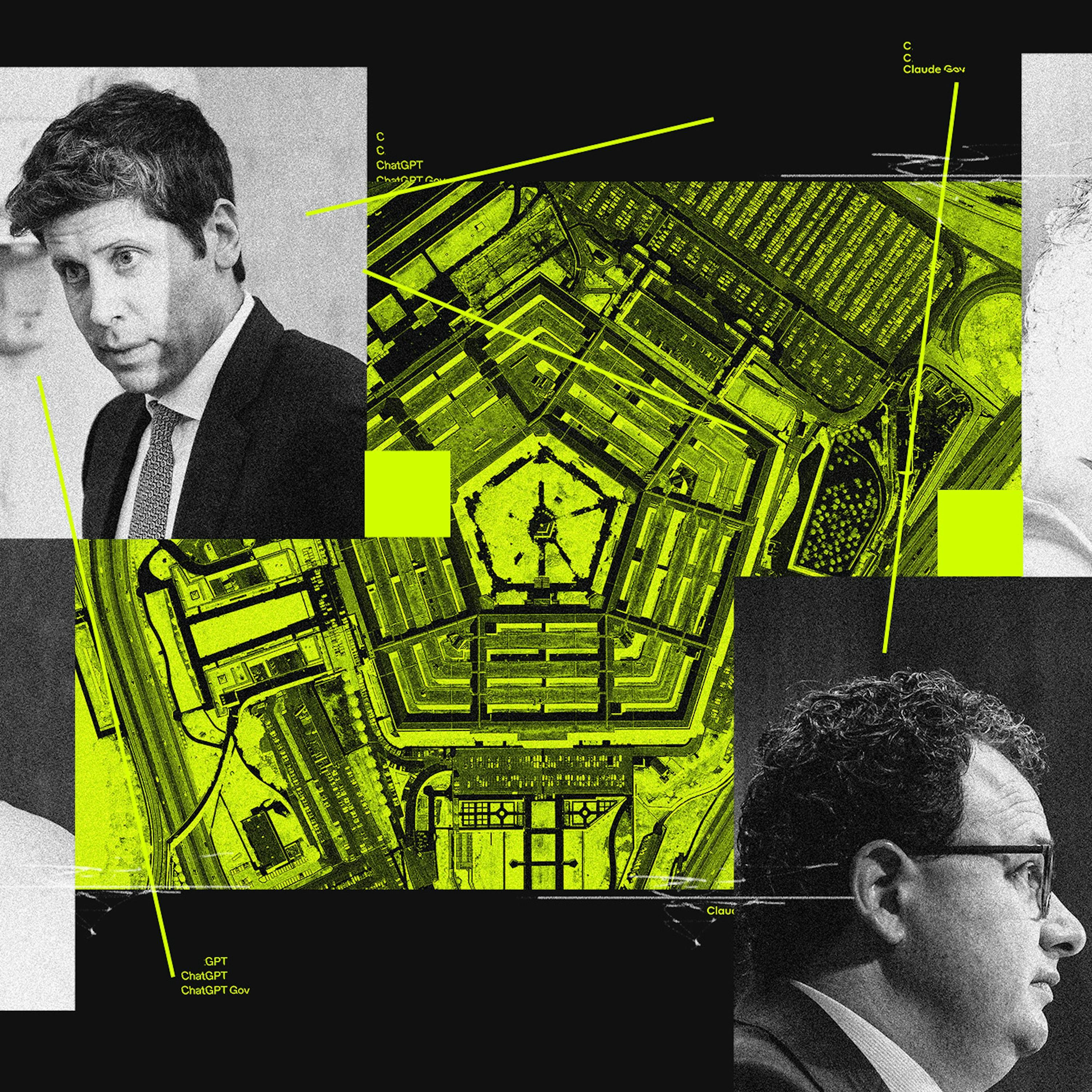
Key negotiators for both OpenAI and Anthropic in their Pentagon talks are former government officials. This reveals a growing talent war for policy experts with deep government ties, who are now crucial for navigating and securing high-stakes defense contracts.

Related Insights
Anthropic's public standoff with the Pentagon over AI safeguards is now being mirrored by rivals OpenAI and Google. This unified front among competitors is largely driven by internal pressure and the need to retain top engineering talent who are morally opposed to their work being used for autonomous weapons.
Dean Ball, who led the Trump administration's AI action plan, characterized the Pentagon's threat to blacklist Anthropic as a dangerous overreach of power. He argued that asserting control over who any defense contractor can do business with is likely illegal and profoundly damages the US business environment.

Leading AI companies, facing high operational costs and a lack of profitability, are turning to lucrative government and military contracts. This provides a stable revenue stream and de-risks their portfolios with government subsidies, despite previous ethical stances against military use.
OpenAI is lobbying the federal government to co-invest in its Stargate initiative, offering dedicated compute for public research. This positions OpenAI not just as a private company but as a key partner for national security and scientific advancement, following the big tech playbook of seeking large, foundational government contracts.

While publicly expressing support for Anthropic's principles, OpenAI was simultaneously negotiating with the Department of Defense. OpenAI's move to accept a deal that Anthropic rejected showcases how ethical conflicts can create strategic business opportunities, allowing a competitor to gain a major government contract by being more flexible on terms.

The conflict over whether to use "lawful purposes" or specific "red lines" in government AI contracts is more than a legal disagreement. It represents the first major, public power struggle between an AI developer and a government over who ultimately determines how advanced AI is used, especially for sensitive applications like autonomous weapons and surveillance.
Anthropic’s resistance to giving the Pentagon unrestricted use of its AI is a talent retention strategy. AI researchers are a scarce, highly valued resource, and many in Silicon Valley are "peaceniks." This forces leaders to balance lucrative military contracts with the risk of losing top employees who object to their work's applications.

While Anthropic battles the Pentagon over usage policies, Elon Musk's XAI is the only major lab to have agreed to the government's "all lawful uses" standard. This quiet compliance strategically positions XAI as a more reliable and less contentious partner for military contracts, potentially giving it a significant advantage in the lucrative defense sector.
As Anthropic's negotiations with the Pentagon collapsed, OpenAI's Sam Altman swiftly moved to secure a nearly identical deal for his company. This highlights a classic competitive strategy of capitalizing on a rival's turmoil to gain market share in a critical government sector.

Despite an ongoing feud over AI safeguards, a defense official revealed the Pentagon feels compelled to continue working with Anthropic because they "need them now." This indicates a perceived immediate requirement for frontier models like Claude, handing significant negotiating power to the AI company.
