Get your free personalized podcast brief
We scan new podcasts and send you the top 5 insights daily.
The risk of AI making unsupervised, critical errors is a major enterprise adoption blocker. n8n addresses this with a "human-in-the-loop" feature that requires approval for sensitive actions like sending emails. This provides a crucial safety layer, giving large organizations the confidence to deploy AI in production.

Related Insights
Instead of forcing full autonomy, the AI agent allows teams to start with human approvals at key stages. This 'human-in-the-loop' model builds trust and enables organizations to incrementally automate complex support workflows as they grow more confident in the system's reliability.
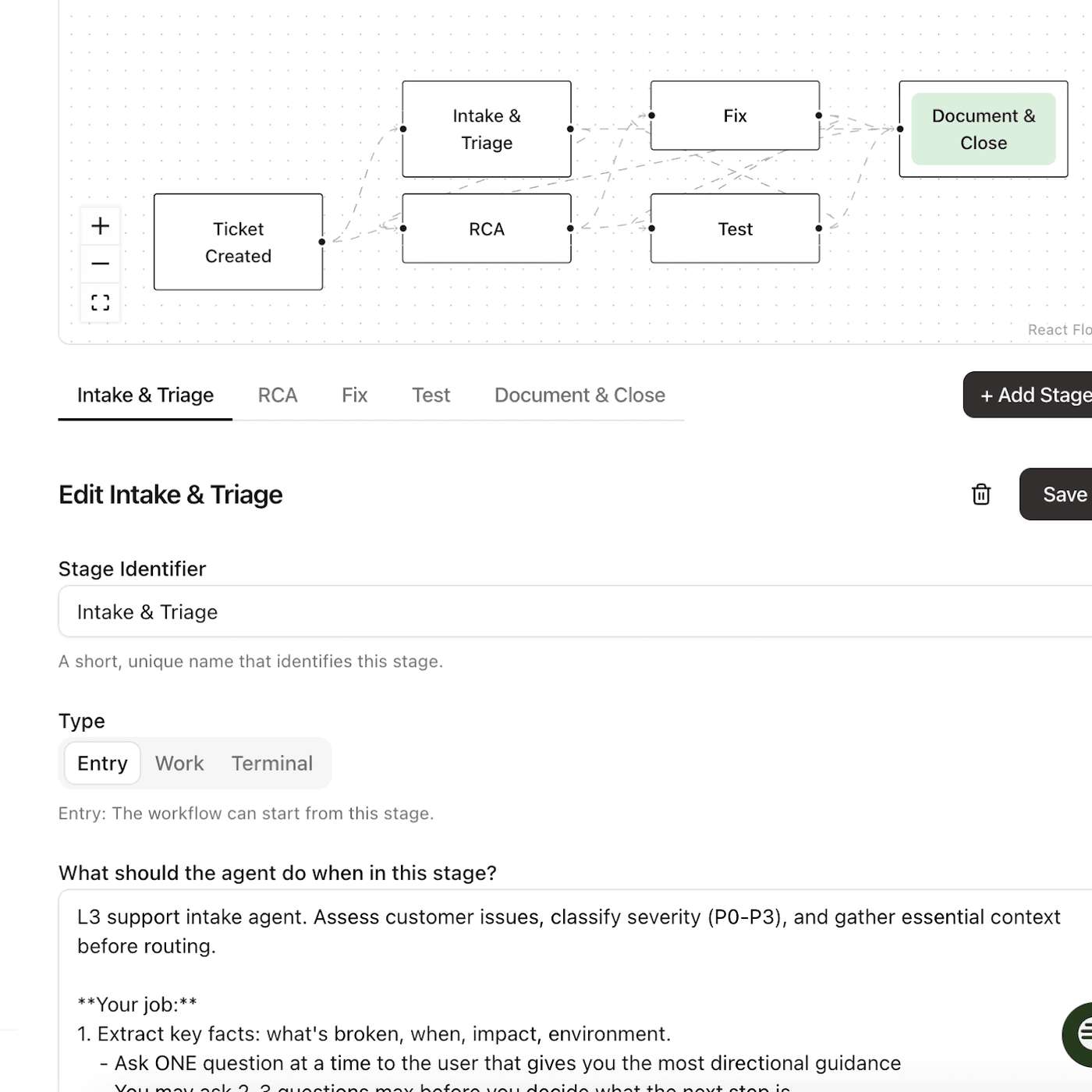
In an enterprise setting, "autonomous" AI does not imply unsupervised execution. Its true value lies in compressing weeks of human work into hours. However, a human expert must remain in the loop to provide final approval, review, or rejection, ensuring control and accountability.

To prevent malicious attacks, a founder configured his AI agent to require manual approval via Telegram before executing any task requested by an external party. This simple human-in-the-loop system acts as a crucial security backstop for agents with access to sensitive data and platforms.
The ability for an AI agent to act autonomously (e.g., send an email) versus asking for approval is determined by user-set permissions. This elevates permissions from a simple privacy feature to a crucial operational control that dictates whether the AI is a supervised assistant or an autonomous worker, with significant real-world consequences.

Marketers mistakenly believe implementing AI means full automation. Instead, design "human-in-the-loop" workflows. Have an AI score a lead and draft an email, but then send that draft to a human for final approval via a Slack message with "approve/reject" buttons. This balances efficiency with critical human oversight.
For enterprises, the raw capability of foundation models is a security risk, not a selling point. The real product value lies in building "boundaries"—robust permissions, approvals, and audit logs that make powerful models safe to deploy company-wide.
For complex, high-stakes tasks like booking executive guests, avoid full automation initially. Instead, implement a 'human in the loop' workflow where the AI handles research and suggestions, but requires human confirmation before executing key actions, building trust over time.
The concept of "human-in-the-loop" is often misapplied. To effectively manage autonomous AI agents, companies must map the agent's entire workflow and insert mandatory human approval at critical decision points, not just as a final check or initial hand-off.

For enterprises, scaling AI content without built-in governance is reckless. Rather than manual policing, guardrails like brand rules, compliance checks, and audit trails must be integrated from the start. The principle is "AI drafts, people approve," ensuring speed without sacrificing safety.

To safely deploy a powerful AI agent, create clear guardrails. SaaStr distinguishes between tasks the agent can perform autonomously (pulling data, generating ideas) and actions that require human approval (sending a mass email). This two-layer approach builds trust and prevents potentially costly mistakes.
