Get your free personalized podcast brief
We scan new podcasts and send you the top 5 insights daily.
The market for AI models follows a power law with a very strong preference for quality. Amodei compares it to hiring employees: people will disproportionately seek out the single best "cognitively capable" model, making price and other factors secondary.

Related Insights
The AI market is becoming "polytheistic," with numerous specialized models excelling at niche tasks, rather than "monotheistic," where a single super-model dominates. This fragmentation creates opportunities for differentiated startups to thrive by building effective models for specific use cases, as no single model has mastered everything.

Even as AI models become more intelligent, they won't fully commoditize. Differentiation will shift to subjective qualities like tone, style, and specialized skills, much like human personalities. Users will prefer models whose "taste" aligns with specific tasks, preventing a single model from dominating all use cases.

In a group of 100 experts training an AI, the top 10% will often drive the majority of the model's improvement. This creates a power law dynamic where the ability to source and identify this elite talent becomes a key competitive moat for AI labs and data providers.

Users in the OpenClaw community are reportedly choosing models like Claude Opus not for superior logic or lower cost, but because they prefer its 'personality.' This suggests that as models reach performance parity, subjective traits and fine-tuned interaction styles will become a critical competitive axis.

The most advanced AI users are 'polyamorous' with models, using an average of 3.5 different tools. This indicates a mature usage pattern where users select the best model for a specific job rather than relying on a single, all-purpose AI, challenging the 'winner-take-all' market theory.

While the most powerful AI will reside in large "god models" (like supercomputers), the majority of the market volume will come from smaller, specialized models. These will cascade down in size and cost, eventually being embedded in every device, much like microchips proliferated from mainframes.

Don't assume that a "good enough" cheap model will satisfy all future needs. Jeff Dean argues that as AI models become more capable, users' expectations and the complexity of their requests grow in tandem. This creates a perpetual need for pushing the performance frontier, as today's complex tasks become tomorrow's standard expectations.
Contrary to the belief that distribution is the new moat, the crucial differentiator in AI is talent. Building a truly exceptional AI product is incredibly nuanced and complex, requiring a rare skill set. The scarcity of people who can build off models in an intelligent, tasteful way is the real technological moat, not just access to data or customers.
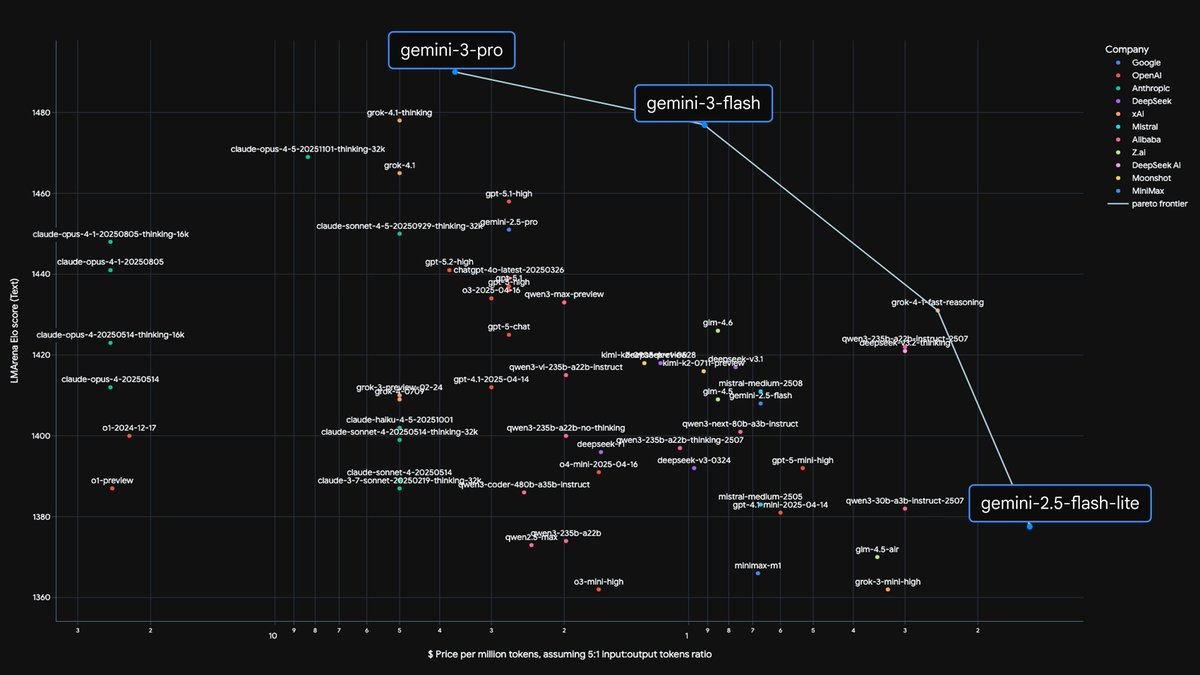
Contrary to the 'winner-takes-all' narrative, the rapid pace of innovation in AI is leading to a different outcome. As rival labs quickly match or exceed each other's model capabilities, the underlying Large Language Models (LLMs) risk becoming commodities, making it difficult for any single player to justify stratospheric valuations long-term.

Horowitz explains the sky-high valuations for AI researchers by noting their skills are not teachable in universities. This expertise is a unique, "alchemistic" craft learned only by building large models inside a few key companies, creating a small, highly sought-after, and non-academically produced talent pool.
![Ben Horowitz - Backing America’s Future - [Invest Like the Best, EP.457] thumbnail](https://megaphone.imgix.net/podcasts/9505619a-009e-11f1-869d-c7d5bc43b194/image/83257eb514e1fd42513d2e46eeb4e9dd.jpg?ixlib=rails-4.3.1&max-w=3000&max-h=3000&fit=crop&auto=format,compress)