Get your free personalized podcast brief
We scan new podcasts and send you the top 5 insights daily.
Portfolios aligned with major intersecting themes like AI infrastructure, energy security, and defense are not just theoretical; they are generating significant alpha. In 2025, these thematic categories outperformed the S&P 500 by 27 percentage points, demonstrating the tangible financial benefit of this investment approach.

Related Insights
Despite the common focus on bottom-up fundamental analysis, statistical evidence shows two-thirds of an investment manager's relative performance is determined by macro factors, such as whether growth or value stocks are in favor. Ignoring top-down signals like Fed policy is a significant mistake, as it means overlooking the largest driver of returns.

Instead of betting on specific AI models like ChatGPT, a more robust strategy is to invest in the underlying infrastructure that all AI development requires. This 'onion' approach focuses on second-order essentials like semiconductors and data centers, which are poised to grow regardless of which consumer-facing application wins.

The most powerful investment opportunities are not in isolated themes but in their intersections. For example, AI's energy demand shapes national politics, which influences global supply chains and societal outcomes. Understanding these reinforcing forces is key to identifying underappreciated opportunities.
Effective hedge fund replication does not try to mimic individual positions (e.g., who owns NVIDIA). Instead, it focuses on identifying and synthesizing the industry's major thematic trades, such as shifts in geographic equity exposure or broad hedges on inflation. These "big trades" are the primary drivers of performance, not the specific securities.

Instead of using current market-cap weightings, a "forward cap" strategy allocates capital based on extrapolated macroeconomic trends. This means overweighting a sector like tech based on its projected future dominance, essentially "skating to where the puck is going."

Despite market hype around AI, Morgan Stanley's analysis shows the top three performing thematic stock categories in 2025 were critical minerals, AI semiconductors, and defense. These 'Multipolar World' investments highlight that geopolitical tensions are currently a more powerful driver of returns than pure tech innovation.
In 2026, the AI investment narrative will expand from foundational model creators to companies building applications and services. It also includes sectors enabling AI growth, such as energy generation and data centers, offering a wider range of investment opportunities beyond the initial tech giants.

An average stock's return is dictated more by external forces than company performance: 40% by the market and 30% by its sector, with only 30% attributable to idiosyncratic factors. This means correctly identifying a winning sector is nearly as valuable as picking the best stock within it.

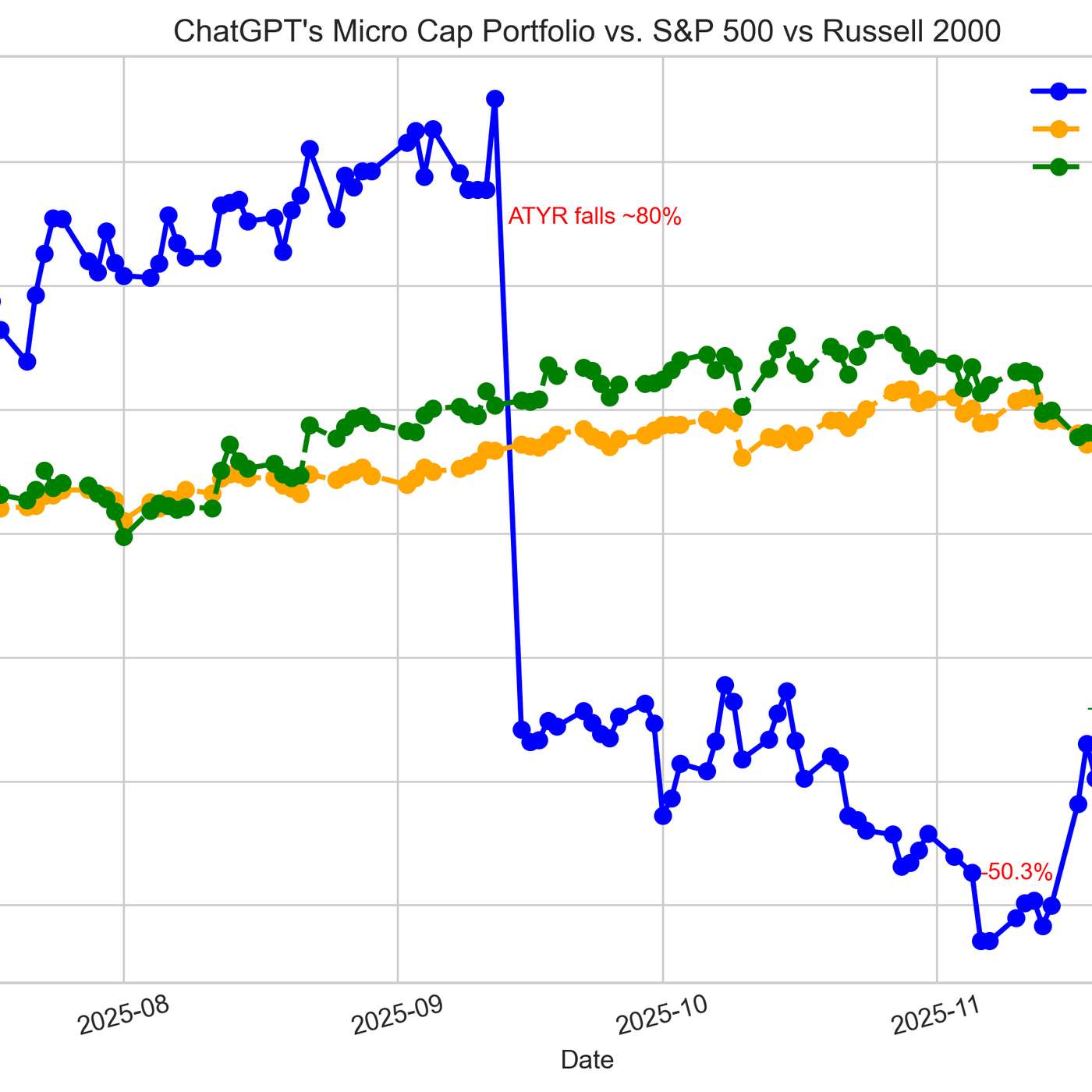
The AI's portfolio construction goes beyond simple asset diversification by intentionally balancing three distinct investment theses: a de-risked 'anchor' (Mist), an asymmetric 'moonshot' (SLS), and a valuation-driven 'rebound' (JSPR). This strategy diversifies risk across different potential paths to success.
The convergence of AI, energy, and geopolitics is the defining market force. AI's massive power requirements are making energy a strategic national priority, while geopolitical tensions are shaping access to both energy and technology, creating a powerful, interconnected investment theme.