Get your free personalized podcast brief
We scan new podcasts and send you the top 5 insights daily.
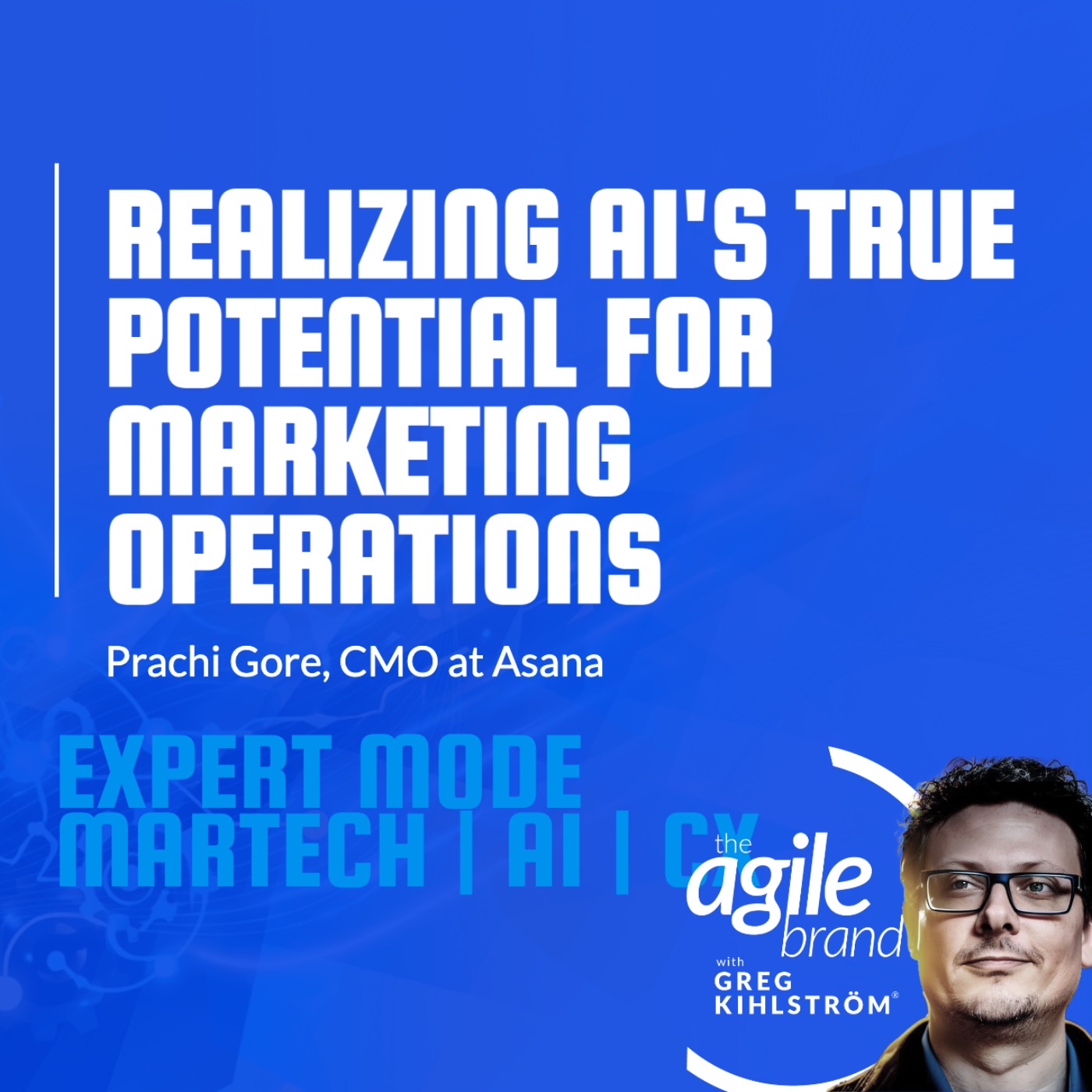
The success of AI in marketing should not be measured by the quantity of content or ideas generated, which can create chaos. Instead, leaders must track its impact on core business metrics like revenue growth and operational efficiency. The goal is enabling a 10-person team to operate with the impact of a 100-person team.
Related Insights
The biggest impact of AI in marketing is not replacing people but augmenting them. By handling repetitive tasks, AI frees up significant team capacity to focus on strategic work like brand building and experience design, amplifying human creativity and judgment.
Marketers win with AI not by making existing tasks faster, but by using it to unlock new growth opportunities. The focus should be on game-changing programs that drive revenue, rather than on simply achieving incremental efficiency gains.

The 'campaign' is a human construct for managing and measuring work. AI will allow a shift away from this project-based unit. Marketing can evolve to focus directly on high-level business outcomes, like quarterly revenue, with AI dynamically orchestrating all the always-on activities required to hit that goal.

Demanding a direct, line-item ROI for foundational AI initiatives is like asking for the ROI on Wi-Fi—it's the wrong question. Instead of getting bogged down in impossible calculations, leaders should focus on measuring the business outcomes enabled by the technology, such as innovation speed or new product creation. Obsess on outcomes, not direct financial return.
As AI bots inflate engagement metrics like views and likes, these numbers will become meaningless. The only way to measure marketing success will be to track direct business outcomes, such as sales or leads. If the desired results happen, the inflated metrics don't matter.

The common view of AI is to increase efficiency or replace headcount. A more powerful approach is to maintain your team and leverage AI for abundance. Use it to triple your output, running five marketing campaigns instead of one and exploring numerous variations to dramatically increase growth.

While AI can generate massive content volume, its true value isn't just replacing human effort for cost savings. Instead, it should augment expert teams, allowing them to test more, learn faster, and make braver creative decisions. The goal is to enhance creative capacity and impact, not just reduce headcount.

While AI tools dramatically increase content production speed, true ROI is not measured in output. Leaders should track incremental engagement, conversion lift, and revenue per message. An often overlooked KPI is brand consistency—how often content passes governance checks on the first try.

To move beyond FOMO-driven investment, AI21 Labs' CMO advises measuring AI's business impact across three pillars: its ability to scale growth, its power to improve decisions through faster analysis, and its capacity to help organizations avoid and plan for risks.
AI's future impact will transcend mere workflow efficiency. It will act as a strategic 'equalizer,' enabling smaller, leaner marketing teams to operate with the sophistication of larger enterprises. This means gaining access to advanced personalization, audience management, and performance optimization that directly impacts the bottom line.
