Get your free personalized podcast brief
We scan new podcasts and send you the top 5 insights daily.
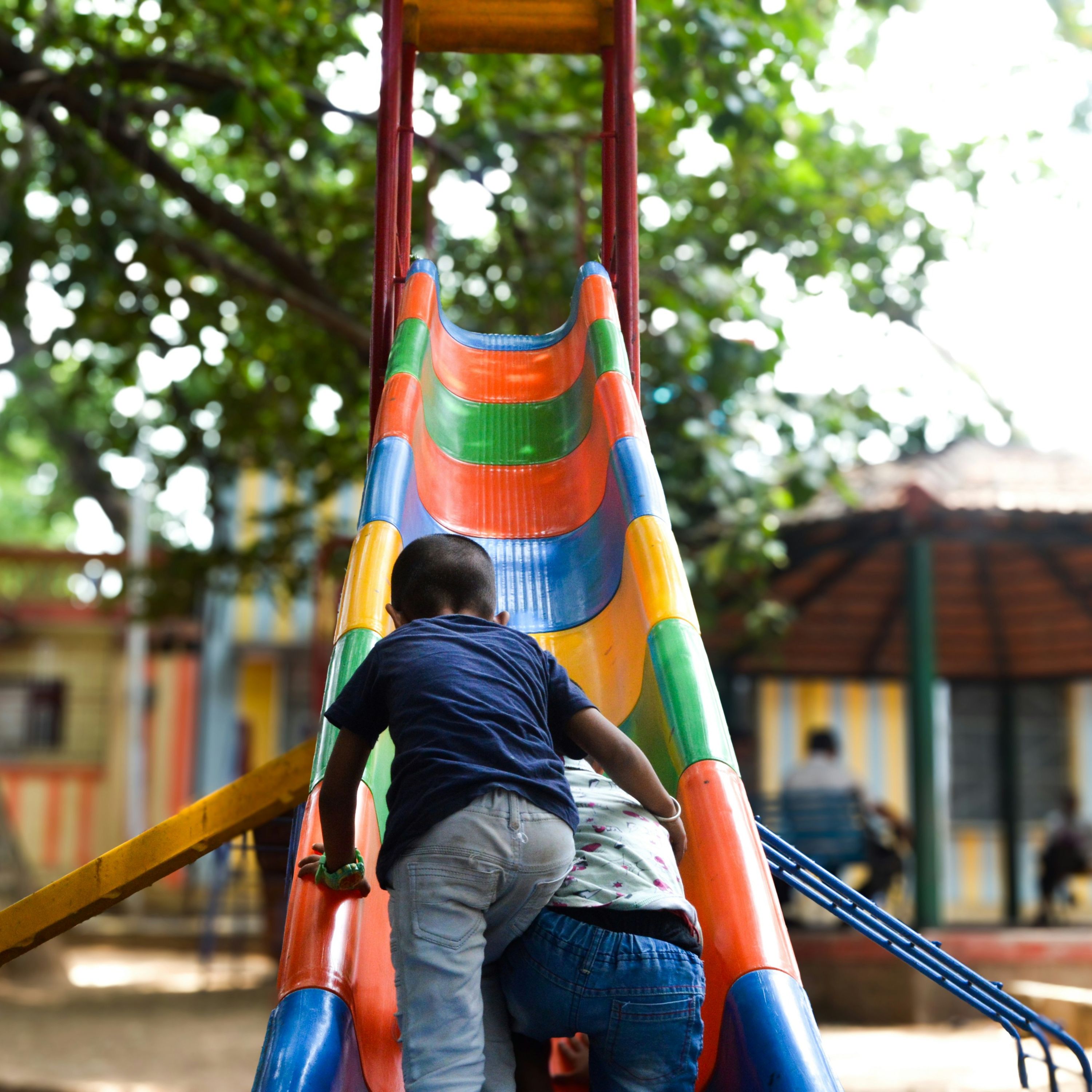
Contrary to the goal of eliminating all danger, progressive playground design intentionally incorporates managed risk. This "risky play" is psychologically vital for children to learn physical limits, problem-solving, and resilience in a controlled environment, which ultimately makes them safer.

Related Insights
The mere presence of an adult shifts responsibility away from children. They come to expect adults to enforce safety and solve conflicts, which discourages them from developing their own problem-solving skills, risk assessment, and self-reliance.
The antidote to the destructive, isolating risk of online gambling is not risk aversion, but the redirection of that appetite toward constructive, real-world challenges. This involves encouraging social risks like approaching strangers, asking someone out, and investing in relationships—actions that build character and connection rather than draining finances.

Instead of avoiding risk, teams build trust by creating a 'safe danger' zone for manageable risks, like sharing a half-baked idea. This process of successfully navigating small vulnerabilities rewires fear into trust and encourages creative thinking, proving that safety and danger are more like 'dance partners' than opposites.

Over the same decades that children's independent play has declined, rates of youth anxiety and depression have steadily risen. Unsupervised play is crucial for developing an "internal locus of control," which allows kids to learn they can handle life’s challenges and builds resilience.
While well-intentioned, attending every single school recital or sports game can create unrealistic expectations for children. Occasionally missing an event teaches resilience, adaptability, and the reality that life sometimes gets in the way, better preparing them for adulthood.

Unlike modern age-segregated classrooms, historical mixed-age play groups create a natural learning environment. Older children develop leadership, teaching, and nurturing skills by guiding younger ones, who in turn are challenged and learn more quickly from their skilled peers.
The common advice to 'protect your mental health' often encourages avoidance. A more effective approach is to 'exercise' it. By actively and intentionally engaging with manageable challenges, you build resilience and expand your mental capacity, much like a muscle.

When adults intervene in children's unstructured play to "teach" them the "right" way to do things, they often strip the activity of its imaginative joy and engagement. This transforms a creative game into a boring, adult-led lesson, diminishing learning and happiness.
A common misconception is that safety means preventing bad things from happening. A more powerful and realistic definition is having the internal conviction that you can handle whatever comes your way. This shifts the focus from external control to internal resilience and capacity.

Unlike organized activities with fixed rules, unstructured play forces children to invent, negotiate, and adapt rules themselves. This teaches them that rules are not sacrosanct but are mutable agreements created to facilitate fun and fairness for the group.