Get your free personalized podcast brief
We scan new podcasts and send you the top 5 insights daily.
Marco Casalaina used natural language to instruct an AI agent to re-encode a 1.7GB video file using the powerful but complex command-line tool FFmpeg. The AI handled the specific command generation, reducing the file to 13MB. This makes highly technical tools accessible for tasks like file manipulation without requiring deep expertise.

Related Insights
The new paradigm for building powerful tools is to design them for AI models. Instead of complex GUIs, developers should create simple, well-documented command-line interfaces (CLIs). Agents can easily understand and chain these CLIs together, exponentially increasing their capabilities far more effectively than trying to navigate a human-centric UI.

The power of tools like Claude Code comes from giving the AI access to fundamental command-line tools (e.g., `bash`, `grep`). This allows the AI to compose novel solutions and lets product teams define new features using simple English prompts rather than hard-coded logic.

Agentic frameworks like OpenClaw are pioneering a new software paradigm where 'skills' act as lightweight replacements for entire applications. These skills are essentially instruction manuals or recipes in simple markdown files, combining natural language prompts with calls to deterministic code ('tools'), condensing complex functionality into a tiny, efficient format.
Marco Casalaina uses Warp, an AI-powered terminal, to automate assigning Azure roles, a task that would take an hour via the web UI. This showcases how AI agents can streamline complex, repetitive administrative work by interacting directly with command-line interfaces, bypassing clunky GUIs.
While GUIs were built for humans, the terminal is more "empathetic to the machine." Coding agents are more effective using CLIs because it provides a direct, scriptable, and universal way to interact with a system's tools, leveraging vast amounts of pre-trained shell command data.
Marco uses the AI tool Warp to control his physical document scanner by giving natural language commands. The AI translates his intent (“scan the odd pages”) into the specific commands for a third-party scanner CLI (NAPS2). This demonstrates how AI can abstract away the complexity of interacting with physical hardware programmatically.
Instead of designing tools for human usability, the creator built command-line interfaces (CLIs) that align with how AI models process information. This "agentic-driven" approach allows an AI to easily understand and scale its capabilities across numerous small, single-purpose programs on a user's machine.
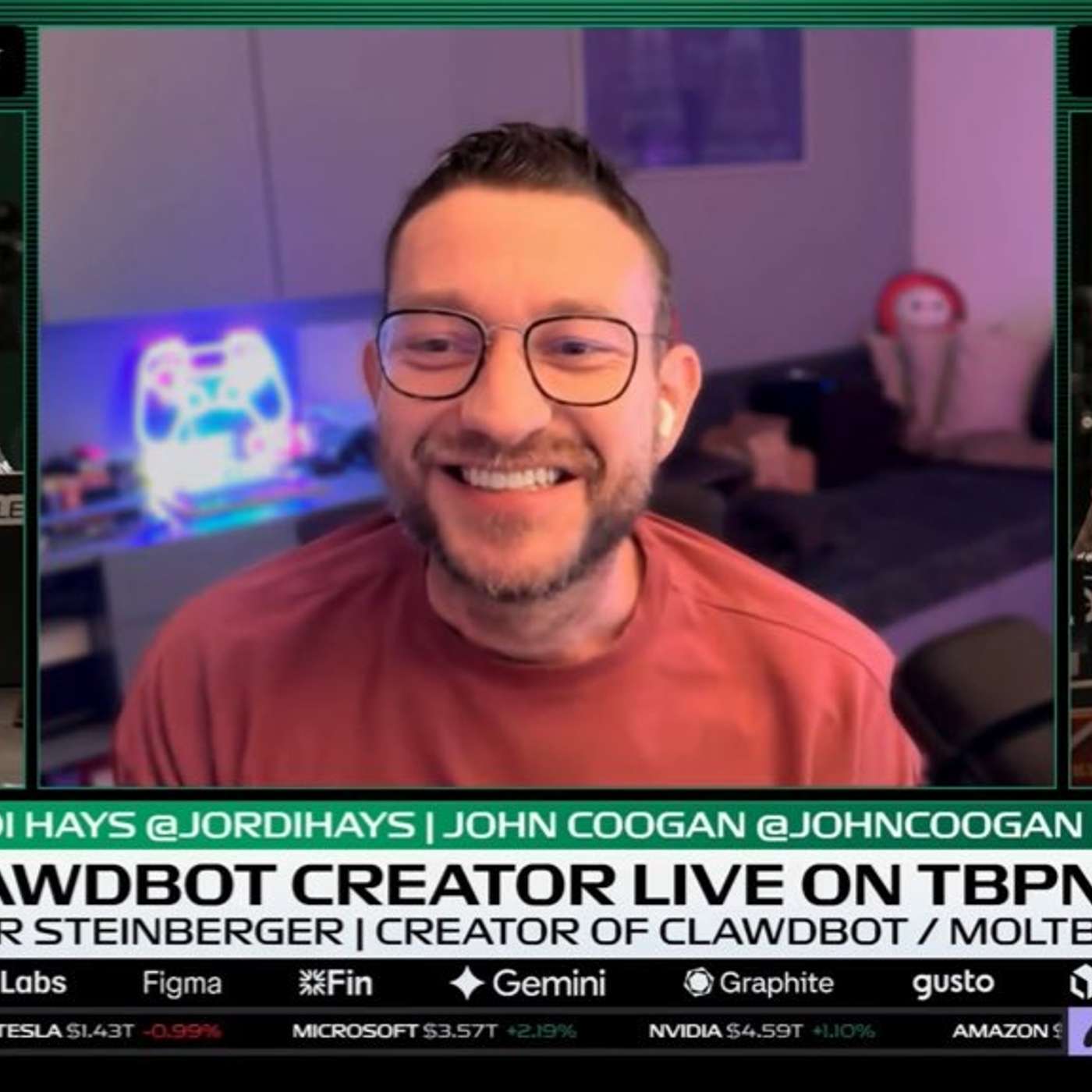
The creator of ClaudeBot (now MoltBot) experienced a moment of perceived AGI when the agent, given an audio file of unknown format, autonomously identified the format, found the right tool (FFmpeg), converted it, used an API key to transcribe it, and delivered the result. This demonstrates the resourceful, multi-step problem-solving capabilities of modern AI agents when given tool access.
The power of tools like Codex lies beyond writing software; they are becoming general 'computer use agents' that leverage the command line to automate personal tasks. This includes organizing messy file directories, managing desktop files, or sorting emails, reclaiming the power of the terminal for everyday automation.

When sent an unsupported voice message, OpenClaw identified the format (Opus), found and used FFmpeg on the computer to convert it, located an OpenAI key, and used curl to call the Whisper API for transcription—a task it wasn't explicitly programmed for.
