Get your free personalized podcast brief
We scan new podcasts and send you the top 5 insights daily.
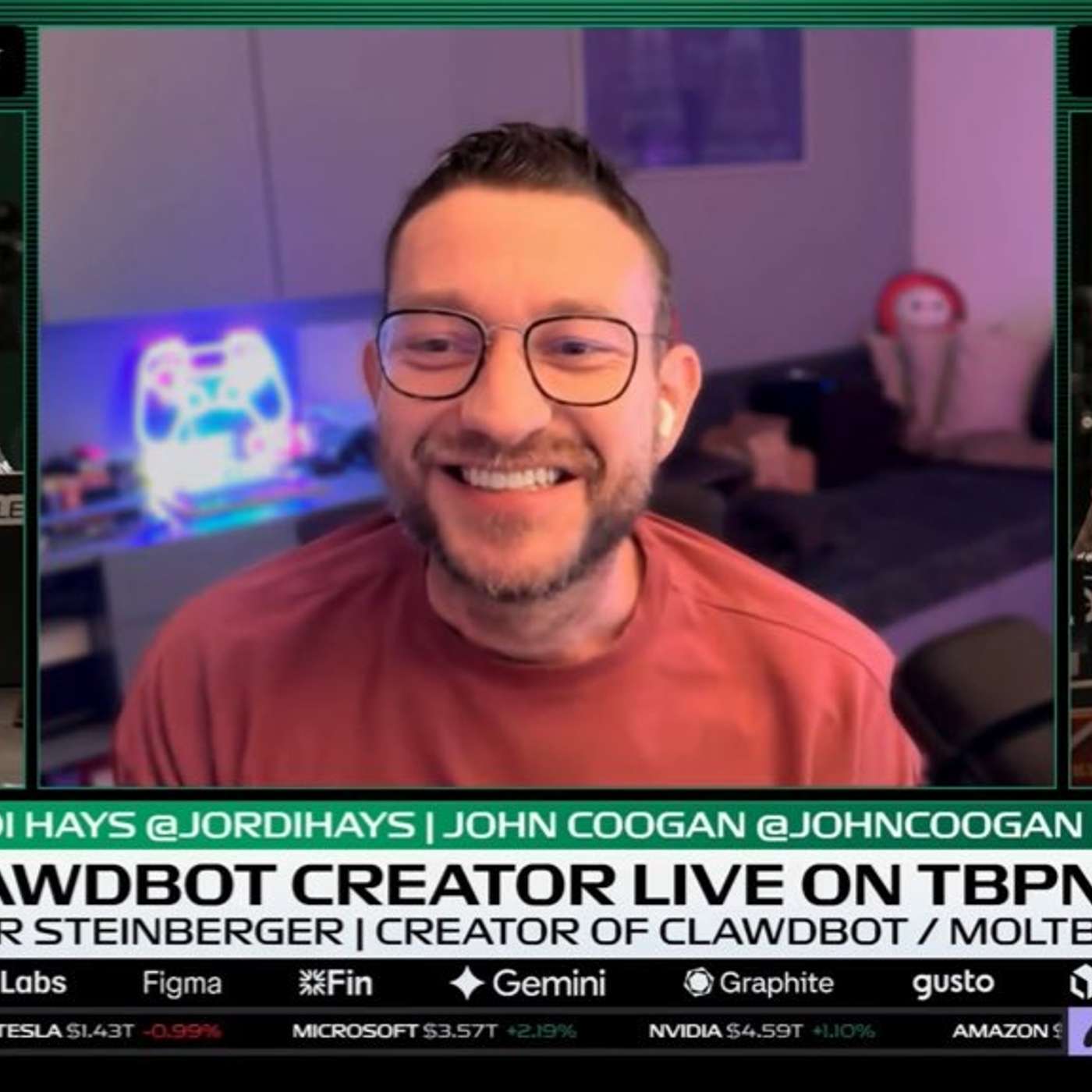
When sent an unsupported voice message, OpenClaw identified the format (Opus), found and used FFmpeg on the computer to convert it, located an OpenAI key, and used curl to call the Whisper API for transcription—a task it wasn't explicitly programmed for.

Related Insights
Unlike simple chatbots, AI agents tackle complex requests by first creating a detailed, transparent plan. The agent can even adapt this plan mid-process based on initial findings, demonstrating a more autonomous approach to problem-solving.

Peter Steinberger's AI, OpenClaw, saw a screenshot of a tweet reporting a bug, understood the context, accessed the git repository, fixed the code, committed the change, and replied to the user on Twitter, all without human intervention.
The power of tools like Claude Code comes from giving the AI access to fundamental command-line tools (e.g., `bash`, `grep`). This allows the AI to compose novel solutions and lets product teams define new features using simple English prompts rather than hard-coded logic.

An AI agent, without specific programming for audio, independently processed a voice memo. It identified the file type, converted it, found an API key, and used an external service for transcription, demonstrating emergent problem-solving skills that surprised its creator.

The defining characteristic of a powerful AI agent is its ability to creatively solve problems when it hits a dead end. As demonstrated by an agent that independently figured out how to convert an unsupported audio file, its value lies in its emergent problem-solving skills rather than just following a pre-defined script.

The terminal-first interface of Claude Code wasn't a deliberate design choice. It emerged organically from prototyping an API client in the terminal, which unexpectedly revealed the power of giving an AI model direct access to the same tools (like bash) that a developer uses.
The creator of ClaudeBot (now MoltBot) experienced a moment of perceived AGI when the agent, given an audio file of unknown format, autonomously identified the format, found the right tool (FFmpeg), converted it, used an API key to transcribe it, and delivered the result. This demonstrates the resourceful, multi-step problem-solving capabilities of modern AI agents when given tool access.

Exceptional AI content comes not from mastering one tool, but from orchestrating a workflow of specialized models for research, image generation, voice synthesis, and video creation. AI agent platforms automate this complex process, yielding results far beyond what a single tool can achieve.
The creator realized his project's true potential only when the AI agent, unprompted, figured out how to transcribe an unsupported voice file by converting it and using an OpenAI API. This shows how a product's core value can derive from emergent, unexpected AI capabilities, not just planned features.
The key innovation behind Claude Code wasn't a more advanced language model, but rather granting it simple permissions: the ability to read/write local files and execute basic Unix commands. This allowed it to overcome the stateless nature of LLMs and chain complex operations together, unlocking emergent capabilities.
