Get your free personalized podcast brief
We scan new podcasts and send you the top 5 insights daily.
Marco uses the AI tool Warp to control his physical document scanner by giving natural language commands. The AI translates his intent (“scan the odd pages”) into the specific commands for a third-party scanner CLI (NAPS2). This demonstrates how AI can abstract away the complexity of interacting with physical hardware programmatically.

Related Insights
The new paradigm for building powerful tools is to design them for AI models. Instead of complex GUIs, developers should create simple, well-documented command-line interfaces (CLIs). Agents can easily understand and chain these CLIs together, exponentially increasing their capabilities far more effectively than trying to navigate a human-centric UI.

The enthusiastic reception for Google's Workspace CLI reveals a counter-intuitive trend: old-school Command-Line Interfaces are becoming the preferred way for AI agents to interact with software. Unlike humans, agents don't need GUIs and benefit from the CLI's deterministic, low-friction nature, avoiding the 'abstraction tax' of newer API layers.

A "magical" use case for agents is giving them access to your local network to operate physical hardware. Being able to voice-command an agent to print a document eliminates friction and integrates AI into the physical home environment, moving beyond screen-based tasks.

Marco Casalaina uses Warp, an AI-powered terminal, to automate assigning Azure roles, a task that would take an hour via the web UI. This showcases how AI agents can streamline complex, repetitive administrative work by interacting directly with command-line interfaces, bypassing clunky GUIs.
Unlike tools like Zapier where users manually construct logic, advanced AI agent platforms allow users to simply state their goal in natural language. The agent then autonomously determines the steps, writes necessary code, and executes the task, abstracting away the workflow.

While GUIs were built for humans, the terminal is more "empathetic to the machine." Coding agents are more effective using CLIs because it provides a direct, scriptable, and universal way to interact with a system's tools, leveraging vast amounts of pre-trained shell command data.
The technical friction of setting up AI agents creates a market for dedicated hardware solutions that abstract away complexity, much like Sonos did for home audio, making powerful AI accessible to non-technical users.

The evolution from simple voice assistants to 'omni intelligence' marks a critical shift where AI not only understands commands but can also take direct action through connected software and hardware. This capability, seen in new smart home and automotive applications, will embed intelligent automation into our physical environments.
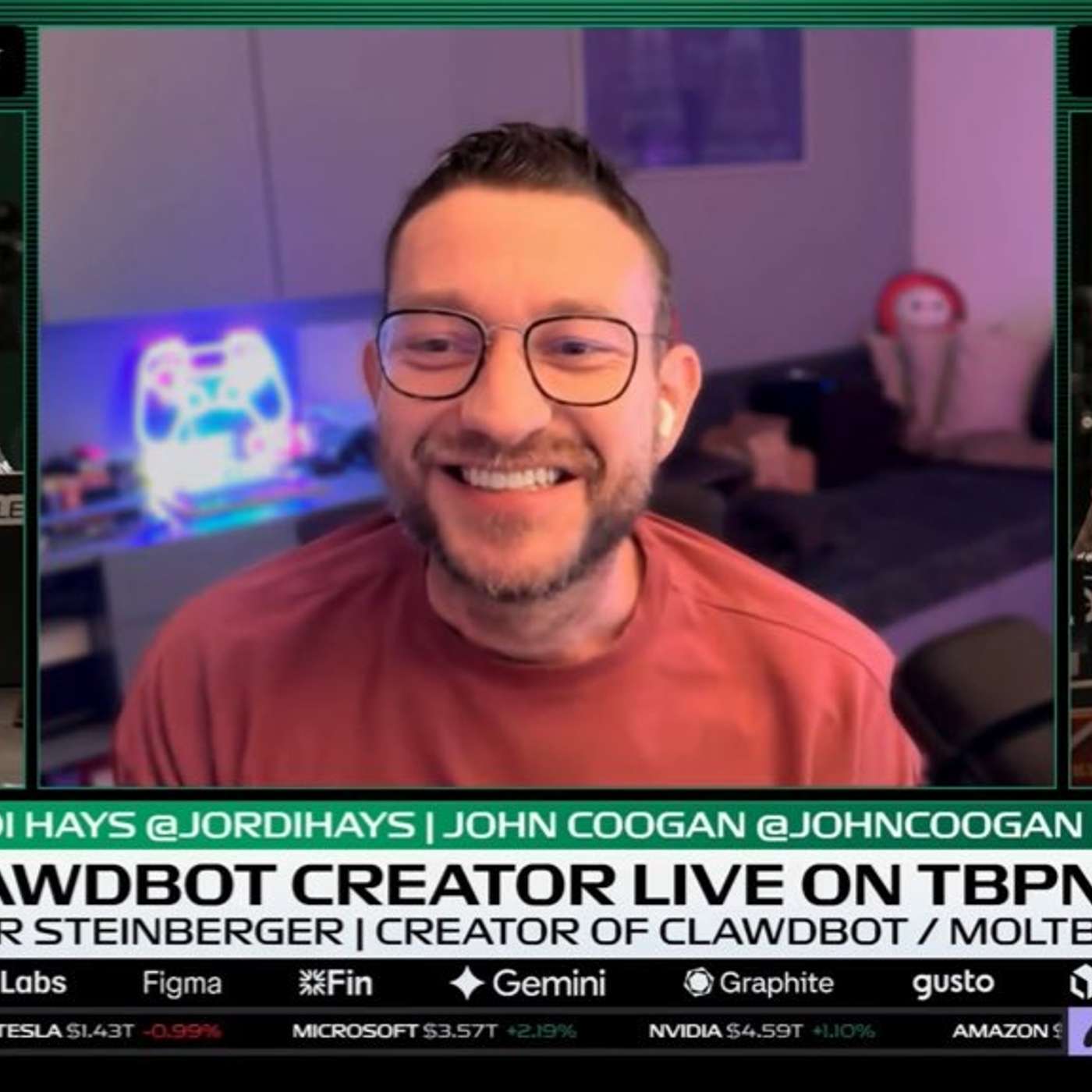
Instead of designing tools for human usability, the creator built command-line interfaces (CLIs) that align with how AI models process information. This "agentic-driven" approach allows an AI to easily understand and scale its capabilities across numerous small, single-purpose programs on a user's machine.
The next evolution of enterprise AI isn't conversational chatbots but "agentic" systems that act as augmented digital labor. These agents perform complex, multi-step tasks from natural language commands, such as creating a training quiz from a 700-page technical document.
