Get your free personalized podcast brief
We scan new podcasts and send you the top 5 insights daily.
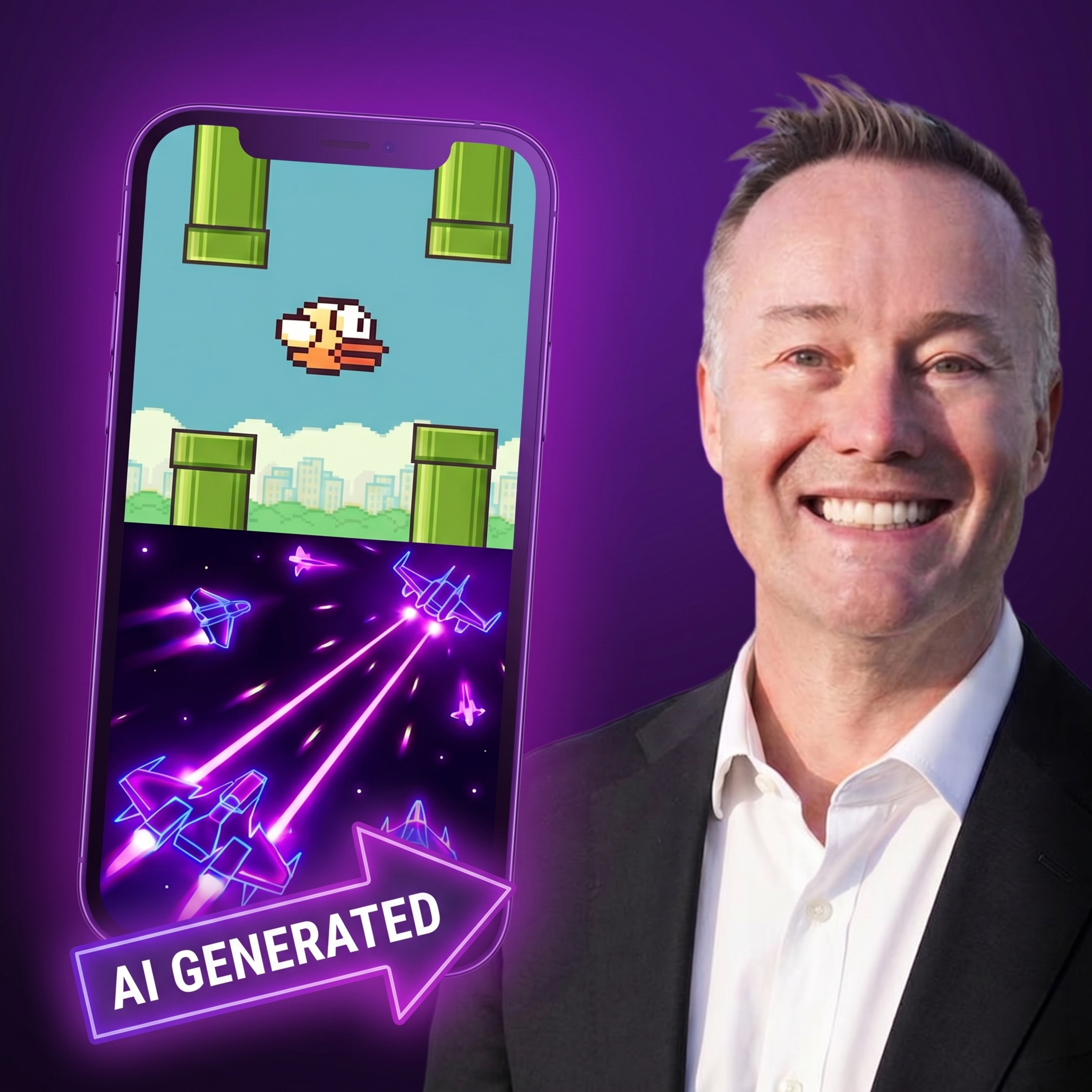
Instead of focusing on in-app purchases, Nanogram's founders envision a future where brands create engaging, interactive ads. For example, Domino's could build a playable game where asteroids are pizzas, and the call-to-action is to order the pizza created in-game.
Related Insights
Ben Thompson argues AI apps should adopt a Meta-style advertising model based on deep user understanding, rather than Google-style contextual ads tied to prompts. This avoids conflicts of interest and surfaces products users didn't know they needed, creating more value for both users and advertisers.
Netflix's ad business will evolve beyond replicating traditional TV ads. The plan is to create ad experiences that tell a cohesive story across a binge-watching session, recognizing and adapting to user behavior for greater impact and differentiation from linear TV.

A novel ad format would allow brands to sponsor access to premium features for free users. For example, McKinsey could underwrite deep research queries, or Nike could present a branded "training mode." This transforms advertising from an interruption into a value-additive, branded experience that enhances the core product.

While people commonly share video clips or text, sharing interactive games is not an established behavior. Nanogram is changing this, observing that for every 100 likes on a game, it receives 30 to 50 shares. This high ratio suggests the platform is creating a new viral loop.
As platforms like Google consume media traffic, brands can no longer rely on placing ads next to content. They must become the content destination themselves. The strategy is to build a direct relationship, often via an app, winning "the battle of the storefront on your phone" and reducing dependency on paid channels.

Similar to the early internet, the time users spend on video games far outweighs the advertising dollars captured by the industry. This gap indicates a huge, untapped monetization opportunity where ad spend will eventually calibrate to match user attention, especially among young male demographics.

Unlike competitors who would struggle to introduce ads into AI chat, Meta's user base is already accustomed to ads in their feeds. This gives Meta a unique advantage to monetize a proactive consumer AI agent that can surface sponsored suggestions for shopping or travel without creating user friction.

Brands can use AI coding tools like Gemini to quickly build simple, themed games. These games act as engaging, shareable content for social media marketing campaigns, offering a fresh way to capture audience attention beyond traditional ads and posts.

AI conversations capture high-intent moments, allowing ads to target active decision-making rather than passive attention-grabbing like social media. This fundamental difference could lead to significantly higher average revenue per user (ARPU), making social media's ad performance a floor, not a ceiling for AI platforms.
The success of events like the Daft Punk concert in Fortnite signals a strategic shift. IP holders will launch new brands within games first to build community, then expand to movies or TV. Games are now viewed as the most influential social platforms, not just secondary marketing channels.
