Get your free personalized podcast brief
We scan new podcasts and send you the top 5 insights daily.
An AI-native application is not a traditional app with an AI feature; it's architected around AI from the start. This requires developers to master a new stack including language models, vector databases, and agentic workflows, moving beyond just REST APIs and traditional databases.

Related Insights
Don't view AI as just a feature set. Instead, treat "intelligence" as a fundamental new building block for software, on par with established primitives like databases or APIs. When conceptualizing any new product, assume this intelligence layer is a non-negotiable part of the technology stack to solve user problems effectively.
The most successful AI applications like ChatGPT are built ground-up. Incumbents trying to retrofit AI into existing products (e.g., Alexa Plus) are handicapped by their legacy architecture and success, a classic innovator's dilemma. True disruption requires a native approach.

Don't just sprinkle AI features onto your existing product ('AI at the edge'). Transformative companies rethink workflows and shrink their old codebase, making the LLM a core part of the solution. This is about re-architecting the solution from the ground up, not just enhancing it.

For years, Google has integrated AI as features into existing products like Gmail. Its new "Antigravity" IDE represents a strategic pivot to building applications from the ground up around an "agent-first" principle. This suggests a future where AI is the core foundation of a product, not just an add-on.

A truly "AI-native" product isn't one with AI features tacked on. Its core user experience originates from an AI interaction, like a natural language prompt that generates a structured output. The product is fundamentally built around the capabilities of the underlying models, making AI the primary value driver.

Simply adding an AI layer on top of a traditional SaaS stack will fail. A true AI-native architecture requires an "AI data layer" sitting next to the "AI application layer," both controlled by ML engineers who need to constantly tune data ingestion and processing without dependencies on the core tech team.
The lesson from Adobe (cloud migrant) vs. Figma (cloud native) is that true advantage comes from organizing an entire architecture around a new technology's properties. AI-native firms will similarly win by building new workflows and value units, not just applying AI to existing ones.

A new software paradigm, "agent-native architecture," treats AI as a core component, not an add-on. This progresses in levels: the agent can do any UI action, trigger any backend code, and finally, perform any developer task like writing and deploying new code, enabling user-driven app customization.

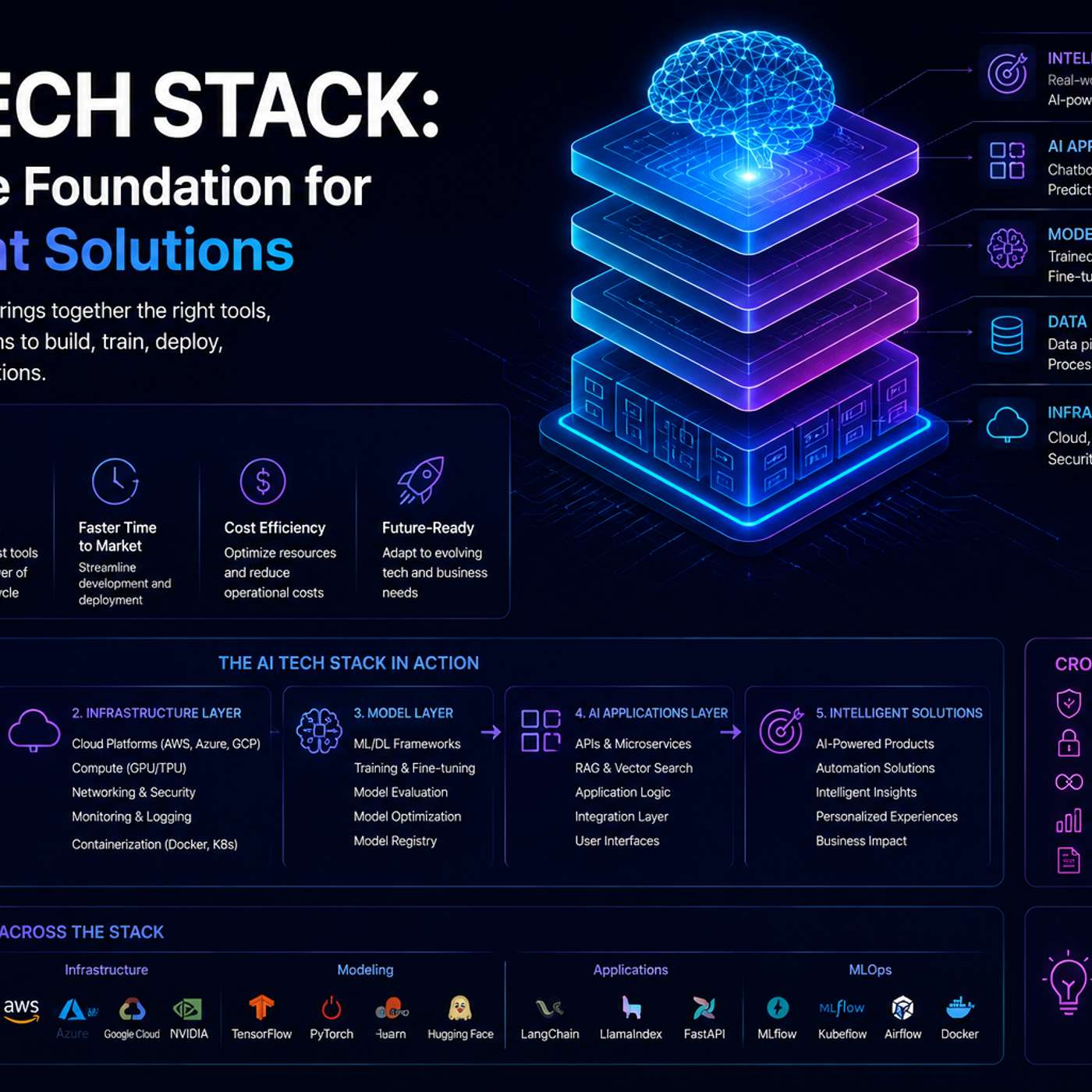
Integrating generative AI is not a simple model upgrade. It demands new architectural components like vector databases (e.g., Pinecone, Weaviate) for semantic search and prompt orchestration frameworks (e.g., LangChain) to manage complex model interactions and proprietary data.
Superhuman's CEO defines "AI Native" as completely rethinking user interactions and rebuilding surfaces from the ground up. This approach fundamentally differs from incumbents like Google and Microsoft, who simply bolt AI capabilities onto legacy applications.
