Get your free personalized podcast brief
We scan new podcasts and send you the top 5 insights daily.
Superpowers often view their own aggressive rhetoric as strategic posturing while taking their adversaries' similar statements as literal threats. This double standard makes them blind to the long-term consequences of their actions, such as creating grievances that birth future insurgencies.

Related Insights
Claiming you will only 'turn down the temperature' after your opponents do is not a strategy for de-escalation; it is a justification for retaliation. This 'counter-punching' approach ensures conflict continues. A genuine desire to reduce societal tension requires leading by example, not waiting for the other side to act first.

In geopolitical conflicts, nations often apply a double standard to rhetoric. An adversary's hyperbolic slogan like 'Death to America' is treated as a literal threat justifying war, while one's own equally extreme statements, like 'a whole civilization will die tonight,' are dismissed as mere posturing.

When a political leader frequently issues apocalyptic threats without acting on them, the public becomes desensitized. The rhetoric is dismissed as bluster (a "Taco Tuesday"), dangerously lowering the bar for acceptable discourse and eroding the impact of genuine warnings.
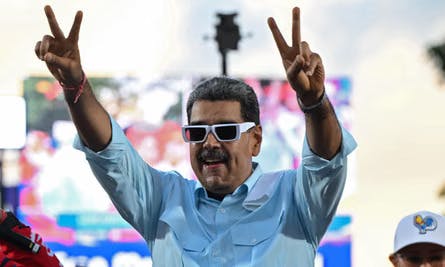
Authoritarian leaders who publicly mock or dismiss threats risk triggering a military response driven by personal pride. Venezuelan President Maduro's televised dancing was reportedly perceived by the Trump administration as calling their bluff, demonstrating how avoiding the appearance of being a 'chump' can become a primary motivator for military action.
In conflicts, a critical error is to believe that escalating pressure will automatically force an opponent to back down. This overlooks that for the adversary, the fight may be existential, leaving them no room to retreat and thus leading to a more dangerous conflict.

Leaders often assume that applying pressure will force an opponent to the negotiating table. This strategy can fail when the adversary operates under a different logic or, as with Iran's decentralized military, when there is no single authority left to negotiate with, revealing a critical cognitive bias.

Leaders create simplified, emotionally resonant narratives for public consumption that mask the messy, complex, and often ugly truths behind their actions. The real "why" is rarely present in the official story.

A leader's bombastic, civilization-ending rhetoric often serves as a distraction from the military's actual strategy. While Trump threatened to "wipe out" Iran, the US military was simultaneously conducting a targeted strike, showing a disconnect between public posturing and operational reality.
Trump's strategy of escalating threats is based on the model that rational actors will capitulate to overwhelming force. This fails when adversaries, viewing conflict as existential, operate under a different calculus, leading to unpredictable and dangerous escalations.

Trump’s signature strategy of building up military force while simultaneously offering diplomatic solutions creates a coercive environment. While it projects short-term strength, it damages long-term relationships, making allies and adversaries alike view the U.S. as an unpredictable and untrustworthy bully.