Get your free personalized podcast brief
We scan new podcasts and send you the top 5 insights daily.
Webflow's CPO champions the "ICCPO" (Individual Contributor CPO) model. In the AI era, leaders must be hands-on practitioners who experiment with their own tools. This direct engagement is critical for understanding the new toolkit, discovering its limitations, and guiding their teams effectively from the trenches.

Related Insights
For executives to truly drive AI adoption, simply using the tools isn't enough. They must model three key behaviors: publicly setting a clear vision for AI's role, actively participating in company-wide learning initiatives like hackathons, and empowering employees with the autonomy to experiment.

Z.AI's culture mandates that technical leaders, including the founder, remain hands-on practitioners. The AI field evolves too quickly for a delegated, hands-off management style to be effective. Leaders must personally run experiments and engage with research to make sound, timely decisions.

To prepare for a future of human-AI collaboration, technology adoption is not enough. Leaders must actively build AI fluency within their teams by personally engaging with the tools. This hands-on approach models curiosity and confidence, creating a culture where it's safe to experiment, learn, and even fail with new technology.
AI is a 'hands-on revolution,' not a technological shift like the cloud that can be delegated to an IT department. To lead effectively, executives (including non-technical ones) must personally use AI tools. This direct experience is essential for understanding AI's potential and guiding teams through transformation.

Simply instructing engineers to "build AI" is ineffective. Leaders must develop hands-on proficiency with no-code tools to understand AI's capabilities and limitations. This direct experience provides the necessary context to guide technical teams, make bolder decisions, and avoid being misled.
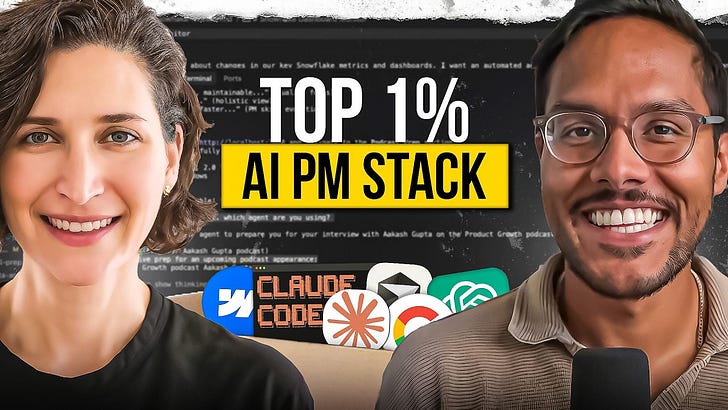
The "ICCPO" (Individual Contributor Chief Product Officer) model requires leaders to use AI tools to self-serve answers directly from company data. This shifts the executive role from pure delegation to hands-on experimentation, modeling a culture of self-sufficiency and inspiring the team to adopt new tools.
It's nearly impossible to hire senior product or engineering leaders who are also fluent in AI. The advice for experienced managers is to step back into an Individual Contributor (IC) role. This allows them to build hands-on AI skills, demonstrating the humility and beginner's mindset necessary to lead in this new era.

To lead in the age of AI, it's not enough to use new tools; you must intentionally disrupt your own effective habits. Force yourself to build, write, and communicate in new ways to truly understand the paradigm shift, even when your old methods still work well.
Successful AI integration is a leadership priority, not a tech project. Leaders must "walk the talk" by personally using AI as a thought partner for their highest-value work, like reviewing financial statements or defining strategy. This hands-on approach is necessary to cast the vision and lead the cultural change required.

Unable to secure budget for a human chief of staff, Webflow's CPO built her own using AI agents. This system automates complex, recurring tasks like podcast research and data prep, demonstrating how executives can use AI to gain significant personal leverage without increasing headcount.