Get your free personalized podcast brief
We scan new podcasts and send you the top 5 insights daily.
Erik Bernhardsson observes that running agents inside permanent dev boxes creates wasteful compute overhead. By implementing rapid container snapshotting, developers can spin up a sandbox in one hundred milliseconds, execute a single command, snapshot state, and power down, allowing massive parallelization across agent tasks and test suites.

Related Insights
Instead of placing agents inside a pre-set environment, a more powerful approach for reasoning models is to start with just the agent. Then, give it the tools and skills to boot its own development stack as needed, granting it more autonomy and control over its workspace.
Because autonomous agents enable a surge of personalized micro-applications used intermittently, hosting software on persistent infrastructure is economically untenable. Next-generation serverless architectures must automatically spin down unused instances and dynamically scale resources like liquid across diverse workloads to support sustainable compute economics.

Running multiple, complex AI coding agents simultaneously is computationally prohibitive on local machines. Stripe's success relies on their ability to spin up numerous isolated cloud development environments in parallel, a crucial investment for any team serious about agentic engineering.

A significant and persistent challenge for deploying AI coding agents is 'repo setup': ensuring the agent’s sandboxed environment perfectly mirrors a human developer's setup, including all dependencies, secrets, and configurations. Solving the local developer environment story is key to solving the agent setup.
As AI generates more code than humans can review, the validation bottleneck emerges. The solution is providing agents with dedicated, sandboxed environments to run tests and verify functionality before a human sees the code, shifting review from process to outcome.

Spawning independent command-line sub-agent sessions maintains persistent context over long development cycles without burning excessive tokens on background research. Teams can orchestrate an implementation agent and a reviewing tech-lead agent across separate sessions to iteratively vet PR descriptions and designs.
Developing with AI agents on your local machine creates bottlenecks and coordination nightmares. Cloud-based virtual machines (VMs) allow you to run numerous agents in parallel without code collision, drastically increasing your shipping velocity and making local development a relic of the past.

Daytona achieves extremely fast sandbox spin-up times (e.g., 60ms) by running on bare metal with a custom scheduler. This avoids the latency of VMs and network-attached storage, as the underlying disk, CPU, RAM, and even pre-loaded snapshots are all local to the physical machine.
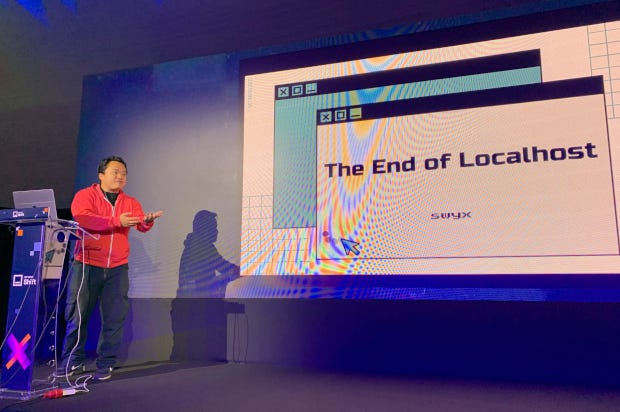
Databricks co-founder Reynold Xin describes the pain of running long agentic coding sessions locally as going "back to the dark ages," requiring tethered laptops to remain online. This personal frustration was a key driver for building persistent cloud sandboxes into their Omnigens platform.
The rise of AI agents drives demand for a new computing primitive: secure, small-footprint virtual machines that can start in milliseconds, execute a task, persist state, and then sleep. This optimizes CPU usage for the high-volume, short-burst workflows characteristic of agents.
