Get your free personalized podcast brief
We scan new podcasts and send you the top 5 insights daily.
Databricks co-founder Reynold Xin describes the pain of running long agentic coding sessions locally as going "back to the dark ages," requiring tethered laptops to remain online. This personal frustration was a key driver for building persistent cloud sandboxes into their Omnigens platform.
Related Insights
To unlock their full intelligence, AI agents require broad access to compute resources—like a sandboxed computer—not just a single tool or database. Providing only limited access wastes their cognitive capacity. The challenge is enabling this power securely, requiring innovations like new types of firewalls.

Running multiple, complex AI coding agents simultaneously is computationally prohibitive on local machines. Stripe's success relies on their ability to spin up numerous isolated cloud development environments in parallel, a crucial investment for any team serious about agentic engineering.
A significant and persistent challenge for deploying AI coding agents is 'repo setup': ensuring the agent’s sandboxed environment perfectly mirrors a human developer's setup, including all dependencies, secrets, and configurations. Solving the local developer environment story is key to solving the agent setup.

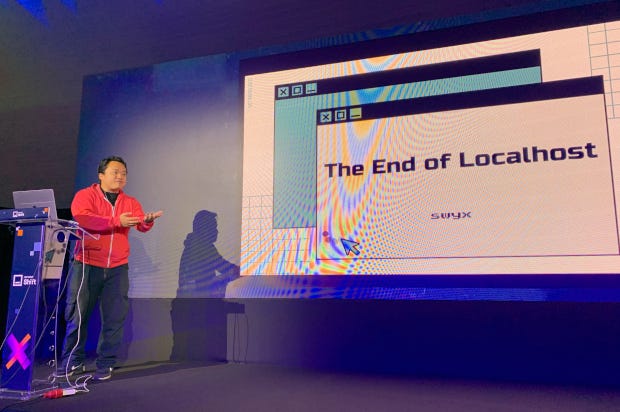
Daytona initially built dev environment automation for human engineers but quickly pivoted. Early feedback from AI agent builders revealed that agent infrastructure has fundamentally different requirements for speed, statefulness, and scale—a non-obvious distinction at the time that proved critical to finding product-market fit.
For a coding agent to be genuinely autonomous, it cannot just run in a user's local workspace. Google's Jules agent is designed with its own dedicated cloud environment. This architecture allows it to execute complex, multi-day tasks independently, a key differentiator from agents that require a user's machine to be active.
![⚡ [AIE CODE Preview] Inside Google Labs: Building The Gemini Coding Agent — Jed Borovik, Jules thumbnail](https://assets.flightcast.com/V2Uploads/nvaja2542wefzb8rjg5f519m/01K4D8FB4MNA071BM5ZDSMH34N/square.jpg)
While local coding agents have product-market fit today, OpenAI's Michael Bolin argues the long-term trend is remote agents. To achieve true automation—like having an agent autonomously tackle every new bug ticket—workloads must run in the cloud, unconstrained by a developer's personal machine.

The true capability of AI agents comes not just from the language model, but from having a full computing environment at their disposal. Vercel's internal data agent, D0, succeeds because it can write and run Python code, query Snowflake, and search the web within a sandbox environment.
A critical, non-obvious requirement for enterprise adoption of AI agents is the ability to contain their 'blast radius.' Platforms must offer sandboxed environments where agents can work without the risk of making catastrophic errors, such as deleting entire datasets—a problem that has reportedly already caused outages at Amazon.

A new wave of AI agents from companies like Manus and Adaptive are launching with a core "My Computer" feature. This signals a critical realization: to be truly useful, agents must move beyond cloud-only environments and gain access to local files and applications on a user's personal machine.

As AI agents evolve from information retrieval to active work (coding, QA testing, running simulations), they require dedicated, sandboxed computational environments. This creates a new infrastructure layer where every agent is provisioned its own 'computer,' moving far beyond simple API calls and creating a massive market opportunity.
