Get your free personalized podcast brief
We scan new podcasts and send you the top 5 insights daily.
Beyond simple quantitative screens, AI can now identify companies fitting complex, qualitative theses. For example, it can find "high-performing businesses with temporary, non-structural hiccups." This requires synthesizing business model quality, recent performance issues, and the nature of those issues—a task previously reliant on serendipity.
![How Investors are using AI - [Business Breakdowns, EP.240] thumbnail](https://megaphone.imgix.net/podcasts/f879fb14-024c-11f1-9c47-7bea8da34fd0/image/56ffcbcc6e03475c408ac0e35a01510d.jpg?ixlib=rails-4.3.1&max-w=3000&max-h=3000&fit=crop&auto=format,compress)
Related Insights
AI's primary value in pre-buy research isn't just accelerating diligence on promising ideas. It's about rapidly surfacing deal-breakers—like misaligned management incentives or existential risks—allowing analysts to discard flawed theses much earlier in the process and focus their deep research time more effectively.
As platforms like AlphaSense automate the grunt work of research, the advantage is no longer in finding information. The new "alpha" for investors comes from asking better, more creative questions, identifying cross-industry trends, and being more adept at prompting the AI to uncover non-obvious connections.

The discipline of writing down your thought process is crucial for decision analysis. AI now amplifies this by creating a searchable, analyzable record of your thinking over time, helping you identify blind spots and get objective feedback on your reasoning.

Historically, investment tech focused on speed. Modern AI, like AlphaGo, offers something new: inhuman intelligence that reveals novel insights and strategies humans miss. For investors, this means moving beyond automation to using AI as a tool for generating genuine alpha through superior inference.
WCM avoids generic AI use cases. Instead, they've built a "research partner" AI model specifically tuned to codify and diagnose their core concepts of "moat trajectory" and "culture." This allows them to amplify their unique edge by systematically flagging changes across a vast universe of data, rather than just automating simple tasks.
Agentic AI is most advanced in software engineering because code provides a constrained, text-based, and verifiable environment. AI agents can now operate for hours, understanding codebases and fixing errors. This iterative reasoning process is a direct preview of how AI will eventually perform long-running, complex investment research tasks.
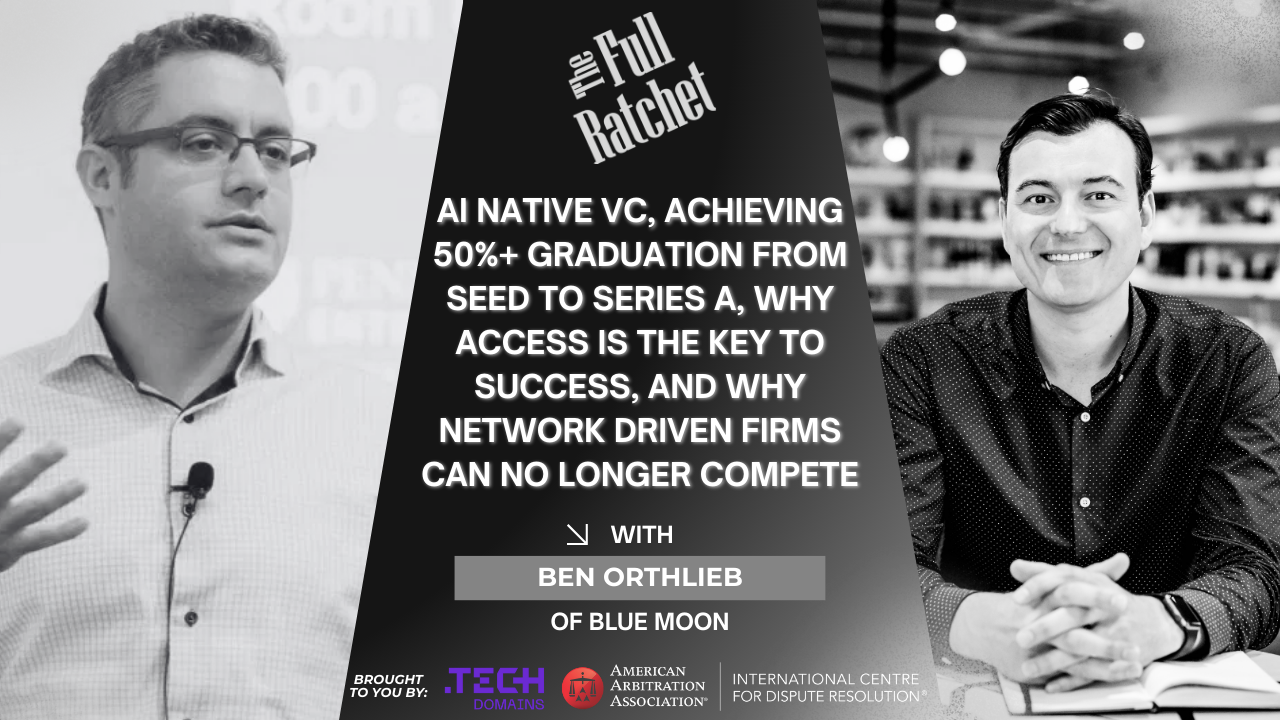
An AI-native VC firm operates like a product company, developing in-house intelligence platforms to amplify human judgment. This is a fundamental shift from simply using tools like Affinity or Harmonics, creating a defensible operational advantage in sourcing, screening, and winning deals.
Advanced AI tools can model an organization's internal investment beliefs and processes. This allows investment committees to use the AI to "red team" proposals by prompting it to generate a memo with a negative stance or to re-evaluate a deal based on a new assumption, like a net-zero mandate.
Cliff Asnes explains that integrating machine learning into investment processes involves a crucial trade-off. While AI models can identify complex, non-linear patterns that outperform traditional methods, their inner workings are often uninterpretable, forcing a departure from intuitively understood strategies.

Beyond automating data collection, investment firms can use AI to generate novel analytical frameworks. By asking AI to find new ways to plot and interpret data inputs, the team moves from rote data entry to higher-level analysis, using the technology as a creative and strategic partner.
