Get your free personalized podcast brief
We scan new podcasts and send you the top 5 insights daily.
The stereotype of a young, rural, unemployed male extremist is false. Data from January 6th shows 45% were business owners or white-collar professionals like doctors and engineers. The new face of political violence is educated, employed, and middle-class.

Related Insights
Political violence and extreme polarization are symptoms of deeper economic anxieties. When people feel economically insecure, they retreat into tribal identities and become susceptible to narratives of anger, which can escalate into violence.

The number one threat to the United States is not a foreign government or fringe militia, but tens of millions of mainstream Americans who now support political violence. This normalization of violence within the body politic represents a new, more dangerous era.
While mainstream liberal politics often frames young men as 'the problem,' the far right has actively courted this disenfranchised group. This political vacuum allowed extremist ideologies to fill the void, capturing a significant and politically potent demographic by acknowledging their struggles.

Mass support for political violence creates a crucial motivator for volatile individuals: social approval. The expectation that their actions will be celebrated by millions nudges them over the edge to commit violent acts, a dynamic amplified by social media.
The common narrative that most political violence comes from the right is based on data starting in the 1990s. Analysis since 2015 shows a new era of 'violent populism' with violence becoming heavily balanced between the left and the right.
America's political class is a gerontocracy, but young staffers wield significant influence. These staffers are deeply immersed in the most extreme online political content, effectively mainlining radical ideologies from platforms like X directly into the heart of policy-making.
The inability for young people to afford assets like housing creates massive inequality and fear. This economic desperation makes them susceptible to populist leaders who redirect their anger towards political opponents, ultimately sparking violence.

Well-off individuals engage in political violence because they are terrified that the opposing party, upon winning, will dismantle their way of life, future, and their children's future. This perceived existential threat makes them willing to risk their comfortable lives.
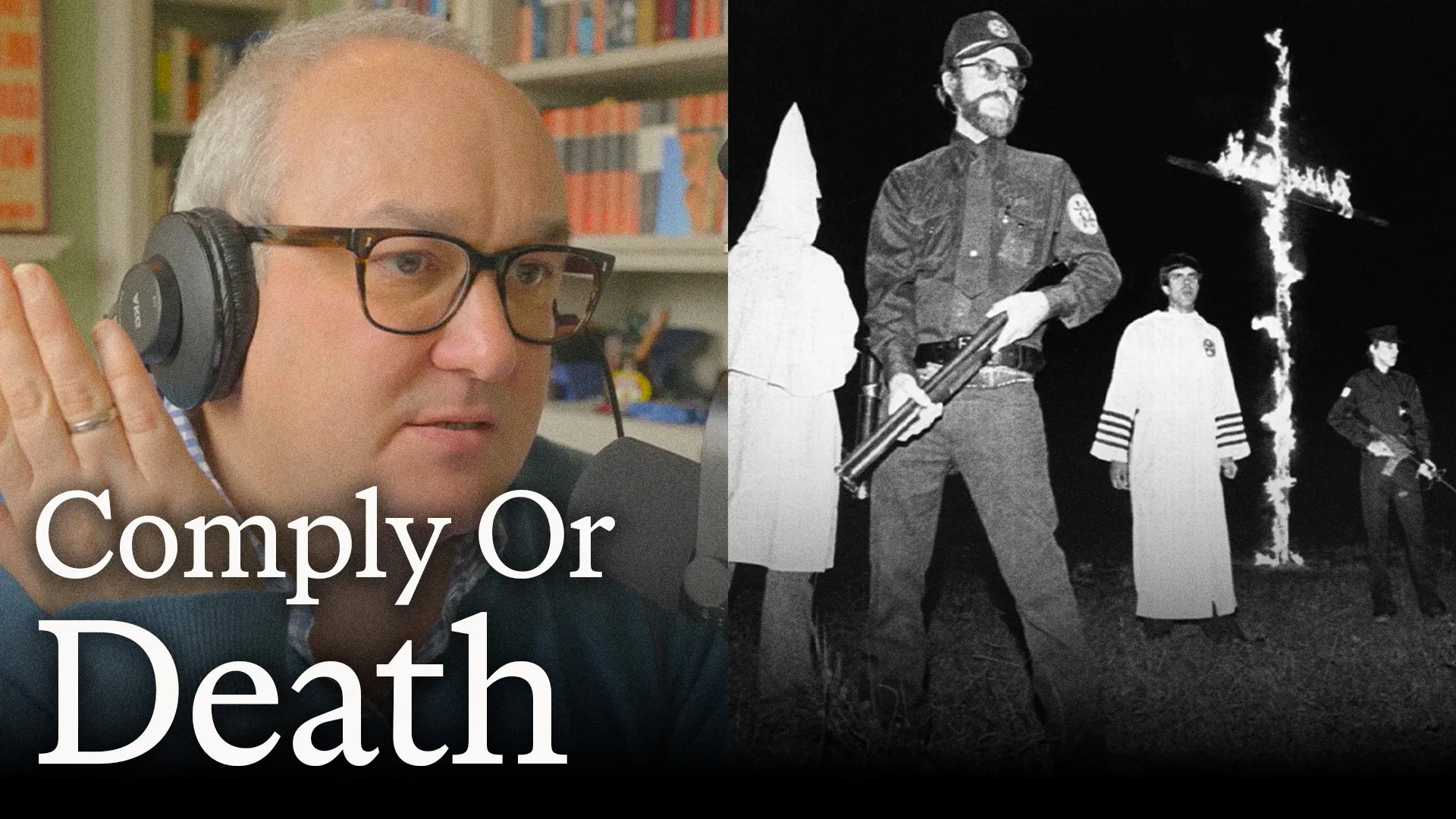
Contrary to the image of a fringe movement, the Klan was composed of and led by the Southern elite. Eyewitness accounts consistently identified lawyers, doctors, planters, and sheriffs as perpetrators of the violence. This highlights how extremist movements can be driven by the most powerful and 'respectable' members of a society.
The root cause of America's era of violent populism is not a single politician but two major social changes reaching a tipping point: the transition to a white-minority democracy and a massive wealth transfer to the top 1%, creating a zero-sum mentality for everyone else.