Get your free personalized podcast brief
We scan new podcasts and send you the top 5 insights daily.
11 Labs operates as a research lab, enterprise company, and consumer app simultaneously. This multi-pronged approach, while seemingly unfocused, allows them to dominate the entire audio vertical by controlling the full stack from foundational models to end-user applications.

Related Insights
Voice AI company ElevenLabs' rapid scaling to $330M ARR defies the narrative that large labs will dominate all AI verticals. Their singular focus allows them to build a superior, more opinionated "best-in-class" product that generalist models cannot easily replicate.

The explosive growth of AI applications like ElevenLabs is driven by a step-function change in value. They replace processes that cost thousands of dollars and weeks of time with a solution that costs $30 and takes 10 minutes. This massive ROI compression makes adoption a no-brainer for customers.

By starting before the ChatGPT boom, ElevenLabs secured two key advantages: less competition for top research talent, allowing them to hire "true missionaries," and a crucial head start to develop their technology before the market became saturated with competitors.
ElevenLabs' defense against giants isn't just a better text-to-speech model. Their strategy focuses on building deep, workflow-specific platforms for agents and creatives. This includes features like CRM integrations and collaboration tools, creating a sticky application layer that a foundational model alone cannot replicate.
While large language models are a game of scale, ElevenLabs argues that specialized AI domains like audio are won through architectural breakthroughs. The key is not massive compute but a small pool of elite researchers (estimated at 50-100 globally). This focus on talent and novel model design allows a smaller company to outperform tech giants.

To avoid choosing between deep research and product development, ElevenLabs organizes teams into problem-focused "labs." Each lab, a mix of researchers, engineers, and operators, tackles a specific problem (e.g., voice or agents), sequencing deep research first before building a product layer on top. This structure allows for both foundational breakthroughs and market-facing execution.
ElevenLabs' CEO sees their cutting-edge research as a temporary advantage—a 6-12 month head start. The real, long-term defensibility comes from using that time to build a superior product layer and a robust ecosystem of integrations, workflows, and brand. This strategy accepts model commoditization and focuses on building durable value on top of the technology.
While AI companies with usage-based APIs like ElevenLabs can grow incredibly fast, their easy-to-implement nature is a double-edged sword. As costs scale for developers, the same simplicity that drives adoption also makes it trivial to swap them out for a cheaper alternative, creating underlying fragility.

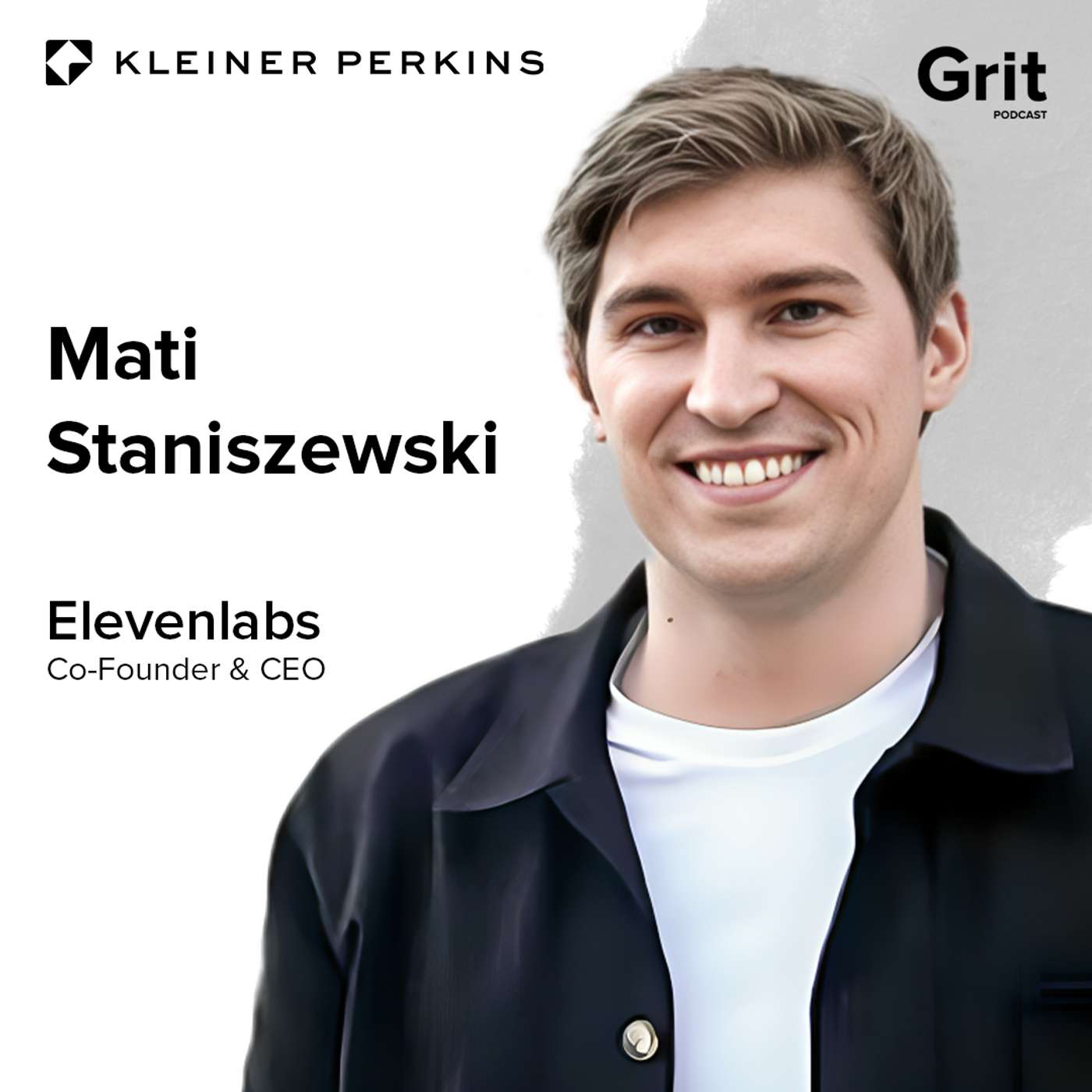
CEO Mati Staniszewski co-founded ElevenLabs after being frustrated by the Polish practice of dubbing foreign films with a single, monotonous voice. This hyper-specific, personal pain point became the catalyst for building a leading AI voice company, proving that massive opportunities can hide in niche problems.
Contrary to typical advice, ElevenLabs targeted multiple customer segments simultaneously. This worked because they first built a best-in-class foundational AI model, attracting diverse users. They then hired founder-type leaders to own and grow each vertical-specific product, treating them as separate business units.
