Get your free personalized podcast brief
We scan new podcasts and send you the top 5 insights daily.
While early differences existed, the Christian East and West only began moving in truly different directions in the 11th century. Western reforms to make the priesthood more monastic—introducing clerical celibacy and papal infallibility—created practical divides that made the schism permanent.

Related Insights
Protestantism offered a direct route to heaven through good deeds and faith, eliminating the need to pay the Catholic Church for "indulgences." This reframes a major religious schism as an appealing financial proposition for a populace being heavily taxed for salvation.
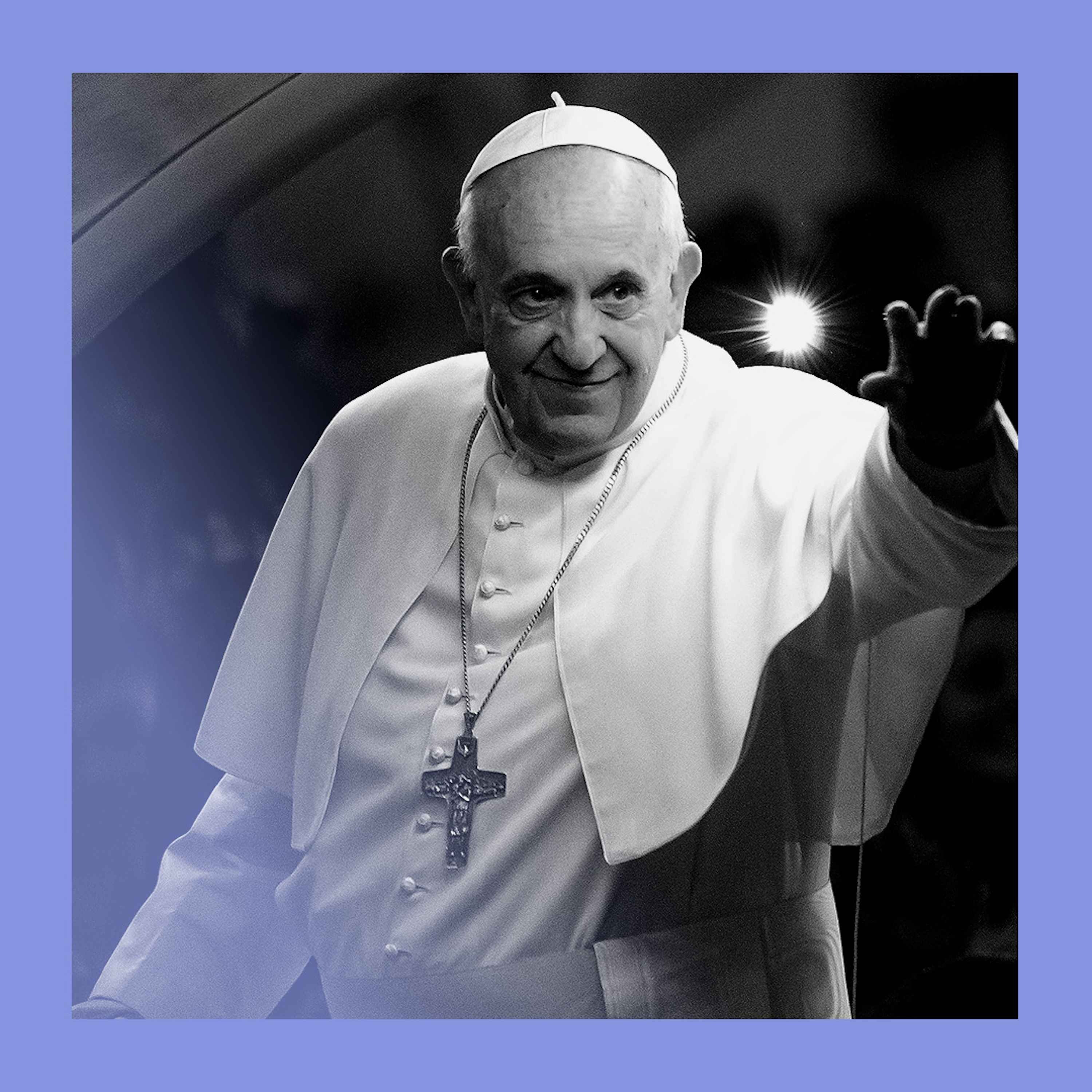
While some speculated Pope Francis's reformist energy was atonement for his past during Argentina's dirty war, it was more likely driven by a forward-looking goal. His primary motivation was to transform the public image of the Catholic Church from a troubled, rigid institution into a welcoming "place of mercy for everybody," a mission he embodied daily.
The two dominant powers, Rome and Persia, engaged in a decades-long, civilization-shattering war that left both empires fiscally and militarily broken. This created a massive power vacuum, allowing newly unified Arab tribes to expand with astonishing speed into unguarded territories.
Unlike Western Europe, where power was decentralized, Constantinople's strategic location naturally encouraged centralization. Its geographic dominance was so profound that it shaped both the Byzantine and Ottoman empires into highly centralized states, a rarity for the pre-modern world.
Unlike the personal, lord-vassal ties defining Western European power, Byzantine society was built around a centralized, institutional emperor. Western visitors were awed by the grandeur but found the courtly protocols and lack of personal access to the emperor to be distant and arrogant.
The printing press, a technology financed by the Catholic Church to solidify its power, was weaponized by Martin Luther to dismantle that same power. By printing pamphlets with bullet-pointed arguments, he bypassed the establishment's information monopoly, acting as the first mass-media disruptor.
Far from being a rubber stamp, the Catholic Church's process for declaring a miracle is a lengthy, forensic investigation. It employs independent medical experts who are predisposed to find scientific explanations and historically used a 'Devil's Advocate' to argue against sainthood. This rigorous skepticism is designed to ensure the process remains credible.

Unlike secular models designed for diverse values, Catholic AI is built with the primary goal of accurately representing and adhering to the Magisterium (the Church's teaching authority). Every design choice serves this fidelity.

During the 5th and 6th centuries, celebrating the Nativity became a key way for the Byzantine church to counter debates about Christ's nature. The holiday served as a historical anchor, reinforcing that Jesus was a real person who lived, not a demigod or abstract spirit.
Faced with the shocking rise of the Arab Empire, Byzantines questioned if their use of religious icons was angering God. The success of the aniconic Arabs suggested that adopting a stricter, image-free worship might be the key to divine favor and military survival.