Get your free personalized podcast brief
We scan new podcasts and send you the top 5 insights daily.
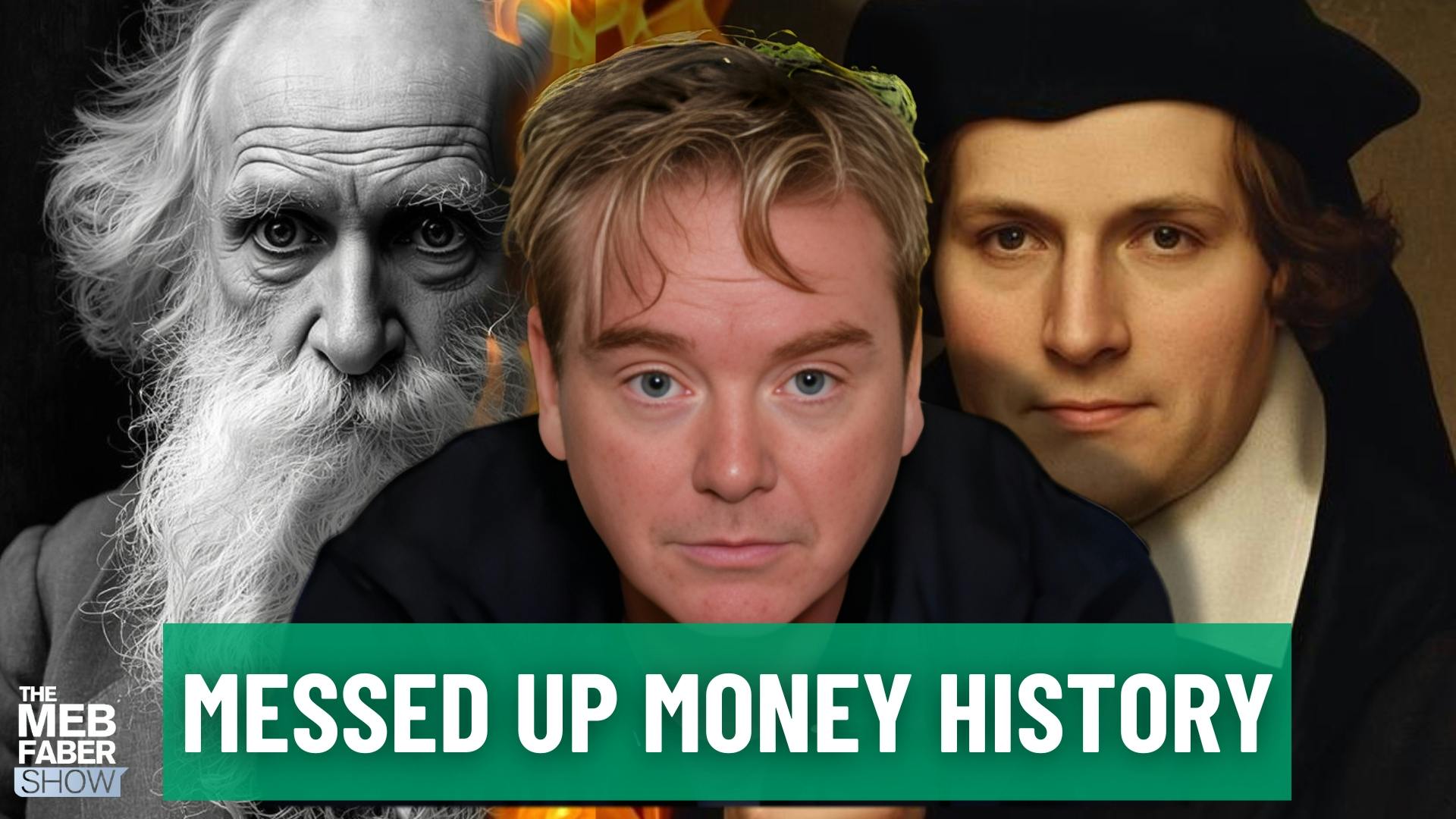
Protestantism offered a direct route to heaven through good deeds and faith, eliminating the need to pay the Catholic Church for "indulgences." This reframes a major religious schism as an appealing financial proposition for a populace being heavily taxed for salvation.
Related Insights
The printing press wasn't conceived for Bibles or intellectual enlightenment. It was a commercial hustle by Gutenberg to automate the production of "indulgences"—paid certificates from the Catholic Church promising salvation. The press solved a production bottleneck for a highly profitable product.
Contrary to popular belief, Nordic countries are not socialist. They operate on a capitalist framework with private markets. Their extensive social safety nets are funded by extremely high taxes on everyone, including the middle and lower classes—a model fundamentally different from socialism's state ownership of production.

The only historically effective method to resolve deep-rooted religious and ideological conflicts is to shift focus toward shared economic prosperity. Alliances like the Abraham Accords create tangible incentives for peace that ideology alone cannot, by making life demonstrably better for citizens.

The printing press, a technology financed by the Catholic Church to solidify its power, was weaponized by Martin Luther to dismantle that same power. By printing pamphlets with bullet-pointed arguments, he bypassed the establishment's information monopoly, acting as the first mass-media disruptor.
Tax policy is a reflection of societal values. By taxing capital gains at a lower rate than ordinary income, the U.S. tax code inherently suggests that wealth generated from existing money (assets, stocks) is more valuable or 'noble' than wealth generated from work and labor.

Despite emotional rhetoric, human behavior is fundamentally driven by incentives. Even the most ardent socialists will act as capitalists when presented with direct personal gain, revealing that incentive-based economics is a core part of human nature.

Despite narratives of higher purpose, the bedrock of modern life is economic specialization. This system ensures survival and allows for hyper-specialization, which is why economic disruptions so easily unravel societal stability and lead to global conflict.

Before becoming a corporate buzzword for mergers, "synergy" first appeared in the 1600s to describe the cooperation between human will and divine grace. It later became jargon in physiology and pharmacology before entering the business lexicon in the 1950s, demonstrating how words evolve across different professional fields.
History demonstrates a direct, causal link between widening inequality and violent societal collapse. When a large portion of the population finds the system unbearable, it leads to events like the French Revolution—a blunt cause-and-effect relationship often sanitized in modern discourse.

The financial system is made intentionally complex not by accident, but as a method of control. This complexity prevents the average person from understanding how the system is rigged against them, making them easier to manipulate and ensuring they won't take action to protect their own interests.