Get your free personalized podcast brief
We scan new podcasts and send you the top 5 insights daily.
The concept of 'man-unmanned teaming' is operationally flawed. Autonomous systems have different speeds, ranges, and signatures than manned platforms. Operating them together makes the robots a liability that humans must slow down for and protect, defeating their purpose. They must operate separately.

Related Insights
Wargaming suggests that instead of flying alongside manned aircraft, unmanned systems are most effective when decoupled. Their best roles are as long-endurance decoys to confuse incoming missiles or as autonomous swarms in a designated kill zone.
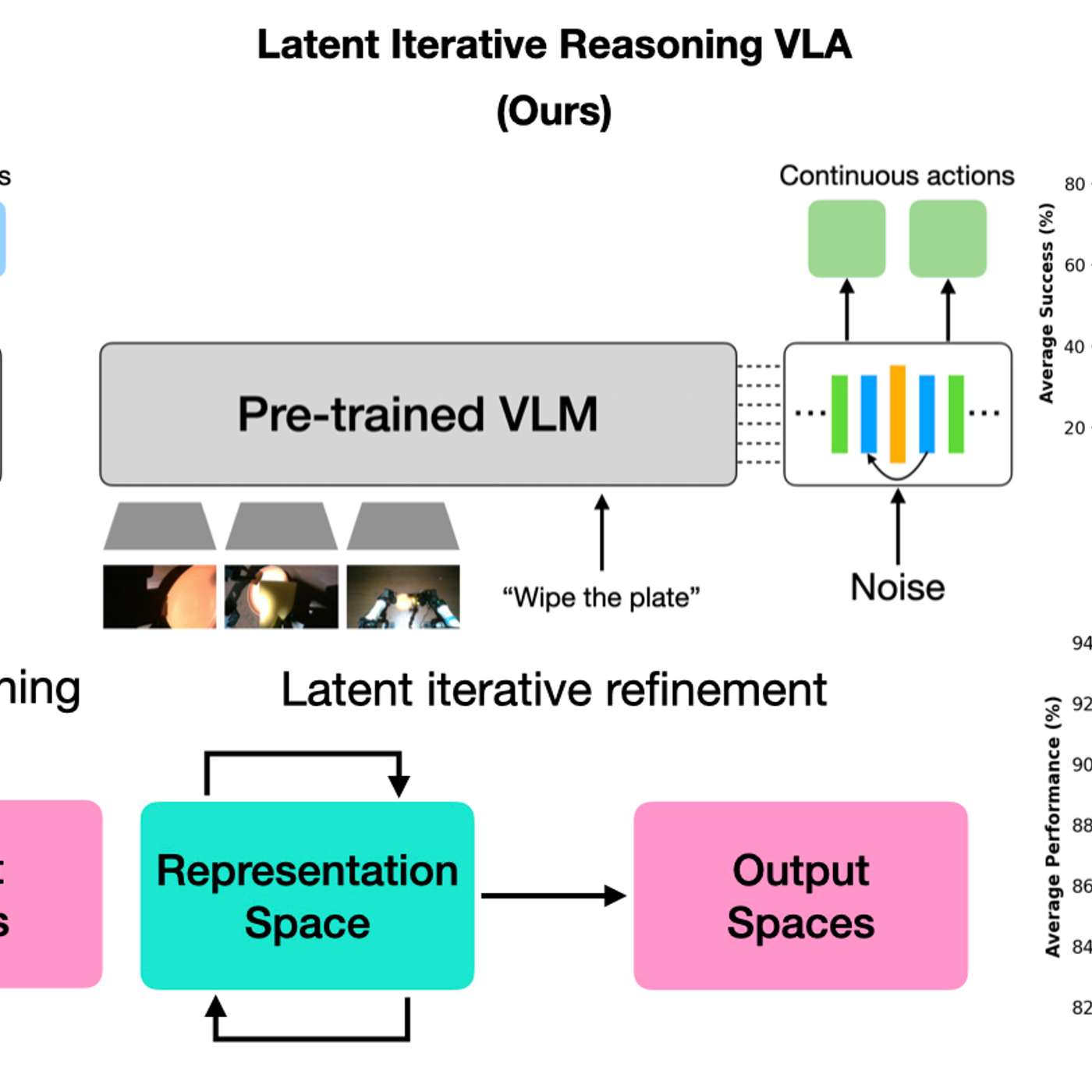
While letting a robot 'think' longer improves decision accuracy in lab tests, this added latency poses a significant risk in the real world. If the environment changes during the robot's reasoning period, its final decision may be outdated and dangerous, questioning its practical deployability.
The ethical stance of requiring a human in the loop for autonomous weapons faces a serious strategic problem. A weapon system with a human decision-maker will likely lose to a fully autonomous one, forcing a choice between ethics and military effectiveness.

Defense tech firm Smack Technologies clarifies the objective is not to remove humans entirely. Instead, AI should handle low-value tasks to free up personnel for critical, high-value decisions. This framework, 'intelligent autonomy,' orchestrates manned and unmanned systems while keeping humans in the loop.

Recent wargames show that pairing manned and unmanned systems is often counterproductive. The need to protect the supposedly "expendable" robot compromises the mission, as it can't be put at risk if it endangers the human crew nearby, negating its core value.
Creating a separate command for drones and autonomy could segregate these capabilities, much like CyberCom. Instead of being integrated into combined arms at the lowest level, they become a resource that operational commanders must request through layers of bureaucracy, hindering agility.

Waymo robo-taxis are calling 911 because passengers are falling asleep. This isn't a critical system failure, but a human-robot interaction problem. It reveals that successful automation requires solving not just complex technical challenges but also simple, unpredictable human edge cases that arise in real-world deployment.

Contrary to the notion of automated warfare, the proliferation of drones is highly manpower-intensive. It requires dedicated units for operation, maintenance, and countering enemy drones. Relying solely on technology creates a single point of failure and doesn't eliminate the need for robust force generation and management.

The key benefit of unmanned vessels isn't just saving on crew. It's the ability to remove all human-centric subsystems (latrines, galleys, etc.), allowing for a complete redesign optimized for naval architecture, speed, range, and payload.

The rise of drones is more than an incremental improvement; it's a paradigm shift. Warfare is moving from human-manned systems where lives are always at risk to autonomous ones where mission success hinges on technological reliability. This changes cost-benefit analyses and reduces direct human exposure in conflict.
