Get your free personalized podcast brief
We scan new podcasts and send you the top 5 insights daily.
A key criterion for selecting tools is now their ability to be controlled by AI agents. Gabor chose Atlassian (Jira/Confluence) specifically because its Model-Component-Package (MCP) allows Claude Code agents to connect and operate the software directly, a critical factor for automating the development lifecycle.
Related Insights
When building AI-driven workflows, the primary interface becomes the API, not the GUI. A tool's value is determined by its programmatic control. Consequently, a clunky UI with a strong API like Salesforce can be superior for AI integration than a tool with a slick UI but a weak API.
![Claude Code marketing masterclass [from idea to making $$] thumbnail](https://assets.flightcast.com/workspaces/vde7jbg9rfhsyiw9o46f9sj8/podcasts/ordbkg8yojpehffas7vr7qpc/t8c97hs8oy7a2xnobsfu5p42.jpg)
A powerful workflow involves using multiple MCPs in a single AI chat. For example, a PM can ask Claude to pull requirements from a Confluence page and then compare them directly against a specific Figma design frame. The AI performs a gap analysis, catching discrepancies that are often missed during manual reviews.
To combat the problem of AI-generated 'spaghetti code,' Gabor first sets up empty documentation and ticketing systems. Forcing the AI agents to document decisions and work through tickets creates a replicable and maintainable app, avoiding the typical one-prompt mess.
The developer workflow is evolving beyond "vibe coding." New tools, like Anthropic's updated Claude Code desktop app, are being redesigned as command centers for managing multiple, parallel AI agent tasks across different projects. The developer's role is shifting from prompter to orchestrator of a fleet of agents.

Project management tools like Jira are not obsolete; they are positioned to become the coordination layer for AI agents. As autonomous agents work together on complex tasks, they will require standardized, headless systems for project management and knowledge sharing, creating a new market for agent coordination.
The term "agent" is overloaded. Claude Code agents excel at complex, immediate, human-supervised tasks (e.g., researching and writing a one-off PRD). In contrast, platforms like N8N or Lindy are better suited for building automated, recurring workflows that run on a schedule (e.g., daily competitor monitoring).

Instead of jumping between apps, top PMs use a central tool like Claude Desktop or Cursor as a 'home base.' They connect it to other services (Jira, GitHub, Sanity) via MCPs, allowing them to perform tasks and retrieve information without breaking their flow state.
Instead of integrating with existing SaaS tools, AI agents can be instructed on a high-level goal (e.g., 'track my relationships'). The agent can then determine the need for a CRM, write the code for it, and deploy it itself.
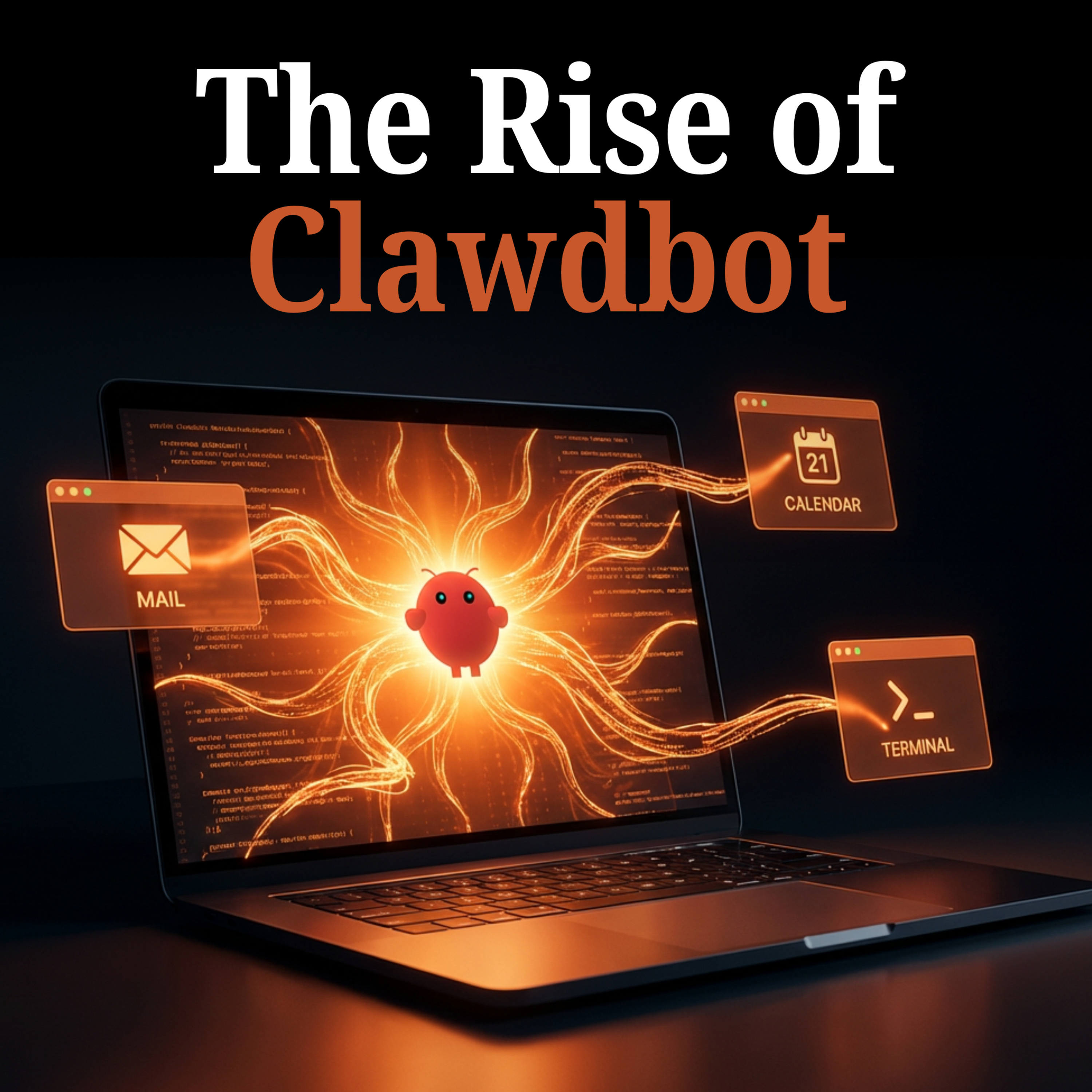
Instead of relying on a single, all-purpose coding agent, the most effective workflow involves using different agents for their specific strengths. For example, using the 'Friday' agent for UI tasks, 'Charlie' for code reviews, and 'Claude Code' for research and backend logic.

To maximize an AI agent's effectiveness, treat it like a team member, not just a tool. Integrate it directly into your company's communication and project management systems (like Slack). This ensures the agent has the full context necessary to perform its tasks.