Get your free personalized podcast brief
We scan new podcasts and send you the top 5 insights daily.
While competitors focus on subscription models for their AI tools, Google's primary strategy is to leverage its core advertising business. By integrating sponsored results into its AI-powered search summaries, Google is the first to turn on an ad-based revenue model for generative AI at scale, posing a significant threat to subscription-reliant players like OpenAI.

Related Insights
GenAI transforms advertising's core pillars. It enables hyper-personalized creatives at scale, democratizes ad production for smaller businesses, and fundamentally enhances the two most critical functions of any ad platform: predicting user behavior and measuring campaign outcomes.

Tech giants like Google and Meta are positioned to offer their premium AI models for free, leveraging their massive ad-based business models. This strategy aims to cut off OpenAI's primary revenue stream from $20/month subscriptions. For incumbents, subsidizing AI is a strategic play to acquire users and boost market capitalization.
There is emerging evidence of a "pay-to-play" dynamic in AI search. Platforms like ChatGPT seem to disproportionately cite content from sources with which they have commercial deals, such as the Financial Times and Reddit. This suggests paid partnerships can heavily influence visibility in AI-generated results.

Contrary to popular narrative, Google's AI products have likely surpassed OpenAI in monthly users. By bundling AI into its existing ecosystem (2B users for AI Overviews, 650M for the Gemini app), Google leverages its massive distribution to win consumer adoption, even if user intent is less direct than visiting ChatGPT.

Your reliance on Google AdWords is a critical vulnerability. As user attention shifts from traditional search to AI-powered chat, search volume will drop, competition for remaining traffic will intensify, and your customer acquisition costs will skyrocket. This isn't a future problem; it is happening now.

As competitors like Google's Gemini close the quality gap with ChatGPT, OpenAI loses its unique product advantage. This commoditization will force them to adopt advertising sooner than planned to sustain their massive operational costs and offer a competitive free product, despite claims of pausing such efforts.
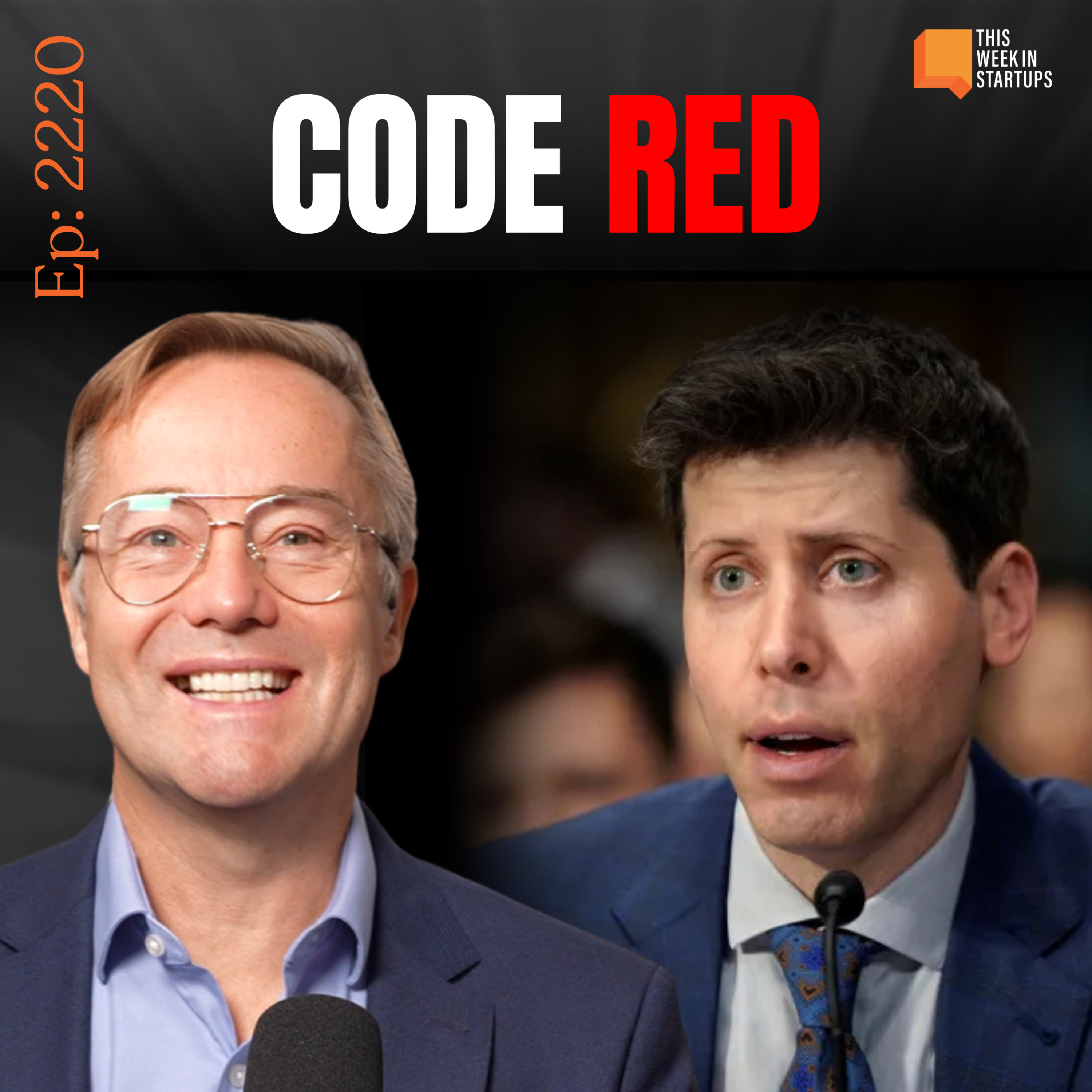
OpenAI is now reacting to Google's advancements with Gemini 3, a complete reversal from three years ago. Google's strengths in infrastructure, proprietary chips, data, and financial stability are giving it a significant competitive edge, forcing OpenAI to delay initiatives and refocus on its core ChatGPT product.
As the current low-cost producer of AI tokens via its custom TPUs, Google's rational strategy is to operate at low or even negative margins. This "sucks the economic oxygen out of the AI ecosystem," making it difficult for capital-dependent competitors to justify their high costs and raise new funding rounds.
![Gavin Baker - Nvidia v. Google, Scaling Laws, and the Economics of AI - [Invest Like the Best, EP.451] thumbnail](https://megaphone.imgix.net/podcasts/d97fee14-d4d7-11f0-8951-8324b640c1c1/image/d3a8b5ecbf3957de5b91f278a191c9ff.jpg?ixlib=rails-4.3.1&max-w=3000&max-h=3000&fit=crop&auto=format,compress)
Google can dedicate nearly all its resources to AI product development because its core business handles infrastructure and funding. In contrast, OpenAI must constantly focus on fundraising and infrastructure build-out. This mirrors the dynamic where a focused Facebook outmaneuvered a distracted MySpace, highlighting a critical incumbent advantage.
While OpenAI leads in AI buzz, Google's true advantage is its established ecosystem of Chrome, Search, Android, and Cloud. Newcomers like OpenAI aspire to build this integrated powerhouse, but Google already is one, making its business far more resilient even if its own AI stumbles.
