Get your free personalized podcast brief
We scan new podcasts and send you the top 5 insights daily.
Start with a 'Minimal Useful Agent' that performs a simple, bounded task like drafting replies for human approval or triaging inbound requests. This 'draft and approve' model reduces risk, builds customer trust, and allows you to earn autonomy over time.

Related Insights
To avoid failure, launch AI agents with high human control and low agency, such as suggesting actions to an operator. As the agent proves reliable and you collect performance data, you can gradually increase its autonomy. This phased approach minimizes risk and builds user trust.

Instead of forcing full autonomy, the AI agent allows teams to start with human approvals at key stages. This 'human-in-the-loop' model builds trust and enables organizations to incrementally automate complex support workflows as they grow more confident in the system's reliability.
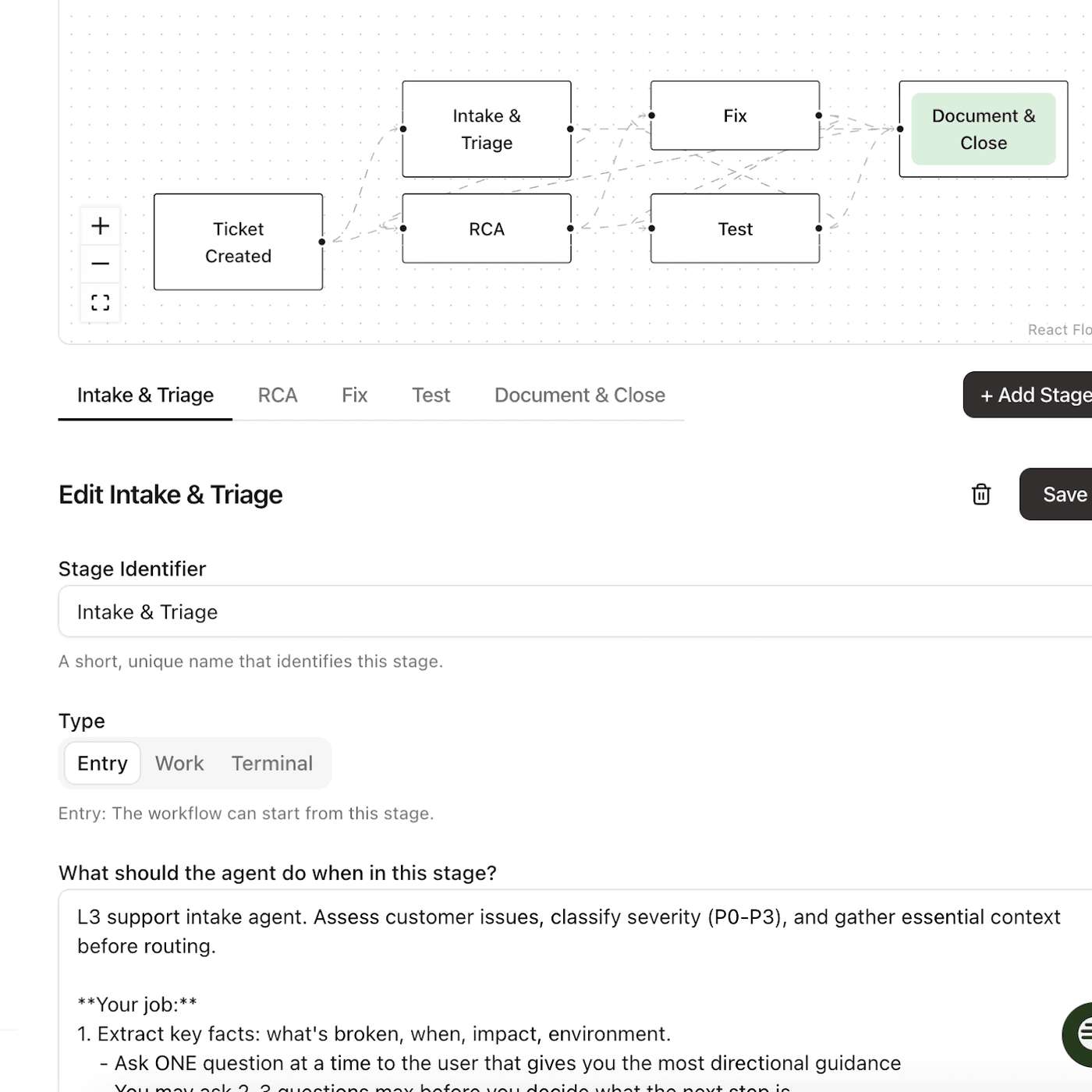
The key to creating effective and reliable AI workflows is distinguishing between tasks AI excels at (mechanical, repetitive actions) and those it struggles with (judgment, nuanced decisions). Focus on automating the mechanical parts first to build a valuable and trustworthy product.
To overcome employee fear, don't deploy a fully autonomous AI agent on day one. Instead, introduce it as a hybrid assistant within existing tools like Slack. Start with it asking questions, then suggesting actions, and only transition to full automation after the team trusts it and sees its value.
Don't try to build a complex AI agent from day one. SaaStr's AI VP of Customer Success started as a basic project management portal to replace a clunky tool. Its advanced, agentic capabilities were layered on over months as real user needs became clear post-launch.

Initial adoption of AI agents was driven by solving small, personal annoyances like ordering groceries, dubbed "computer errands." This low-stakes entry point helped users build familiarity and trust with the agent before graduating them to more complex, high-value professional work.

Current AI workflows are not fully autonomous and require significant human oversight, meaning immediate efficiency gains are limited. By framing these systems as "interns" that need to be "babysat" and trained, organizations can set realistic expectations and gradually build the user trust necessary for future autonomy.

The goal of AI in customer service isn't human replacement. Instead, use AI agents to handle predictable, repetitive queries instantly. This strategy frees up human staff to focus their time on complex, empathetic problem-solving where a personal connection is most valuable.
Prioritize using AI to support human agents internally. A co-pilot model equips agents with instant, accurate information, enabling them to resolve complex issues faster and provide a more natural, less-scripted customer experience.

To safely deploy a powerful AI agent, create clear guardrails. SaaStr distinguishes between tasks the agent can perform autonomously (pulling data, generating ideas) and actions that require human approval (sending a mass email). This two-layer approach builds trust and prevents potentially costly mistakes.
