Get your free personalized podcast brief
We scan new podcasts and send you the top 5 insights daily.
Beyond technology and cost, the most significant immediate barrier to scaling autonomous vehicle services is the fragmented, state-by-state regulatory approval process. This creates a complex and unpredictable patchwork of legal requirements that hinders rapid, nationwide expansion for all players in the industry.

Related Insights
Autonomous vehicle technology will likely become a commodity layer, with most manufacturers providing their cars to existing ride-sharing networks like Uber and Lyft. Only a few companies like Tesla have the brand and scale to pursue a vertically-integrated, closed-network strategy.
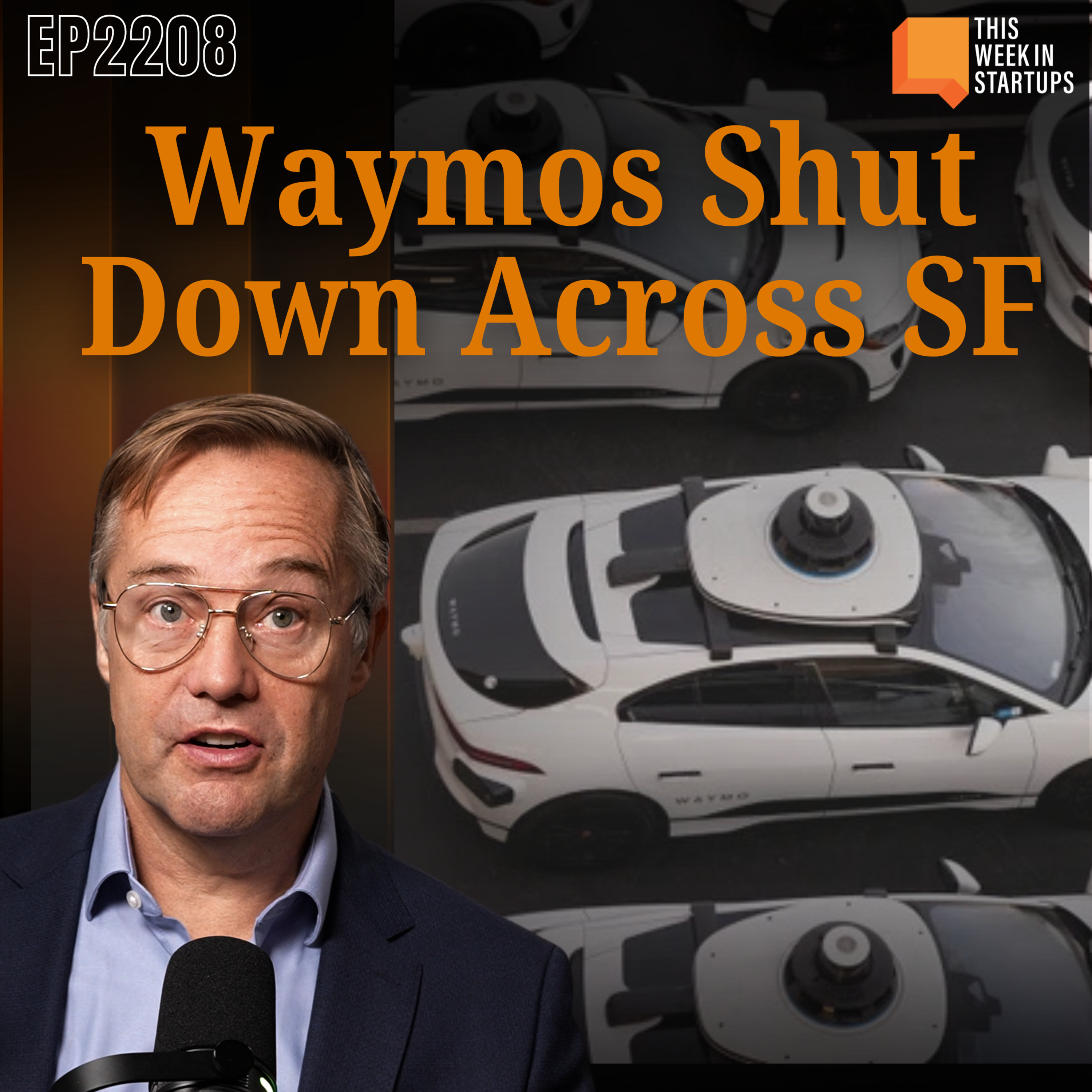
While its technology is advanced, Waymo's most significant competitive advantage is its head start in securing regulatory permits to operate and charge for rides. Competitors like Amazon's Zoox are far behind, not yet able to take paid passengers. This regulatory moat creates a powerful first-mover advantage in lucrative urban markets.

The key milestone for autonomous driving in 2026 is a rapid expansion of availability, not just technological progress. The forecast predicts access will jump from 15% to over 30% of the U.S. urban population in one year, signaling a shift from niche trials to a more widely accessible consumer service.
Buttigieg argues that while AVs can save thousands of lives, a conservative regulatory approach is paradoxically the fastest path to adoption. A handful of highly-publicized accidents can destroy public acceptance, so ensuring safety upfront is critical for long-term success, even if it slows initial deployment.

Contrary to their current stance, major AI labs will pivot to support national-level regulation. The motivation is strategic: a single, predictable federal framework is preferable to navigating an increasingly complex and contradictory patchwork of state-by-state AI laws, which stifles innovation and increases compliance costs.

Despite rapid software advances like deep learning, the deployment of self-driving cars was a 20-year process because it had to integrate with the mature automotive industry's supply chains, infrastructure, and business models. This serves as a reminder that AI's real-world impact is often constrained by the readiness of the sectors it aims to disrupt.

Waive's core strategy is generalization. By training a single, large AI on diverse global data, vehicles, and sensor sets, they can adapt to new cars and countries in months, not years. This avoids the AV 1.0 pitfall of building bespoke, infrastructure-heavy solutions for each new market.

Factory's CEO argues that regulating AI at the state level is ineffective. Like climate change or nuclear proliferation, AI is a global phenomenon. A rule in California has no bearing on development in China or Europe, making localized efforts largely symbolic.

AV companies naturally start in dense, wealthy areas. Uber sees an opportunity to solve this inequality by leveraging its existing supply and demand data in underserved areas. This allows it to make AV operations economically viable in transportation deserts, accelerating equitable access to the technology.

With Waymo's data showing a dramatic potential to reduce traffic deaths, the primary barrier to adoption is shifting from technology to politics. A neurosurgeon argues that moneyed interests and city councils are creating regulatory capture, blocking a proven public health intervention and framing a safety story as a risk story.
