Get your free personalized podcast brief
We scan new podcasts and send you the top 5 insights daily.
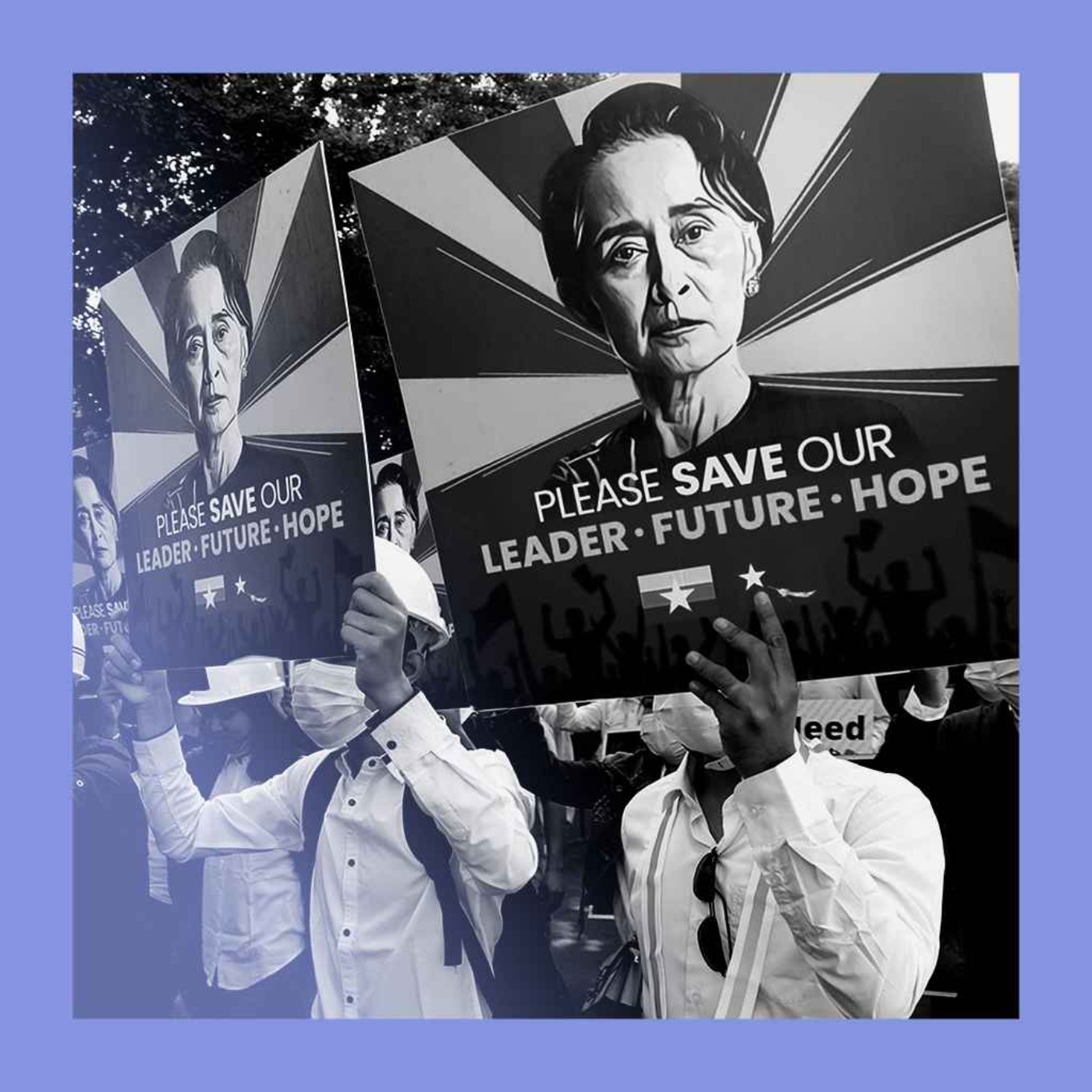
The military regime is comfortable managing violent conflict but is terrified of the symbolic power Aung San Suu Kyi holds over the populace. They believe her ability to inspire a massive, non-violent movement represents a greater threat to their rule than the ongoing armed resistance.
Related Insights
The widely condemned election is not for public legitimacy but serves as a potential internal political mechanism. Many in the military brass consider their leader, Min Aung Hlaing, to be inept and may use the election's outcome as a pretext to displace him and install new leadership.

Foreign diplomats appear ready to normalize relations with the junta for proof of Aung San Suu Kyi's well-being. This focus on a single individual, however flawed, risks eclipsing the dire situation of 55 million people suffering from war, displacement, and military rule.
The goal of nonviolent resistance is not to "melt the heart of the dictator" but to strategically create defections within their pillars of support. By growing large and diverse, a movement builds direct ties to elites in business, media, and security, systematically shredding their loyalty to the regime.

Political scientist Erika Chenoweth's research, despite her initial skepticism, shows nonviolent campaigns for radical change succeeded about 50% of the time, compared to only 25% for violent counterparts over the last century. This counters the common belief that power flows from the barrel of a gun.
The most potent threat to an authoritarian regime comes not from visible dissidents, who are often neutralized, but from patriotic loyalists within the system. These insiders believe the current leadership is corrupt and harming the country, making their patriotism a powerful tool that can be turned against the regime.

Citing Gandhi and the Civil Rights Movement, the most successful long-term protest strategies rely on peaceful non-resistance. Active resistance, even when justified, often escalates violence and cedes the moral high ground, making it a less effective tool for systemic change compared to disciplined, peaceful protest.

Dictatorships can tolerate individual criticism but actively suppress mechanisms that create common knowledge, like public assemblies or organized online groups. They understand that power rests on preventing citizens from realizing that their grievances are shared. Once dissent becomes common knowledge, coordinated revolt is possible, which no regime can withstand.

Myanmar's revolutionary forces were gaining until two external factors reversed their momentum. China cut supply lines to ethnic armed groups it previously backed, and the closure of USAID forced rebels to divert 60% of their military budget to humanitarian aid, enabling a junta comeback.
Dictatorships appear strong because they control the state apparatus and outlaw opposition. However, this same structure makes them weak. Their fundamental illegitimacy means they haven't been truly tested and are plagued by internal paranoia and a lack of trust, creating significant vulnerabilities.
![Darren Farber on Iran, China, and the Rise of Neoprimes - [Invest Like the Best, EP.474] thumbnail](https://megaphone.imgix.net/podcasts/ef669774-cccd-11ed-889b-c36caad6646f/image/158efdddfb983d2678b3530d484e8aa2.jpg?ixlib=rails-4.3.1&max-w=3000&max-h=3000&fit=crop&auto=format,compress)
Jane Fonda argues that defeating an authoritarian regime requires weakening its "pillars of support" like finance, military, and art. This is achieved through strategic noncompliance—strikes, boycotts, and mass actions that hit the economy—rather than traditional protests, which are less effective against entrenched power.
