Get your free personalized podcast brief
We scan new podcasts and send you the top 5 insights daily.
A feature request via text was converted into a Notion task with a screenshot. By @mentioning a Codex agent, a complete pull request with a preview URL was generated within 20 minutes, showcasing an instant, conversational development cycle.

Related Insights
Ben Tossel, a non-technical person, codes from his phone by using a GitHub app to manage pull requests and a Telegram bot to trigger his AI agent to make fixes or add features. This creates a powerful mobile coding workflow, treating the AI like a remote human programmer.

The widespread use of coding agents at Notion has amplified engineering output, leading to what co-founder Simon Last calls a 'more messy and chaotic' environment. This 'productive chaos' manifests as more ambitious pull requests and non-engineering teams, like design, building their own sophisticated prototyping tools.

Because AI agents operate autonomously, developers can now code collaboratively while on calls. They can brainstorm, kick off a feature build, and have it ready for production by the end of the meeting, transforming coding from a solo, heads-down activity to a social one.

Instead of a multi-week process involving PMs and engineers, a feature request in Slack can be assigned directly to an AI agent. The AI can understand the context from the thread, implement the change, and open a pull request, turning a simple request into a production feature with minimal human effort.
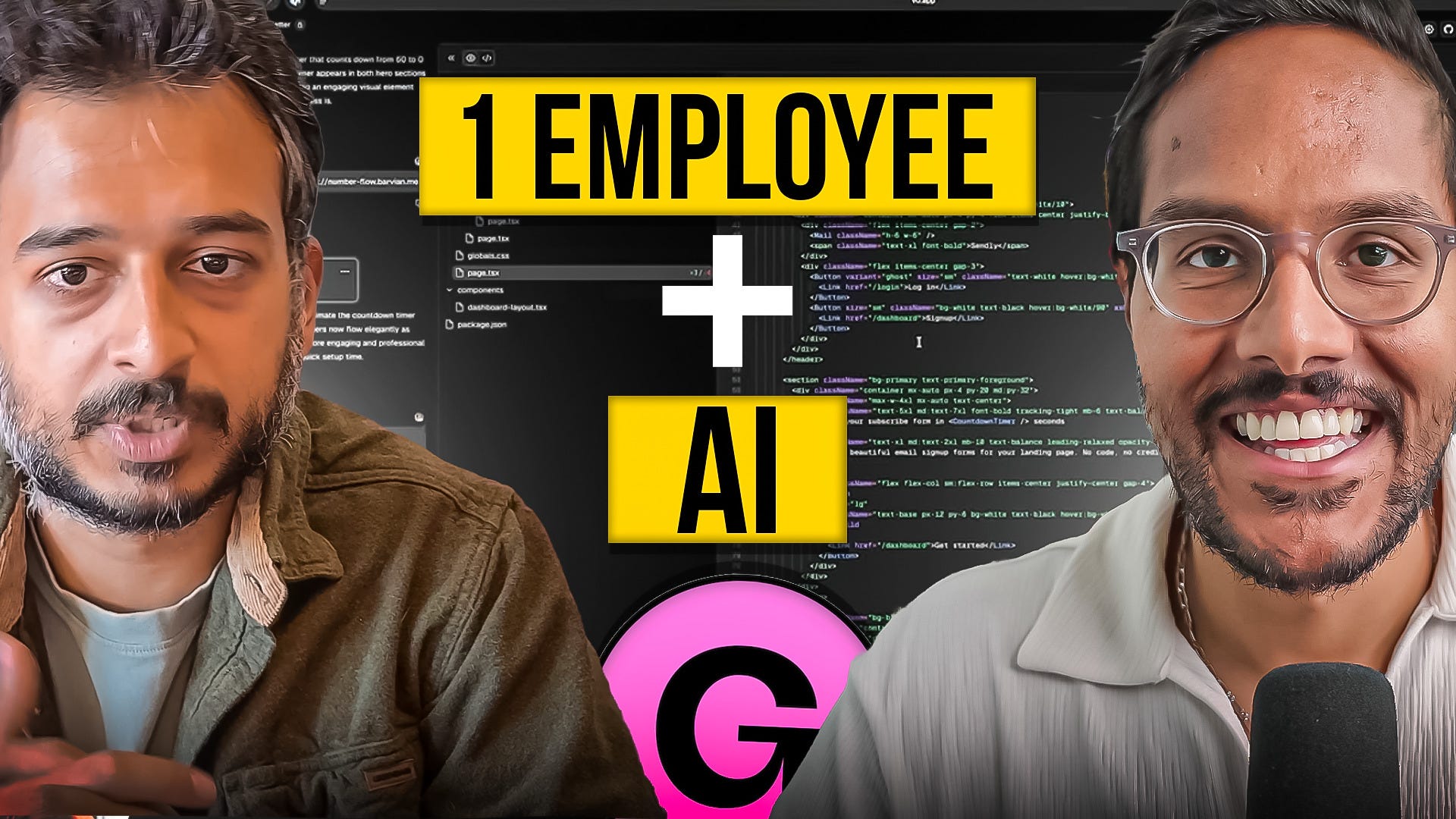
A design agency professional with no coding experience used the Moltbot agent to build 25 internal web services simply by describing the problems. This signals a paradigm shift where non-technical users can create their own hyper-personalized software, bypassing traditional development cycles and SaaS subscriptions.
Instead of writing code, engineers verbally describe a feature, use an AI to generate a detailed spec, and then point another AI agent at the spec to build the feature. The spec file becomes the source of truth, managed in version control.
Stripe engineers can initiate a full AI-driven coding task—including provisioning a dev environment and creating a pull request—simply by reacting to a Slack message with an emoji. This dramatically lowers the friction to start work by moving the entry point from a text editor to a chat app.

To compress feedback cycles, Coinbase built a tool that captures live audio feedback, uses an LLM to create a structured bug report in Linear, and then triggers an internal Slack bot to immediately begin authoring a pull request. This reduces the feedback-to-fix cycle from weeks to minutes.

Instead of writing detailed specs, a developer can copy conversations or take screenshots from community platforms like Discord. This raw user feedback becomes the direct starting point for a conversation with an AI coding assistant, dramatically shortening the development cycle.

Standard APIs for human developers are often too verbose for AI agents. Notion created agent-centric APIs, like a special markdown dialect and a SQLite interface, by treating the AI as a new type of user. This involved empirical testing to understand what formats agents are naturally good at using.