Get your free personalized podcast brief
We scan new podcasts and send you the top 5 insights daily.
Standard APIs for human developers are often too verbose for AI agents. Notion created agent-centric APIs, like a special markdown dialect and a SQLite interface, by treating the AI as a new type of user. This involved empirical testing to understand what formats agents are naturally good at using.

Related Insights
The creator realized AI agents don't browse websites with traditional user interfaces. The core product for an agent-native platform must be a set of API calls for interaction, news feeds, and browsing. This fundamentally rethinks product design for non-human users.

For companies building AI agents, the key indicator of a successful customer engagement is the availability of well-documented APIs. These APIs are essential for the agent to take action and look up data, which directly enables a superior, elevated experience from day one.
![Jesse Zhang - Building Decagon - [Invest Like the Best, EP.443] thumbnail](https://megaphone.imgix.net/podcasts/2cc4da2a-a266-11f0-ac41-9f5060c6f4ef/image/7df6dc347b875d4b90ae98f397bf1cb1.jpg?ixlib=rails-4.3.1&max-w=3000&max-h=3000&fit=crop&auto=format,compress)
Notion is creating a new, defensible market by positioning its platform not just for human work, but as a central hub where different third-party AI agents can interact, collaborate, and have their actions tracked. This strategy aims to make Notion the essential infrastructure for an emerging agent-driven workforce.

Unlike tools like Zapier where users manually construct logic, advanced AI agent platforms allow users to simply state their goal in natural language. The agent then autonomously determines the steps, writes necessary code, and executes the task, abstracting away the workflow.

The engineering role is shifting from direct coding to 'agent management.' Notion's co-founder Simon Last no longer types code; instead, he designs end-to-end tasks, assigns them to AI agents, and verifies the final output. This represents a fundamental change in the software development workflow.
To personalize his email-sorting agent, Notion's co-founder didn't manually label data. Instead, he prompted the agent to ask him questions about which emails to archive. This interactive 'interview' process allowed the agent to learn his preferences and generate its own rules from the conversation.
Notion's core vision has fundamentally changed because of AI. The co-founder explained their goal shifted from building the best tool for humans to *directly perform* work, to creating the best platform for humans to *manage agents* that do the work for them, using the same core primitives like pages and databases.
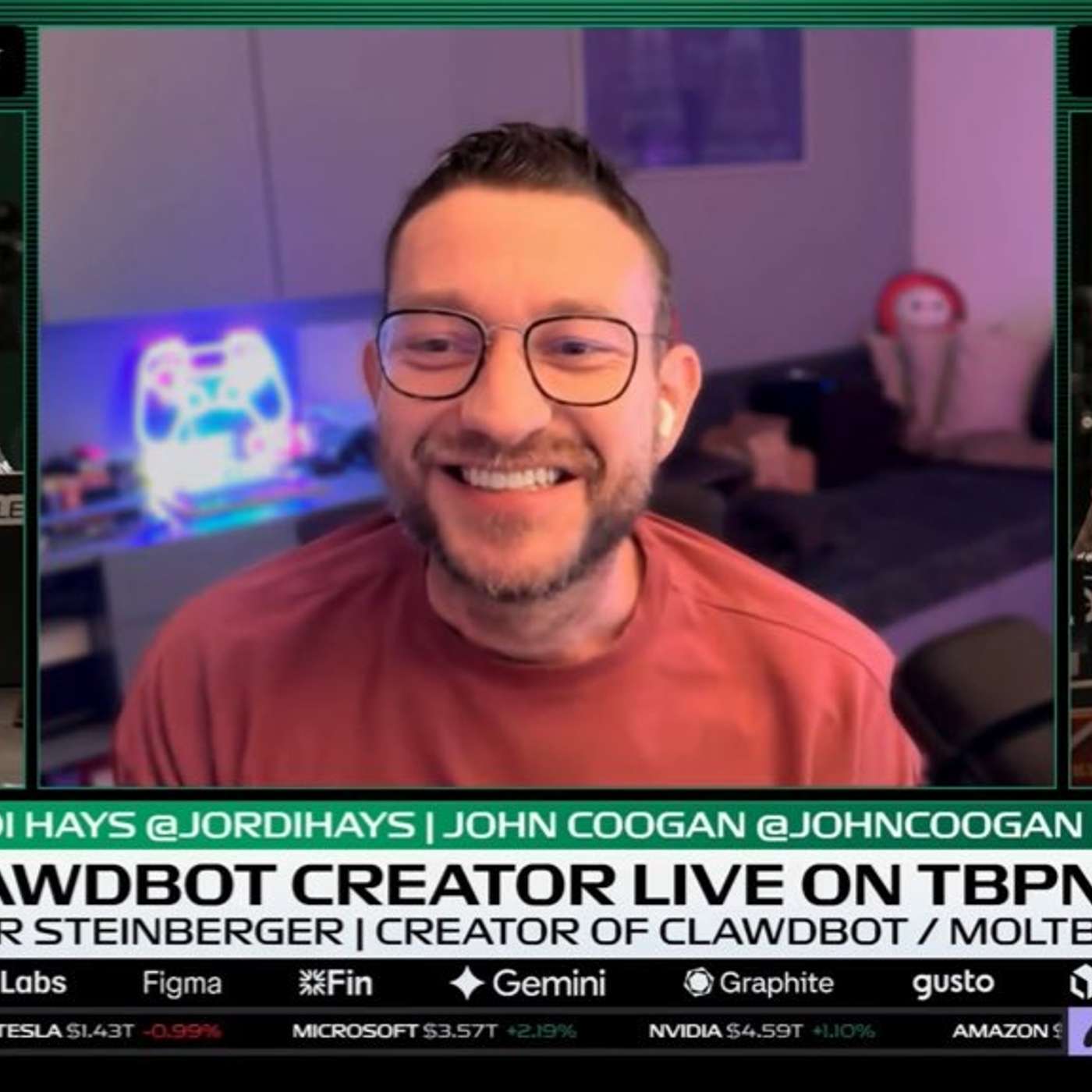
Instead of designing tools for human usability, the creator built command-line interfaces (CLIs) that align with how AI models process information. This "agentic-driven" approach allows an AI to easily understand and scale its capabilities across numerous small, single-purpose programs on a user's machine.
A new software paradigm, "agent-native architecture," treats AI as a core component, not an add-on. This progresses in levels: the agent can do any UI action, trigger any backend code, and finally, perform any developer task like writing and deploying new code, enabling user-driven app customization.

To fully leverage rapidly improving AI models, companies cannot just plug in new APIs. Notion's co-founder reveals they completely rebuild their AI system architecture every six months, designing it around the specific capabilities of the latest models to avoid being stuck with suboptimal implementations.