Get your free personalized podcast brief
We scan new podcasts and send you the top 5 insights daily.
Lacking recent combat experience since 1979, China is seeking high-end military assistance from Russia, specifically drone data and tactical lessons from the Ukraine front line. This transforms its economic and diplomatic support for Russia into a strategic opportunity to modernize its own military understanding.

Related Insights
The primary threat from alliances like Russia, China, and Iran lies not in sales of ships or planes, but in the creation of 'learning communities.' These nations share hard-won lessons from their respective conflicts, such as Russia teaching Iran how to build better drones based on its experience in Ukraine. This agile knowledge transfer poses a more significant challenge to Western military superiority.

President Stubb observes that China, initially "baffled" by Russia's invasion of Ukraine, has transitioned to a position of dominance. Russia is now in a "vassal type of a relationship," completely dependent on China for financial support and dual-use materials, fundamentally altering the power dynamic between the two nations.

China is the biggest winner of the conflict, watching its strategic rival, Russia, "bleed itself away" while remaining bogged down. It also profits financially, as 90% of the components for Ukraine's seven million annual drones are sourced from China, showcasing its critical role in the global supply chain.

According to Fiona Hill, senior Chinese officials have told Western scholars, 'if we wanted Russia to win, it would have done.' This suggests China is deliberately managing the conflict to its advantage and holds the ultimate key to forcing a resolution, solidifying its leverage over a dependent Russia.
After licensing Iran's Shaheed drones for use in Ukraine, Russia improved them and developed new battlefield tactics. Russia is now sharing this advanced operational knowledge back with Iran, the system's originator, accelerating the evolution of drone warfare for both nations.

The pace of innovation is a critical factor in modern warfare. In one year, the Ukraine-Russia conflict advanced drone technology from a "2022" to a "2026" capability level. In that same period, Europe made zero progress, widening a dangerous technological gap.
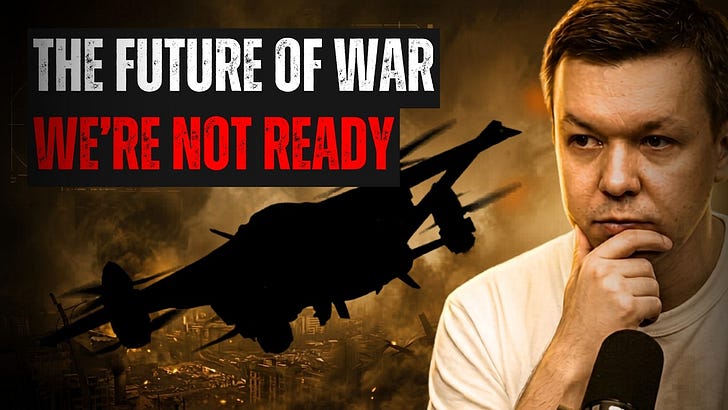
The Ukraine war has forged a new defense industrial bloc. Russia's ability to sustain its war effort is now critically dependent on a consistent supply of Chinese components, North Korean ammunition, and Iranian drone technology, creating a deeply interconnected anti-Western military-industrial axis.
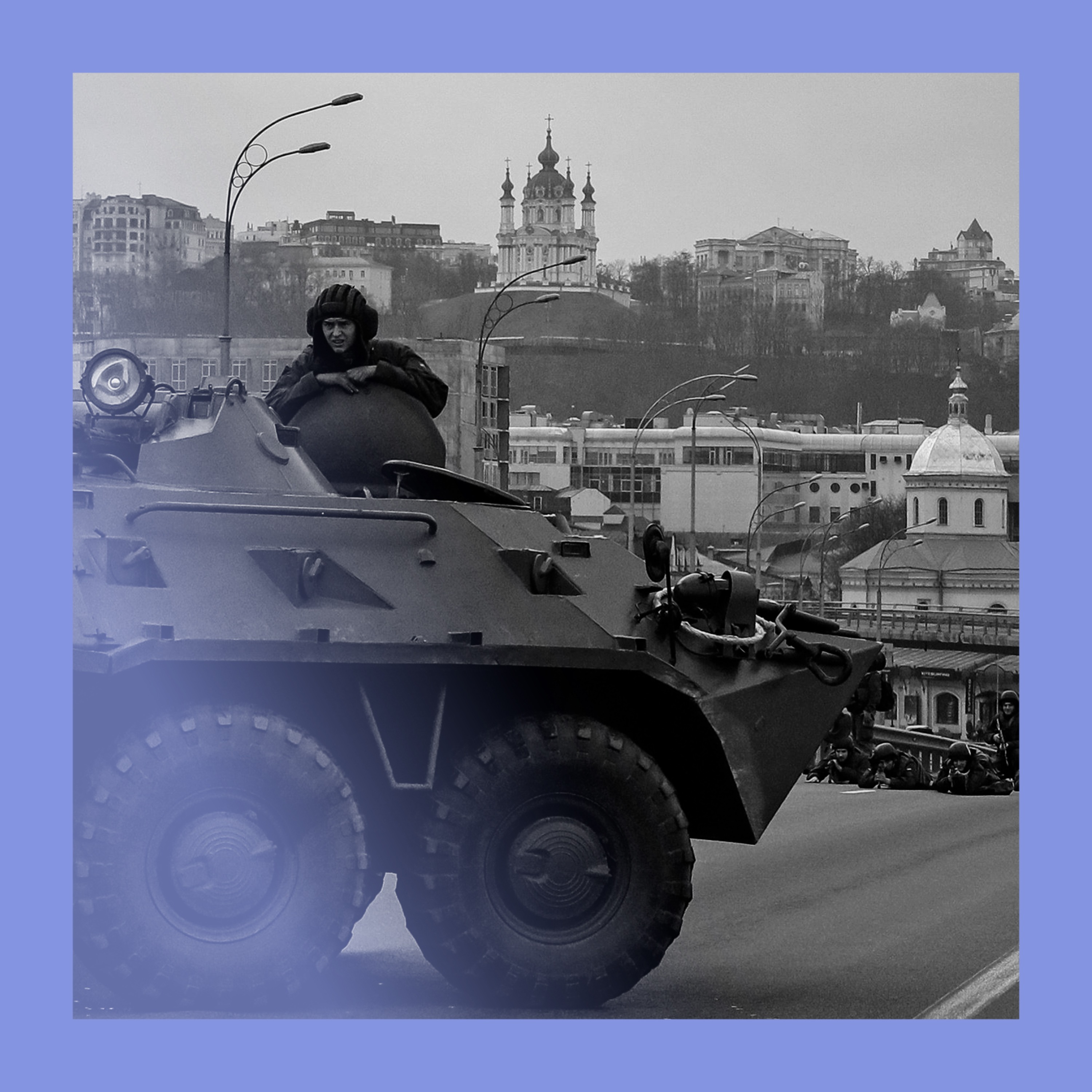
Ukraine's unique experience defending against Shaheed drones has become a valuable diplomatic asset. President Zelensky is offering this specialized knowledge to Gulf nations and Western partners in a direct exchange for investment in its defense industry and crucial military aid.
The war in Ukraine has evolved from a traditional territorial conflict into a "robot war," with drones dominating the front lines. This real-world battlefield is accelerating innovation at an "unbelievable" pace, driving new solutions for secure communications and autonomous targeting, providing critical lessons for US drone strategy.

Nations are now prioritizing partnerships with countries that have battle-tested expertise in modern warfare, like Ukraine's drone defense. This practical capability is becoming more valuable than traditional alliances with superpowers whose military technology may be outdated for current threats.