Get your free personalized podcast brief
We scan new podcasts and send you the top 5 insights daily.
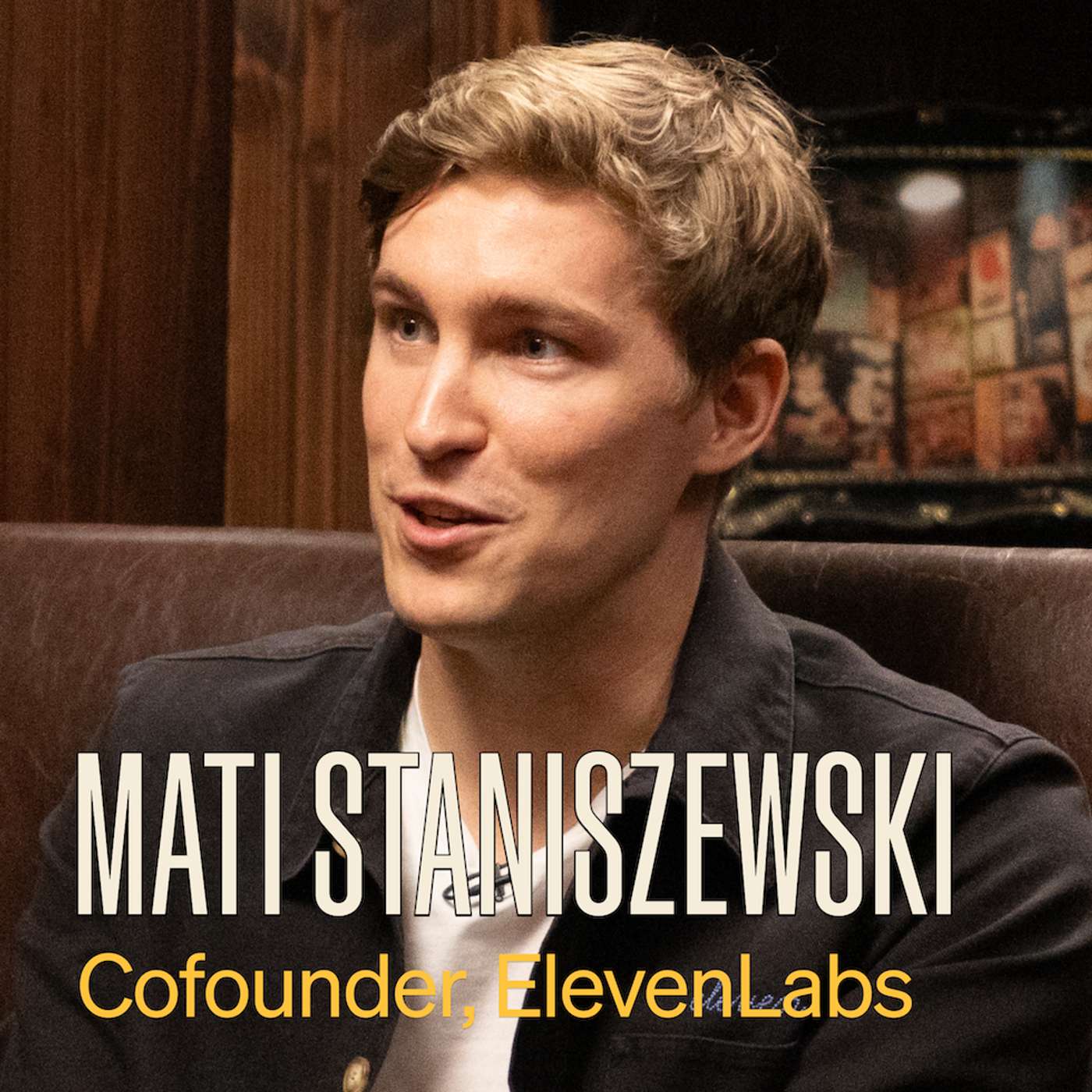
Unlike LLMs, where performance often scales with size, specific voice AI applications appear to have an optimal parameter count. For tasks like audiobook narration, ElevenLabs believes it has found the size sweet spot, where making models larger yields diminishing returns on quality, suggesting different scaling laws for specialized AI.
Related Insights
Voice AI company ElevenLabs' rapid scaling to $330M ARR defies the narrative that large labs will dominate all AI verticals. Their singular focus allows them to build a superior, more opinionated "best-in-class" product that generalist models cannot easily replicate.

Current transcription models use a global approach, often struggling with individual accents. ElevenLabs states that models fine-tuned on a specific person's voice (e.g., from an hour of audio) are not a distant research challenge but a solvable problem and an imminent product release, promising superhuman accuracy.
While direct speech-to-speech models are faster (lower latency), they are less reliable and "dumber." ElevenLabs bets on a "cascaded" approach that uses text as an intermediate layer, providing greater accuracy, visibility, and control—features that are critical for most enterprise applications.
Use a tiered approach for model selection based on parameter count. Models under 10B are for simple tasks like RAG. The 10-100B range is the sweet spot for agentic systems. Models over 100B parameters are for complex, multi-lingual, enterprise-wide deployments.

The MiniMax Speech series isn't a one-size-fits-all solution. It includes a high-definition model, a speed-optimized 'Turbo' version, and other quality tiers. This signals a deliberate product strategy to segment the market based on user priorities like processing speed versus audio fidelity.

For most enterprise tasks, massive frontier models are overkill—a "bazooka to kill a fly." Smaller, domain-specific models are often more accurate for targeted use cases, significantly cheaper to run, and more secure. They focus on being the "best-in-class employee" for a specific task, not a generalist.

While large language models are a game of scale, ElevenLabs argues that specialized AI domains like audio are won through architectural breakthroughs. The key is not massive compute but a small pool of elite researchers (estimated at 50-100 globally). This focus on talent and novel model design allows a smaller company to outperform tech giants.

The primary driver for fine-tuning isn't cost but necessity. When applications like real-time voice demand low latency, developers are forced to use smaller models. These models often lack quality for specific tasks, making fine-tuning a necessary step to achieve production-level performance.

The trend toward specialized AI models is driven by economics, not just performance. A single, monolithic model trained to be an expert in everything would be massive and prohibitively expensive to run continuously for a specific task. Specialization keeps models smaller and more cost-effective for scaled deployment.

Early voice models required hardcoding parameters like accent or emotion. Modern models, like those from ElevenLabs, learn these nuances contextually from data, allowing complex traits like a specific accent to emerge naturally without being explicitly programmed.