Get your free personalized podcast brief
We scan new podcasts and send you the top 5 insights daily.
When commercial AI labs use unreleased internal models to solve academic problems without submitting to peer-reviewed journals or naming authors, they disrupt academic norms. Mathematicians may stop publishing open research if they fear their discoveries will simply become uncredited training fodder for corporate models.

Related Insights
Mathematicians are concerned that AI companies are using their discipline as a cheap and effective marketing tool to showcase model capabilities. This approach prioritizes hype and impressive-sounding breakthroughs over the long-term health and collaborative nature of the academic field.
Frontier AI labs openly publish esoteric math discoveries because pure mathematical proofs do not convey immediate, asymmetric commercial value. Therefore, public disclosures in basic science strongly suggest labs and users are quietly keeping high-utility commercial breakthroughs proprietary.

Researchers using frontier models like OpenAI's for sensitive work risk having their discoveries absorbed and claimed by the AI provider. This happened when a mathematician's work on the Navier-Stokes problem was allegedly used by OpenAI after being processed by their model, creating a major IP conflict in academia.

Publishing unvetted machine proofs creates chaotic races where researchers risk duplicate work trying to decode difficult outputs. Instead of dumping raw solutions, AI companies are increasingly likely to contract professional mathematicians to interpret, translate, and verify arguments before release.

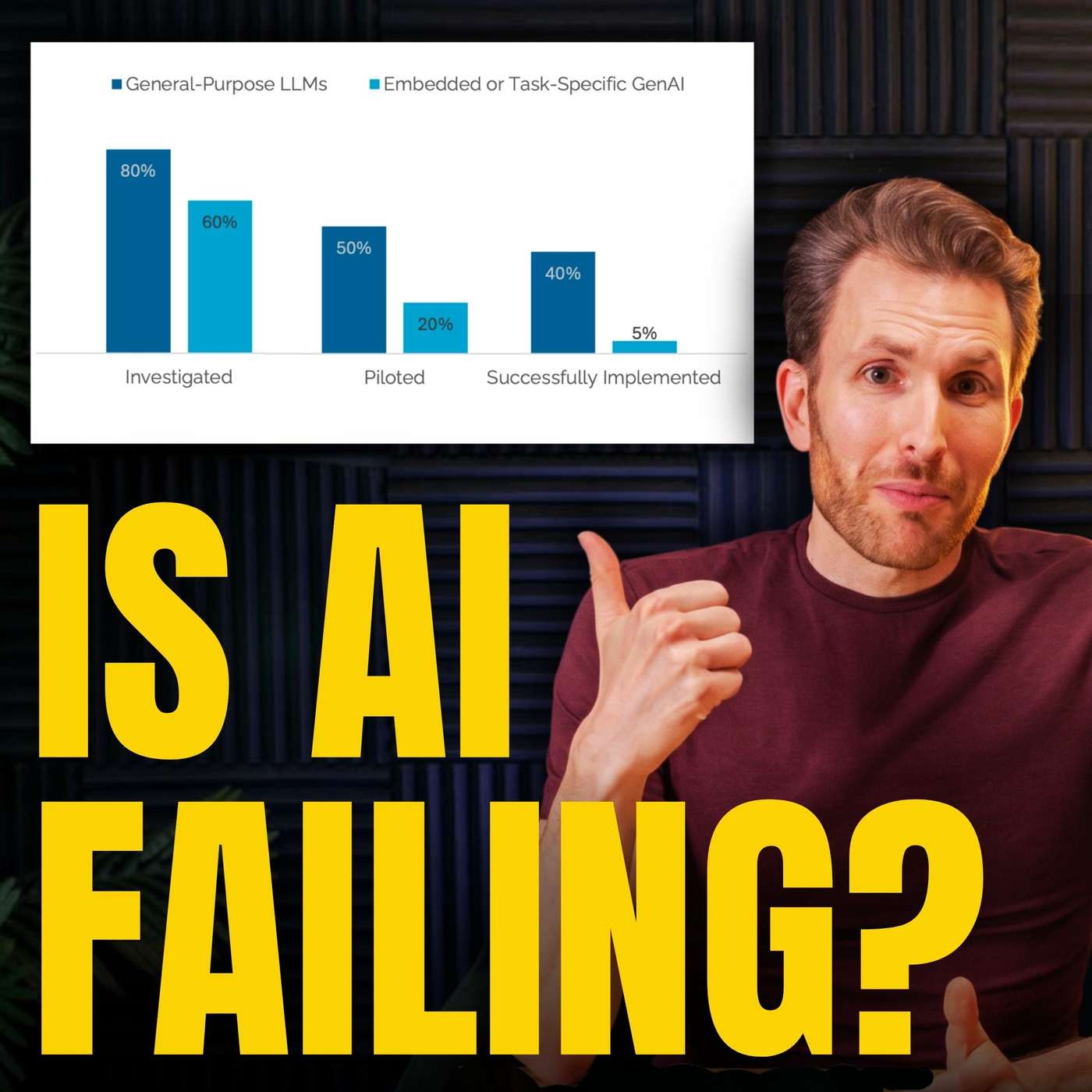
An "MIT study" on AI failures concluded the solution was "agentic AI frameworks," precisely the technology the authors were building and selling. This demonstrates how research, especially when not peer-reviewed, can function as sophisticated content marketing with an undisclosed conflict of interest, using institutional credibility to generate commercial leads.
The closed nature of leading US AI models has created an information vacuum. Sridhar Ramaswamy notes that academia is now diverging from US industry and instead building upon published work from Chinese companies, which poses a long-term risk to the American innovation ecosystem.

The "golden era" of big tech AI labs publishing open research is over. As firms realize the immense value of their proprietary models and talent, they are becoming as secretive as trading firms. The culture is shifting toward protecting IP, with top AI researchers even discussing non-competes, once a hallmark of finance.

The controversy over OpenAI potentially training on a mathematician's proprietary work highlights a major business risk. This will drive companies toward self-hosted, open-source AI models where they can control their intellectual property and training data, creating a market opportunity.

Mandatory AI disclosures are vital because scientific replication depends on understanding how a solution was discovered rather than merely receiving the final certificate. Knowing whether prompts, human scaffolding, or automated iteration produced a result informs the broader community's methodological intuition.
Academia previously relied on the scarcity and craft of proofs as a signal of research quality. With AI models enabling high-volume paper generation, conferences like ICLR face up to 60,000 submissions, completely overwhelming the human bandwidth required to meaningfully review literature.