Get your free personalized podcast brief
We scan new podcasts and send you the top 5 insights daily.
When Claude refused a task, the user immediately gave another AI, GrokBot, access to the same private database to complete it. This shows that true power and interoperability in the AI era come not from model APIs, but from owning your data, making it trivial to swap out compute layers that don't serve your needs.

Related Insights
With low switching costs between AI models, the only significant user lock-in is the accumulated context and memory within a platform. This "memory moat" may not be sustainable, as its anti-competitive effect could trigger regulatory demands for data transportability, allowing users to export their context to rivals.

Echoing crypto's "not your keys, not your crypto," a new ethos is emerging in AI: if a company's core product relies solely on another's model via an API, it has no real ownership. Startups are realizing they must control their own model weights to ensure steerability, capture their data flywheel, and build a defensible business.

To combat reliance on a single AI provider, users can build a personal context layer—a collection of documents, data connections, and skill playbooks. This system acts as personal "alpha," allowing any capable AI model to quickly understand a user's context and perform tasks effectively, ensuring portability and reducing vendor lock-in.

Open-source agent frameworks like OpenClaw allow users to retain ownership of their data and context. This enables them to switch between different LLMs (OpenAI, Anthropic, Google) for different tasks, like swapping engines in a car, avoiding the data lock-in promoted by major AI companies.

The friction of switching AI chatbots comes from losing the model's accumulated knowledge about you. This "context lock-in" makes users hesitant to start over with a new system. A portable, personal context portfolio is the key to breaking this dependency and maintaining user sovereignty over their AI relationships.
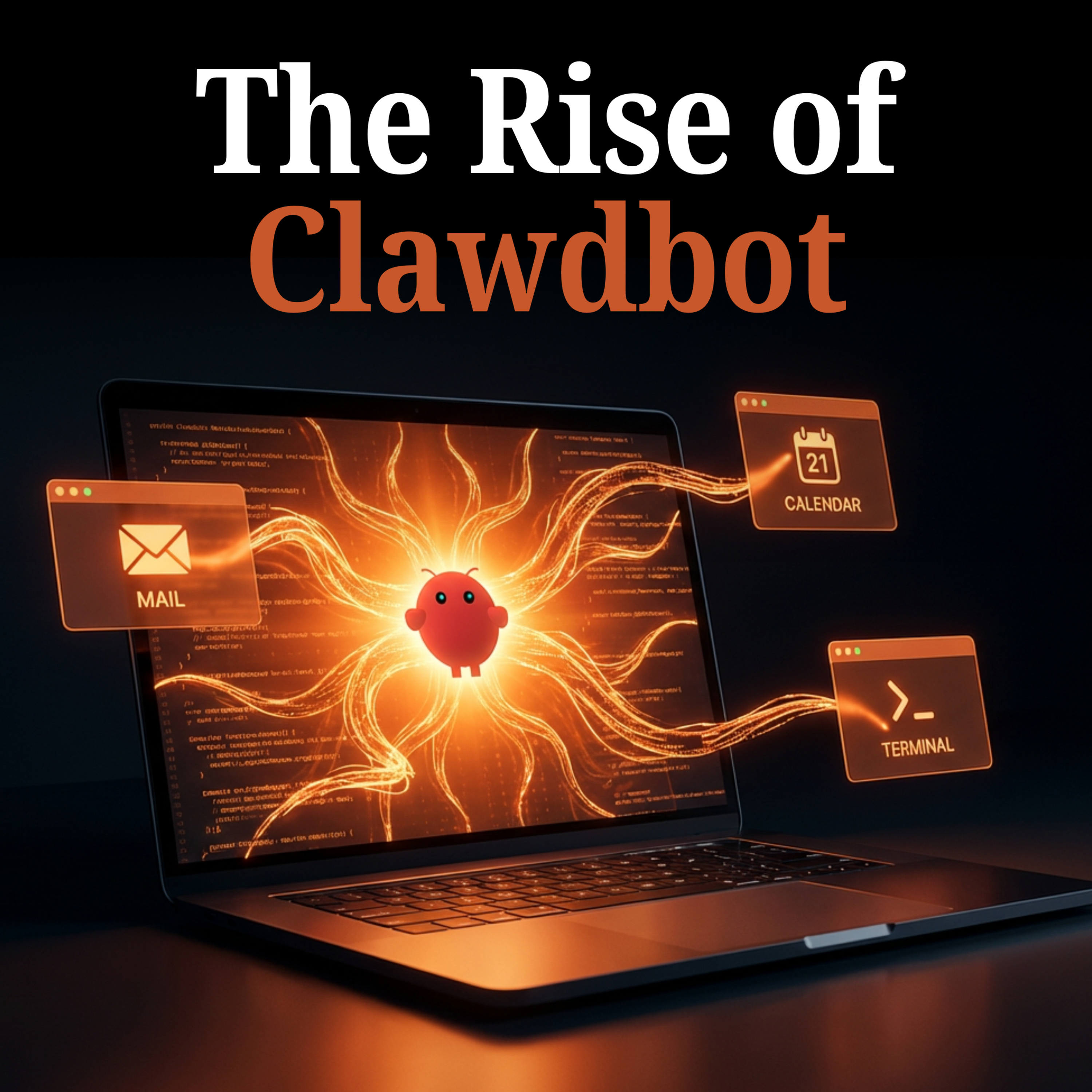
By running on a local machine, Clawdbot allows users to own their data and interaction history. This creates an 'open garden' where they can swap out the underlying AI model (e.g., from Claude to a local one) without losing context or control.
For many companies, 'AI sovereignty' is less about building their own models and more about strategic resilience. It means having multiple model providers to benchmark, avoid vendor lock-in, and ensure continuous access if one service is cut off or becomes too expensive.

The primary driver for running AI models on local hardware isn't cost savings or privacy, but maintaining control over your proprietary data and models. This avoids vendor lock-in and prevents a third-party company from owning your organization's 'brain'.
AI sovereignty now applies to enterprises protecting intellectual property from third-party models. Rackspace's Chetan Gupta predicts this will extend to individuals demanding control over their data as they use AI for personal tasks. The core idea is an entity protecting its unique interests and data.
Running a personal AI on your own hardware is fundamentally different than using a cloud service. The key advantage is data sovereignty. This protects user data from third-party access, subpoenas, and control by large corporations, which is a critical differentiator for privacy-conscious users and businesses.
