Get your free personalized podcast brief
We scan new podcasts and send you the top 5 insights daily.
In biology, hyper-specialization leads to fragility and extinction when conditions change. The most resilient model is the human hand—optimized for nothing, but adaptable to countless tasks. Organizations should pursue flexible adequacy rather than rigid optimization to ensure long-term survival.

Related Insights
When a company like OpenAI hires many "fancy" specialists attracted by the promise of owning a domain (e.g., health, ads), it loses agility. These specialists are not fungible. A top-down "Code Red" to pivot everyone to the core product fails because you can't easily re-task people who joined to run their own fiefdom.

Correcting the 'survival of the fittest' myth, Tom Bilyeu emphasizes Darwin's real point: adaptability is the key trait for survival. In business, this means the ability to pivot and evolve in response to stressors is more critical for longevity than simply being the biggest or most intelligent player.

AI will outperform any hyper-specialized human. To remain relevant, individuals should cultivate a broad range of knowledge. The full quote, "A jack of all trades is a master of none, but most times better than a master of one," becomes a career survival guide in the AI era.

All-AI organizations will struggle to replace human ones until AI masters a wide range of skills. Humans will retain a critical edge in areas like long-horizon strategy and metacognition, allowing human-AI teams to outperform purely AI systems, potentially until around 2040.

The market is a constantly changing environment. Like species in nature, teams that survive are not the strongest, but the most adaptable. Adaptability is built through continuous learning, making it a leader's core responsibility to foster this capability.

A profitable business is a complex system that works. Changing one variable by pursuing something 'new' is statistically more likely to break the system than improve it. The highest risk-adjusted move is to do 'more' of what already works, even if it requires solving a much harder underlying problem.

Traditional corporate structures are too rigid for today's environment. The octopus serves as a better model, with distributed intelligence in its tentacles allowing for autonomous yet coordinated action, sensory awareness of customers, and rapid adaptation.
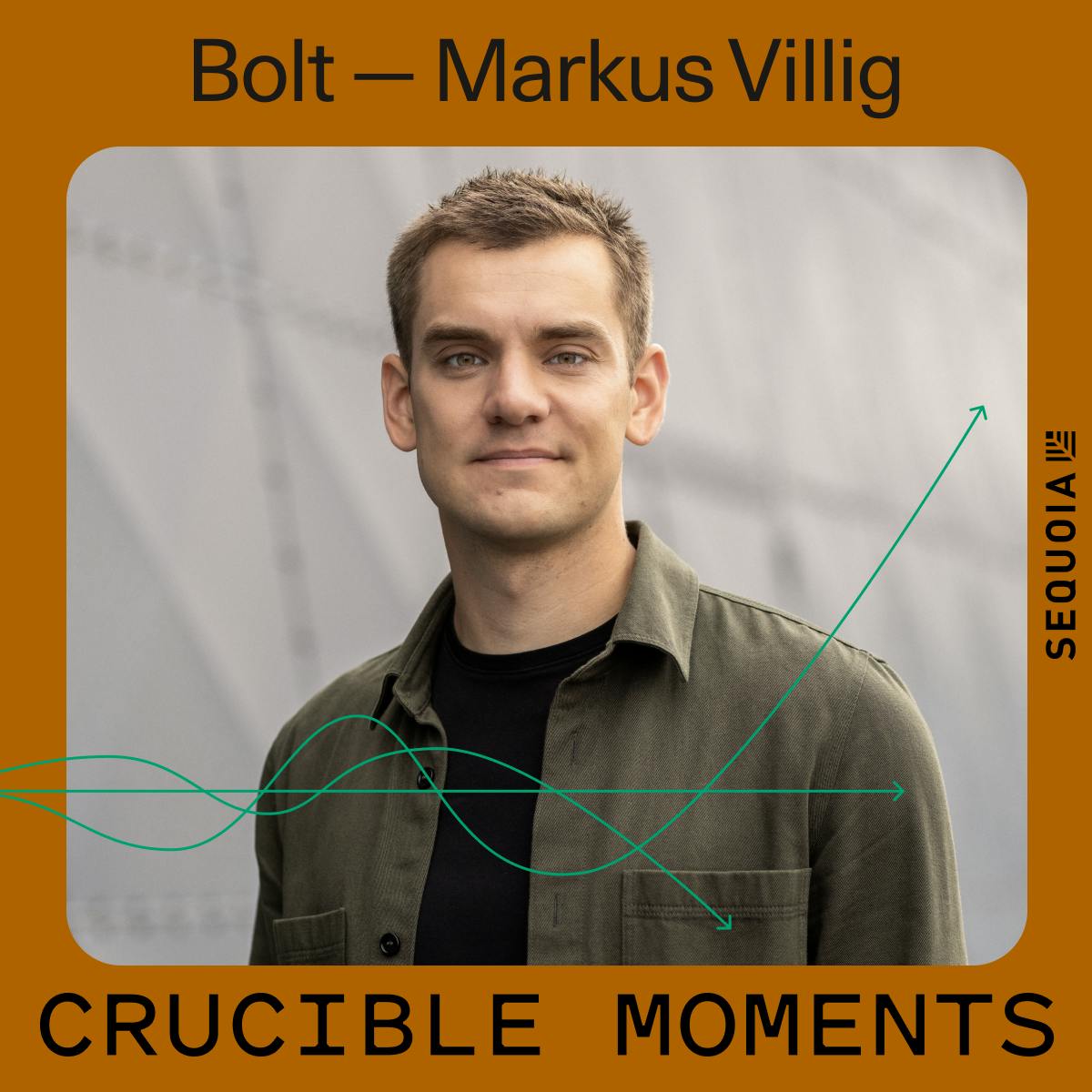
Bolt's philosophy of hiring entrepreneurial 'smart generalists' was key to its resilience and ability to pivot. When the company needed to shift focus from ride-hailing to food delivery overnight during COVID, its adaptable talent pool was a critical asset. An organization of specialists would have been unable to make such a drastic change so quickly.
Historian Joseph Tainter argues societies collapse when maintaining their complexity consumes all available resources. This applies to organizations, which become fragile by constantly adding complex solutions without a mechanism for simplification. This leaves no buffer to handle the next major, inevitable crisis.

In a rapidly changing world, the most valuable skill is not expertise in one domain, but the ability to learn itself. This generalist approach allows for innovative, first-principles thinking across different fields, whereas specialists can be constrained by existing frameworks.
