Get your free personalized podcast brief
We scan new podcasts and send you the top 5 insights daily.
OpenAI is building products that directly compete with Microsoft, its largest investor. This move, along with Microsoft's diversification into deals with rivals like Anthropic, indicates their relationship is evolving into "co-opetition," where they are both strategic partners and direct competitors in key markets.

Related Insights
Top AI labs like Anthropic are simultaneously taking massive investments from direct competitors like Microsoft, NVIDIA, Google, and Amazon. This creates a confusing web of reciprocal deals for capital and cloud compute, blurring traditional competitive lines and creating complex interdependencies.

OpenAI's record-breaking funding round, led by Amazon, Nvidia, and SoftBank but not Microsoft, signals a strategic diversification. By committing to AWS and Amazon's chips, OpenAI secures capital and compute resources beyond its core Microsoft partnership, creating a competitive "frenemy" dynamic among its key infrastructure providers.

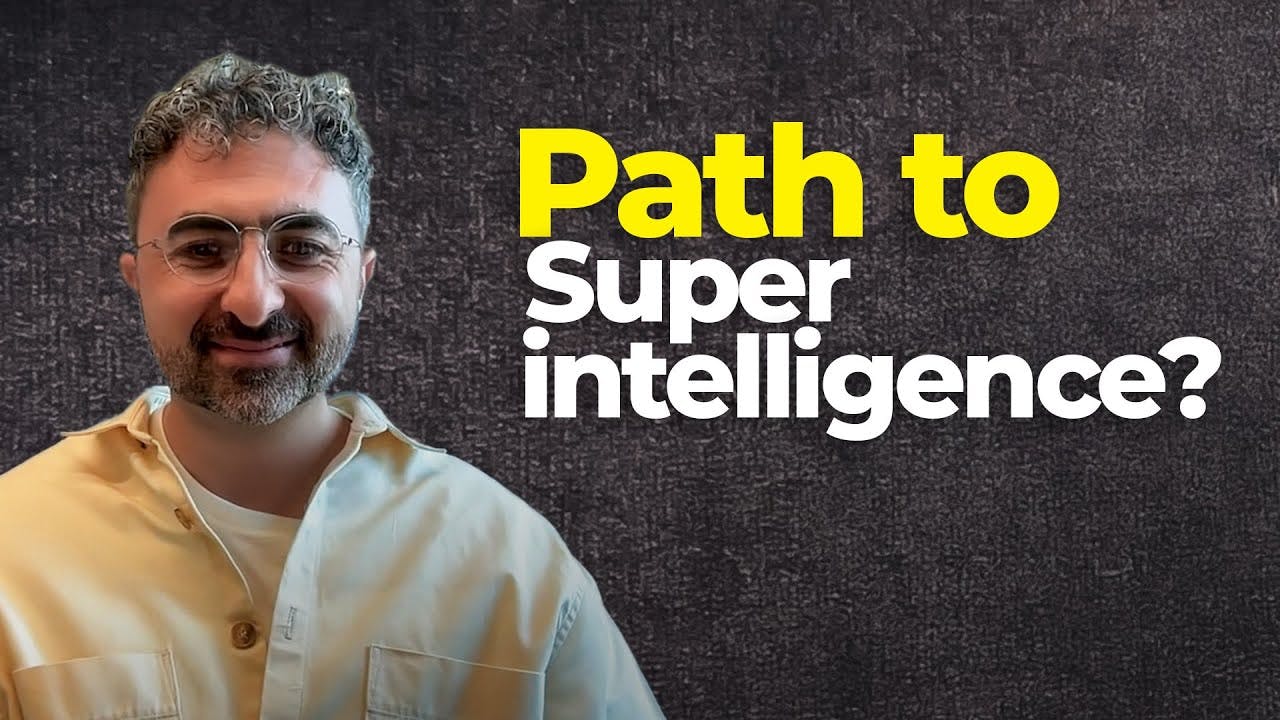
Microsoft’s new superintelligence team is a direct result of a renegotiated OpenAI deal. The previous contract restricted Microsoft from building AGI past a certain computational threshold. Removing this clause was a pivotal, strategic move to pursue AI self-sufficiency.
Rivals like Microsoft and Amazon are investing in each other's primary AI partners (e.g., Amazon in OpenAI). This isn't random; it reflects a strategic alignment to create a powerful counterweight against Google, which they view as the single biggest long-term threat in the AI race.

OpenAI is launching an AI-powered jobs platform and a massive certification program. This move positions them as a direct competitor to LinkedIn, which is owned by their primary investor and partner, Microsoft, creating a fascinating and tense "coopetition" dynamic.
Despite being key backers of OpenAI, Microsoft and NVIDIA are investing heavily in its competitor, Anthropic. This signals a strategic shift by tech giants to diversify their AI investments, ensuring no single lab becomes dominant and fostering a more competitive ecosystem.

Faced with growing competition in AI coding assistants, Microsoft's GitHub is positioning itself as the central hub. By becoming the 'Agent HQ' where developers can manage and deploy multiple competing agents, GitHub ensures its platform's growth regardless of which agent wins.
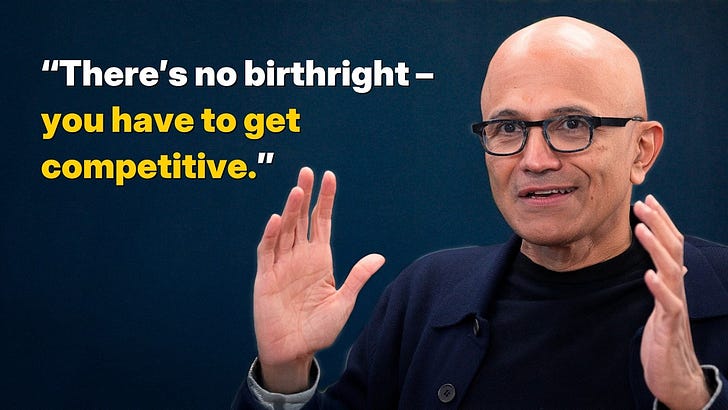
Beyond the equity stake and Azure revenue, Satya Nadella highlights a core strategic benefit: royalty-free access to OpenAI's IP. For Microsoft, this is equivalent to having a "frontier model for free" to deeply integrate across its entire product suite, providing a massive competitive advantage without incremental licensing costs.

Major AI labs like OpenAI and Anthropic are partnering with competing cloud and chip providers (Amazon, Google, Microsoft). This creates a complex web of alliances where rivals become partners, spreading risk and ensuring access to the best available technology, regardless of primary corporate allegiances.
Microsoft, despite its deep ties to OpenAI, was alarmed by the capabilities of Anthropic's new productivity platform. This reaction signifies a competitive shift where Anthropic is now seen as a primary threat, forcing Microsoft to rapidly prototype similar features to maintain its edge in AI productivity tools.