Get your free personalized podcast brief
We scan new podcasts and send you the top 5 insights daily.
Snap deployed an AI agent, Casper, that acts as a team member within tools like Slack and Jira. It listens to conversations, understands context from the entire company knowledge base and codebase, and can be invoked with a simple command to build a working prototype.

Related Insights
Features like Anthropic's Claude Tag embed powerful AI capabilities directly into collaborative platforms like Slack. This moves AI from an individual tool to a group experience, giving non-technical team members access to advanced functions and providing the AI with persistent team context.

With 65% of its product code now written by Claude Tag, Anthropic shows that integrating powerful coding agents into simple chat interfaces enables entire teams to initiate production-ready features from conversations. This dramatically lowers the barrier to software creation for non-coders.
Because AI agents operate autonomously, developers can now code collaboratively while on calls. They can brainstorm, kick off a feature build, and have it ready for production by the end of the meeting, transforming coding from a solo, heads-down activity to a social one.

At Cursor, development is increasingly happening in Slack channels. Team members collectively kick off and redirect a cloud agent in a thread, turning development into a collaborative discussion. The IDE becomes a secondary tool, while communication platforms become the primary surface.
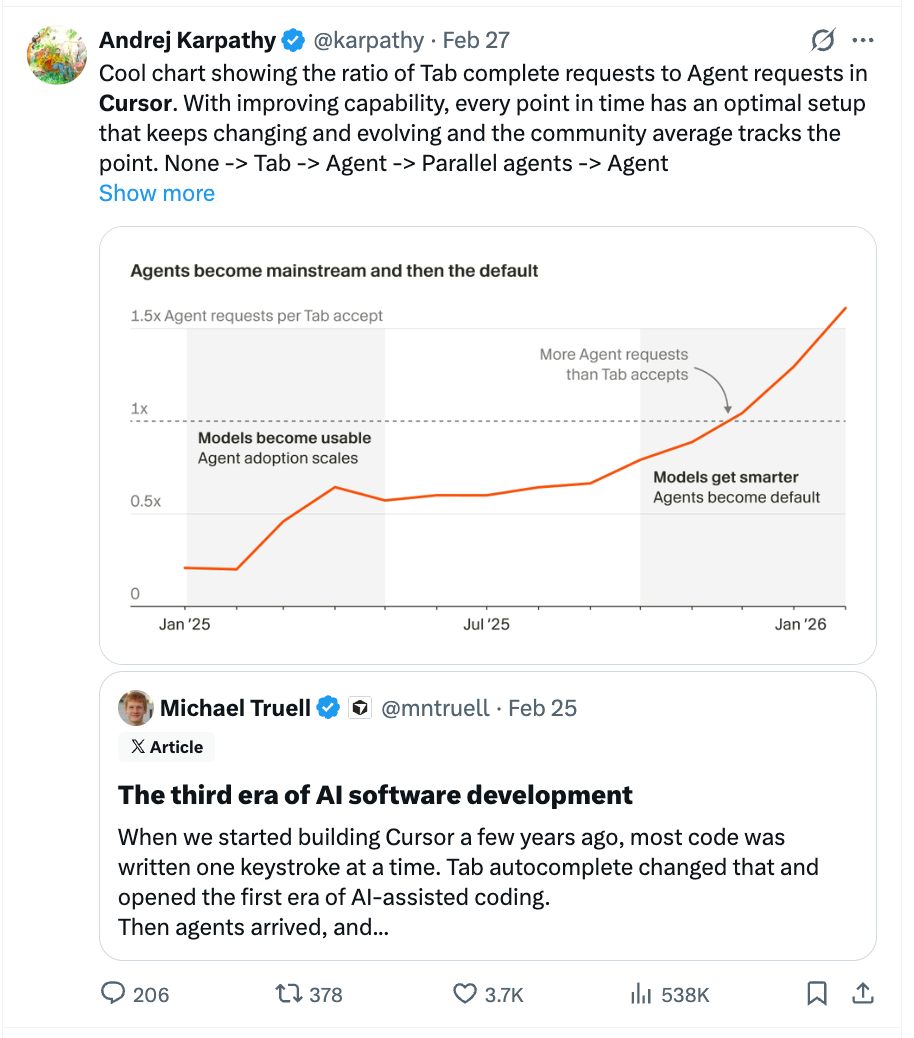
Instead of confining users to its app, Linear's first homegrown agent was built for Slack's interface. This user-centric strategy embeds workflows into existing habits—like summarizing a long Slack thread into tickets—acknowledging that work happens across an ecosystem of tools.

Using AI agents in shared Slack channels transforms coding from a solo activity into a collaborative one. Multiple team members can observe the agent's work, provide corrective feedback in the same thread, and collectively guide the task to completion, fostering shared knowledge.
In a large, remote company, product managers can't be in every conversation. Customer.io built an internal AI agent that scans Slack channels to find discussions where product input is needed but absent. This 'sonar' helps PMs stay close to customer and internal issues without manual monitoring.

Instead of a multi-week process involving PMs and engineers, a feature request in Slack can be assigned directly to an AI agent. The AI can understand the context from the thread, implement the change, and open a pull request, turning a simple request into a production feature with minimal human effort.
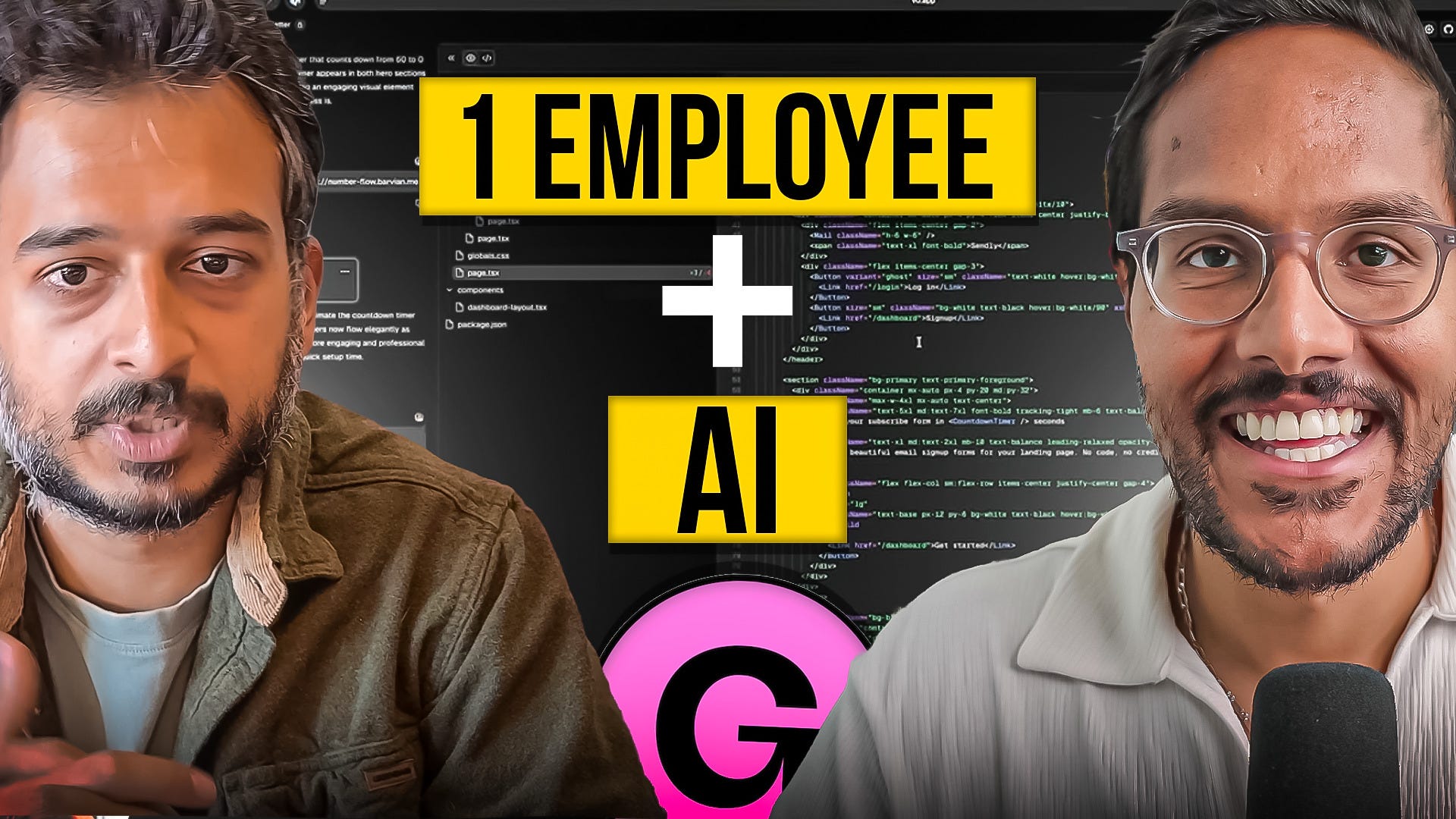
Stripe engineers can initiate a full AI-driven coding task—including provisioning a dev environment and creating a pull request—simply by reacting to a Slack message with an emoji. This dramatically lowers the friction to start work by moving the entry point from a text editor to a chat app.

To maximize an AI agent's effectiveness, treat it like a team member, not just a tool. Integrate it directly into your company's communication and project management systems (like Slack). This ensures the agent has the full context necessary to perform its tasks.