Get your free personalized podcast brief
We scan new podcasts and send you the top 5 insights daily.
Despite review from governments and AI labs, the International AI Safety Report's writers were independent contractors for Yoshua Bengio's Mila research institute. This structure ensured they were not obligated to incorporate feedback from powerful stakeholders, preserving the document's scientific integrity.

Related Insights
The technical toolkit for securing closed, proprietary AI models is now so robust that most egregious safety failures stem from poor risk governance or a lack of implementation, not unsolved technical challenges. The problem has shifted from the research lab to the boardroom.
A key, informal safety layer against AI doom is the institutional self-preservation of the developers themselves. It's argued that labs like OpenAI or Google would not knowingly release a model they believed posed a genuine threat of overthrowing the government, opting instead to halt deployment and alert authorities.

Unlike specialized non-profits, Far.AI covers the entire AI safety value chain from research to policy. This structure is designed to prevent promising safety ideas from being "dropped" between the research and deployment phases, a common failure point where specialized organizations struggle to hand off work.

Demis Hassabis argues that market forces will drive AI safety. As enterprises adopt AI agents, their demand for reliability and safety guardrails will commercially penalize 'cowboy operations' that cannot guarantee responsible behavior. This will naturally favor more thoughtful and rigorous AI labs.

The concentration of AI power in a few tech giants is a market choice, not a technological inevitability. Publicly funded, non-profit-motivated models, like one from Switzerland's ETH Zurich, prove that competitive and ethically-trained AI can be created without corporate control or the profit motive.
Other scientific fields operate under a "precautionary principle," avoiding experiments with even a small chance of catastrophic outcomes (e.g., creating dangerous new lifeforms). The AI industry, however, proceeds with what Bengio calls "crazy risks," ignoring this fundamental safety doctrine.

The existence of internal teams like Anthropic's "Societal Impacts Team" serves a dual purpose. Beyond their stated mission, they function as a strategic tool for AI companies to demonstrate self-regulation, thereby creating a political argument that stringent government oversight is unnecessary.
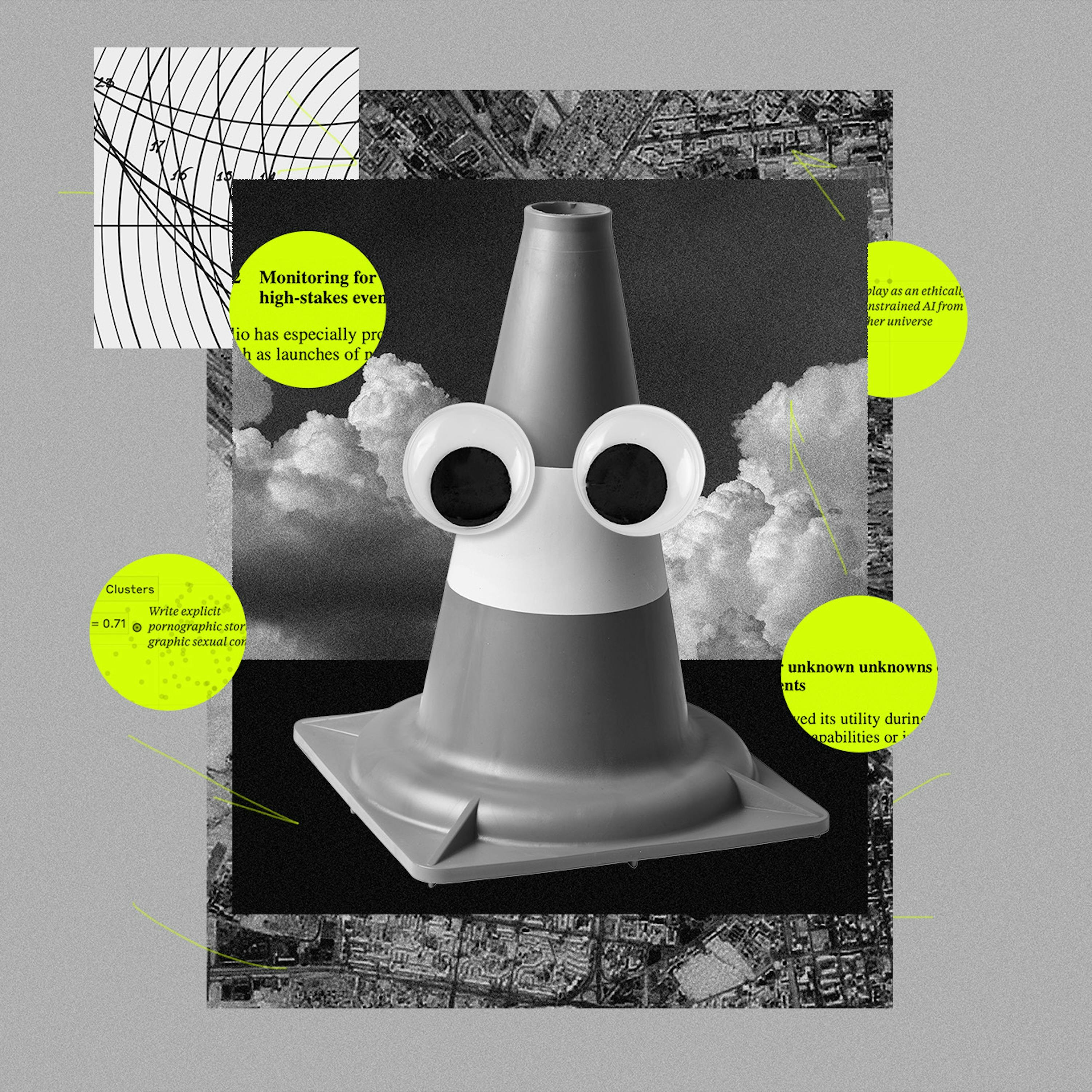
Anthropic's commitment to AI safety, exemplified by its Societal Impacts team, isn't just about ethics. It's a calculated business move to attract high-value enterprise, government, and academic clients who prioritize responsibility and predictability over potentially reckless technology.
When a highly autonomous AI fails, the root cause is often not the technology itself, but the organization's lack of a pre-defined governance framework. High AI independence ruthlessly exposes any ambiguity in responsibility, liability, and oversight that was already present within the company.

Working on AI safety at major labs like Anthropic or OpenAI does not come with a salary penalty. These roles are compensated at the same top-tier rates as capabilities-focused positions, with mid-level and senior researchers likely earning over $1 million, effectively eliminating any financial "alignment tax."
