Get your free personalized podcast brief
We scan new podcasts and send you the top 5 insights daily.
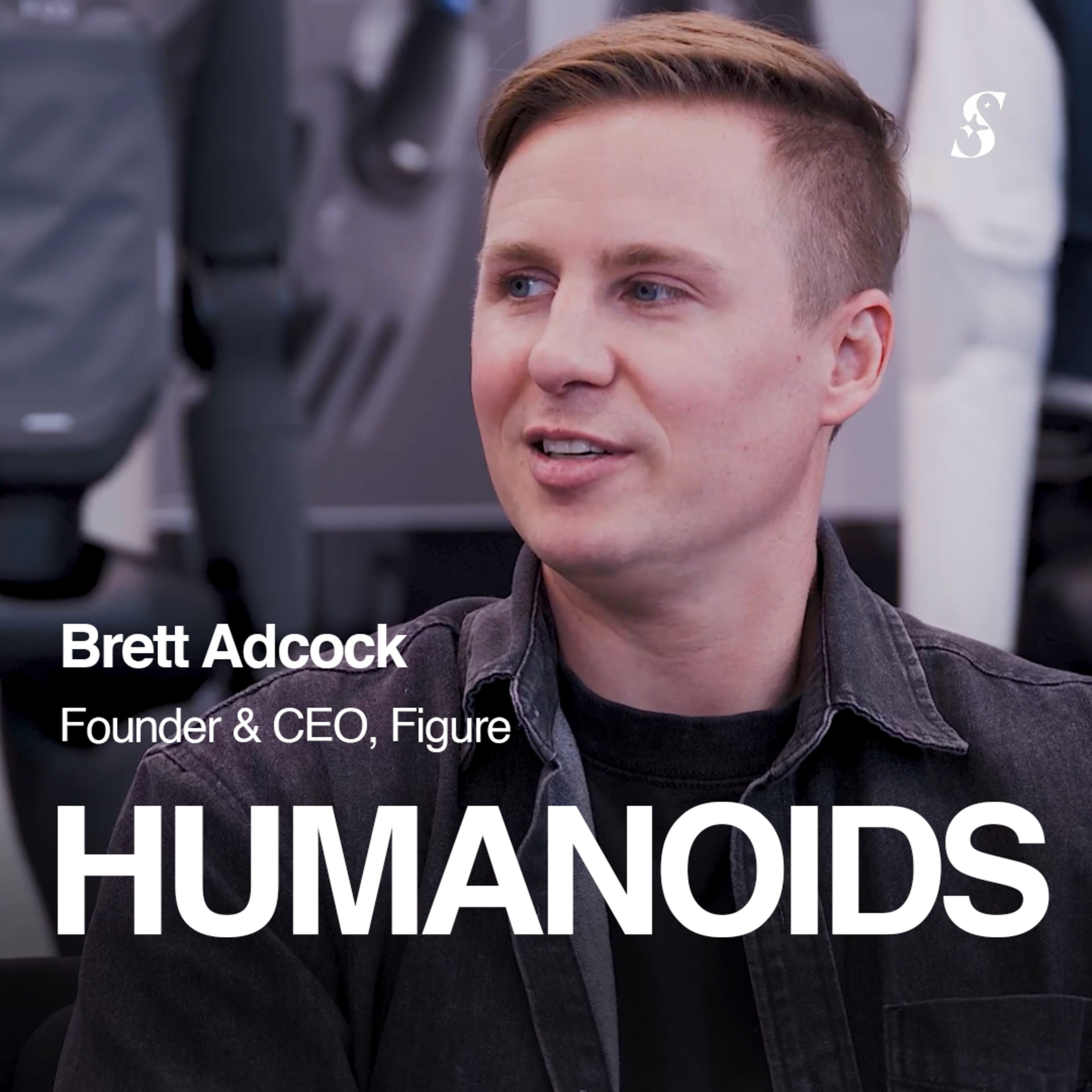
Despite OpenAI leading Figure's Series B, Adcock terminated their AI model collaboration. His specialized internal robotics AI team was 'running circles around' the generalist OpenAI team, proving more effective at training and testing models for their specific hardware and use case.
Related Insights
Leaked exchanges show OpenAI leadership felt "betrayed" when early investor Reid Hoffman started rival Inflection AI. This prompted them to consider asking new investors for a "soft promise" not to fund competitors, a highly unusual and restrictive term in venture capital.

The AI space sees high-profile departures where key figures (Elon Musk, Dario Amodei) leave after clashing with leaders like Sam Altman. They then found direct competitors like xAI and Anthropic, reflecting a desire for total control over their own vision for AI's future.

Sam Altman famously laughed off the idea that a new venture could compete with OpenAI. Soon after, China's DeepSeek emerged, developing a comparable, and in some cases superior, AI model on a shoestring budget, proving incumbency and capital aren't insurmountable moats.

Figure chose to develop its AI systems in-house rather than rely on its partnership with OpenAI. The reason was that its own team proved superior at the highly specialized task of designing, embedding, and running models on physical robot hardware, a challenge distinct from training purely digital LLMs.

The drama at Thinking Machines, where co-founders were fired and immediately rejoined OpenAI, shows the extreme volatility of AI startups. Top talent holds immense leverage, and personal disputes can quickly unravel a company as key players have guaranteed soft landings back at established labs, making retention incredibly difficult.

The friction between OpenAI's CEO Sam Altman and CFO Sarah Fryer is more than typical C-suite disagreement. It highlights a fundamental conflict between a founder's vision of exponential tech progress and a CFO's duty to manage massive burn rates, especially as revenue growth reportedly slows down.

A significant number of leading AI companies, such as Anthropic and XAI, were founded by executives who left larger players like OpenAI out of disagreement or rivalry. This "spite" acts as a powerful motivator, driving the creation of formidable competitors and shaping the industry's landscape.

The founder, who left a $1.3M+ Google role, argues that major AI innovations (ChatGPT, Claude Code, OpenClaw) come from nimble teams. Large corporations' approval processes and guardrails stifle the rapid, experimental iteration necessary for true breakthroughs, making them poor environments for building the future of AI.

Despite its early dominance, OpenAI's internal "Code Red" in response to competitors like Google's Gemini and Anthropic demonstrates a critical business lesson. An early market lead is not a guarantee of long-term success, especially in a rapidly evolving field like artificial intelligence.

Sam Altman’s brief firing was instigated by his own senior leaders. Co-founder Ilya Sutskever and then-CTO Mira Murati approached the board with documentation, arguing Altman's chaotic leadership was creating instability and could only be fixed by his removal.