Get your free personalized podcast brief
We scan new podcasts and send you the top 5 insights daily.
True crime shows like *Forensic Files* can feel less scary than horror movies because they emphasize science, investigation, and the eventual capture of criminals. This provides a sense of order and justice, whereas fictional horror often presents unresolved chaos and malevolence, making it feel more threatening.

Related Insights
Not all horror fans seek an adrenaline rush. "White Knucklers" enjoy the feeling of *overcoming* fear, not the fear itself. "Dark Copers" use the genre to process difficult emotions like anxiety and depression. This typology reveals the diverse psychological needs that scary media fulfill.

Humans crave control. When faced with uncertainty, the brain compensates by creating narratives and seeing patterns where none exist. This explains why a conspiracy theory about a planned event can feel more comforting than a random, chaotic one—the former offers an illusion of understandable order.

Our fascination with danger isn't a flaw but a survival mechanism. Like animals that observe predators from a safe distance to learn their habits, humans consume stories about threats to understand and prepare for them. This 'morbid curiosity' is a safe way to gather crucial information about potential dangers without facing direct risk.
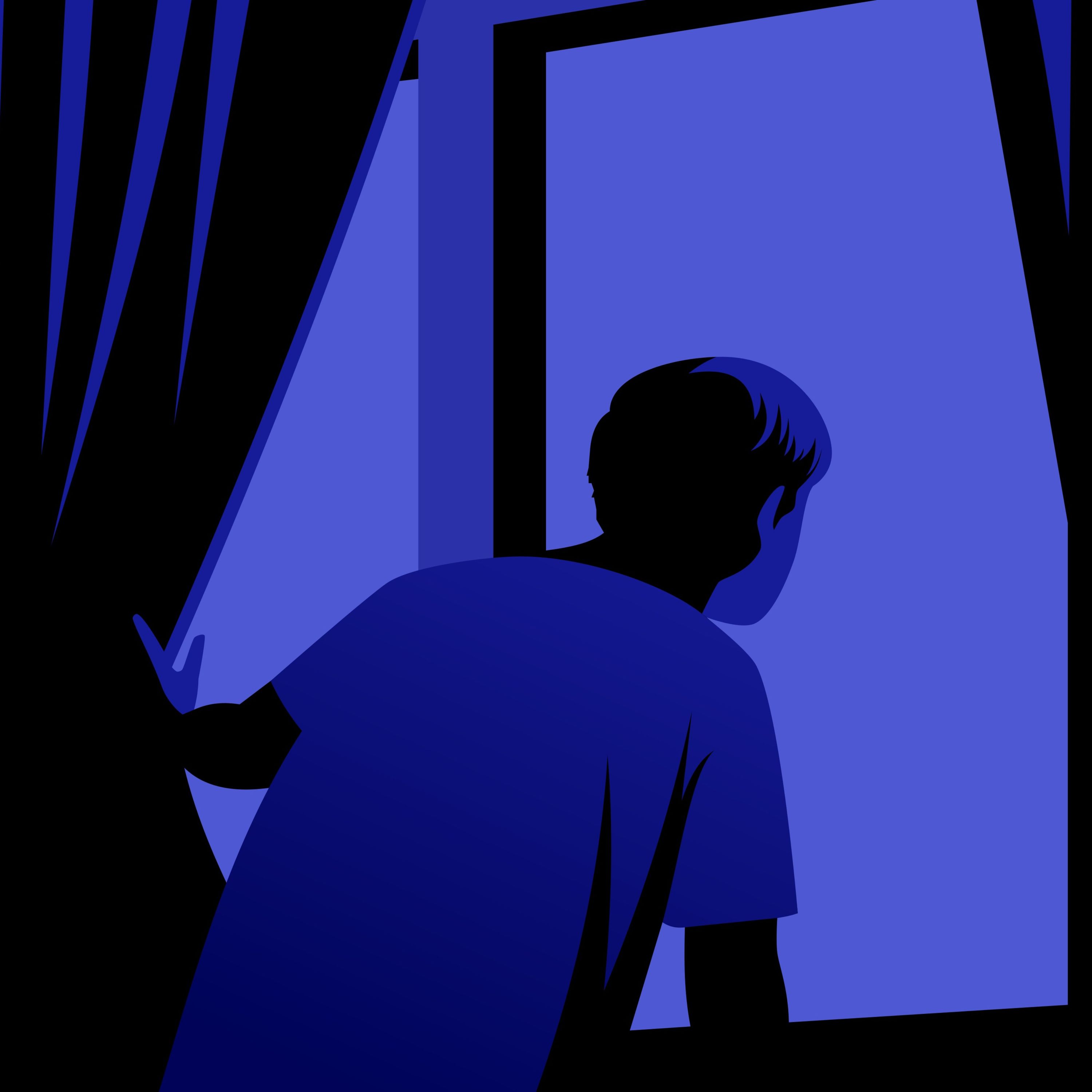
Contrary to the belief that people seek escapism during turbulent times, research shows a surge of interest in scary entertainment following real-life traumatic events. For example, after a campus murder, students in the victim's dorm were most likely to choose to watch a violent movie, suggesting a need to process and understand the threat.
Horror can act as a tool for managing generalized anxiety. It hijacks the mind's vigilance cycle, which looks for a threat but can't find one, and provides a specific, identifiable, and controllable fictional threat on screen. Once the movie ends, the threat disappears, triggering the body's relaxation response and calming the nervous system.
People watched the movie 'Contagion' during the pandemic rather than reading scientific papers because the human brain is wired to learn through first-person stories, not lists of facts. Narratives provide a simulated, experiential perspective that taps into ancient brain mechanisms, making the information more memorable, understandable, and emotionally resonant.
Contrary to stereotypes that horror fans are depraved, research indicates they often possess higher-than-average cognitive empathy. To experience fear while watching a scary movie, a viewer must be able to adopt the perspective of the protagonist. The fear is generated not by the monster itself, but by empathizing with someone like us who is in danger.
Research conducted during the COVID-19 pandemic revealed that horror fans exhibited greater psychological resilience and less distress than non-fans. Regularly engaging with frightening fictional scenarios appears to serve as a form of emotional regulation practice, equipping individuals to better handle real-world stress and anxiety.
A study in April 2020 found that people who regularly consumed frightening media scored better on resilience measures. Their history of engaging with simulated threats appears to provide practice in emotional regulation, helping them cope with the uncertainty of a real-world crisis.
People watch horror films not just for the thrill, but to vicariously experience and understand potential dangers. This allows them to process anxieties about real-world threats, from pandemics to AI, in a controlled setting, serving as a form of psychological preparation.