Get your free personalized podcast brief
We scan new podcasts and send you the top 5 insights daily.
Listen Labs envisions its platform evolving into a "Human API." This would allow other AI agents—like a coding agent—to programmatically query human preferences before building a feature. It helps them know "what to build" by accessing up-to-date insights from a target user base, connecting strategy to execution.
Related Insights
Beyond customer-facing features, Uber employs AI agents to systematically analyze customer interactions, including support calls and in-app searches. This data is automatically summarized to identify common pain points and requests, which directly informs their product development roadmap.

AI agents are becoming the dominant source of internet traffic, shifting the paradigm from human-centric UI to agent-friendly APIs. Developers optimizing for human users may be designing for a shrinking minority, as automated systems increasingly consume web services.

Expensive user research often sits unused in documents. By ingesting this static data, you can create interactive AI chatbot personas. This allows product and marketing teams to "talk to" their customers in real-time to test ad copy, features, and messaging, making research continuously actionable.

Since AI makes coding cheap, the real advantage lies in 'product taste.' Develop this by building an agent that consumes and synthesizes feedback from all sources—GitHub, Slack, Gong transcripts, and Twitter—to identify key user pains and roadmap priorities.

The most reliable customer insights will soon come from interviewing AI models trained on vast customer datasets. This is because AI can synthesize collective knowledge, while individual customers are often poor at articulating their true needs or answering questions effectively.

When a user's personal agent (in an environment like Codex) interacts with an app, it can automatically share vast context about the user's goals and history. This eliminates tedious onboarding and enables a deeply customized experience from the first interaction, changing how software is designed.

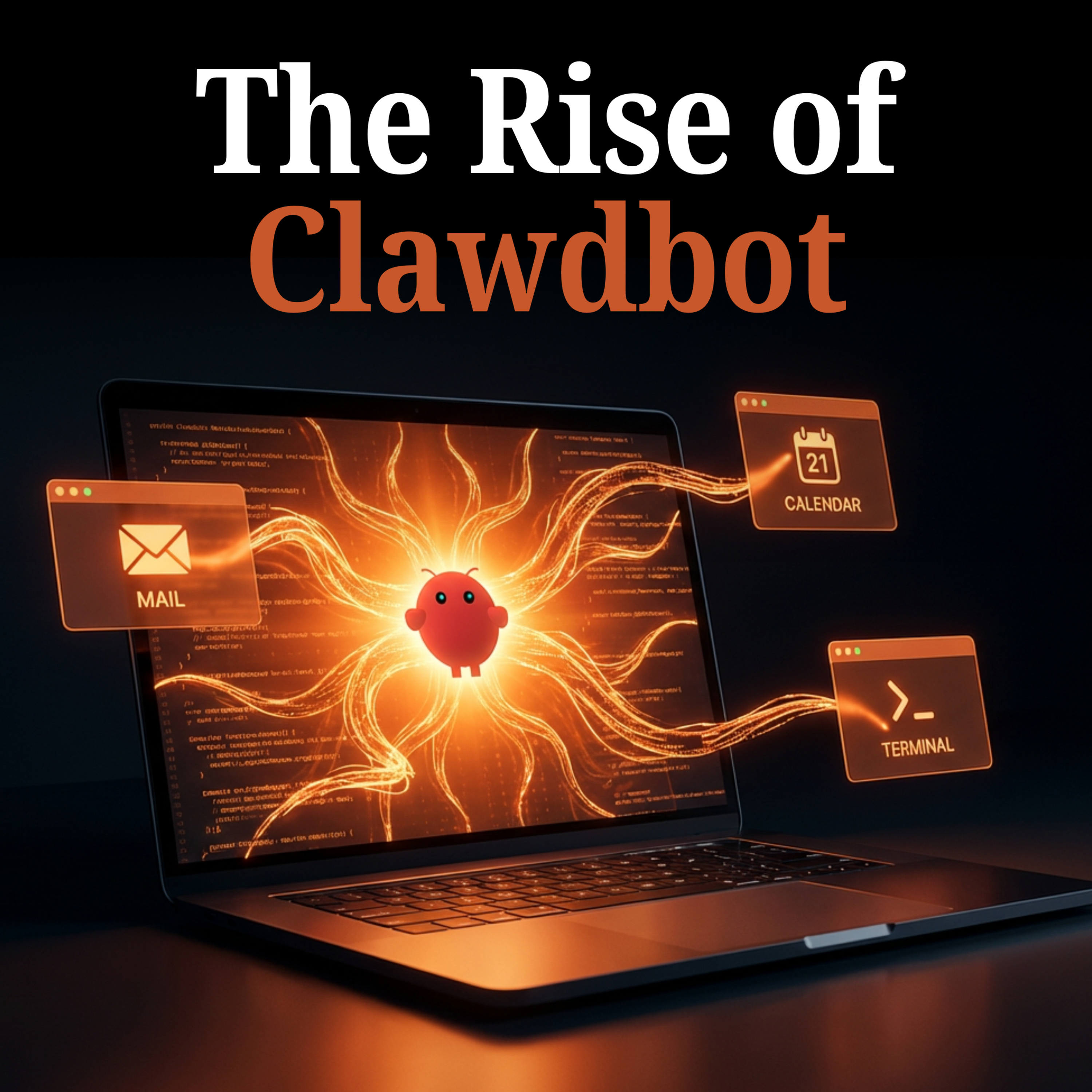
Clawdbot can autonomously identify market trends (like X's new article feature), propose new product features, and even write the code for them, acting more like a chief of staff than a simple task-doer.
Standard APIs for human developers are often too verbose for AI agents. Notion created agent-centric APIs, like a special markdown dialect and a SQLite interface, by treating the AI as a new type of user. This involved empirical testing to understand what formats agents are naturally good at using.

Designers at OpenAI don't have to wait for data scientists. They use an internal AI agent to ask questions about user behavior and query usage data, dramatically speeding up the design process by reducing cross-functional dependencies.
A major architectural shift is underway: instead of embedding AI features into a product, companies should treat AI as an external agent that uses the product via a CLI or API. This simplifies integration and better aligns with AI's capabilities.
