Get your free personalized podcast brief
We scan new podcasts and send you the top 5 insights daily.
The creation of early animated films was a highly technical and physical process. Operating complex machinery like the 15-foot-tall multiplane camera required engineering skills, creating a cultural and technical foundation for Disney's artists to evolve into the "Imagineers" who would later build theme parks.
Related Insights
Jeffrey Katzenberg repeatedly gained an edge by importing Silicon Valley innovations into Hollywood. From using Pixar for 'Toy Story' to pioneering 3D animation, he demonstrated that creative industries thrive by adopting cutting-edge technology to enhance storytelling, not by resisting it.
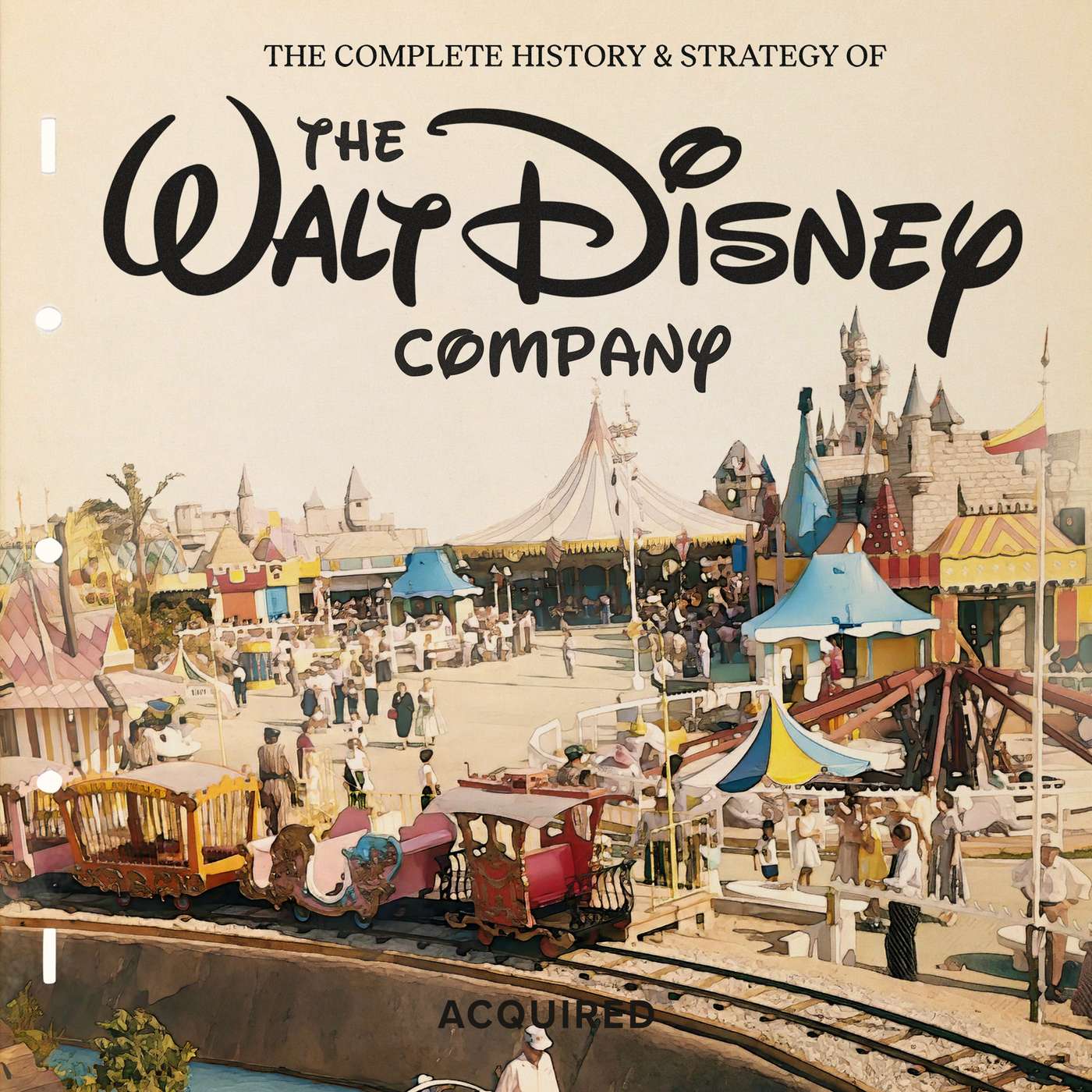
Disneyland was not a planned corporate initiative. It originated as Walt Disney's personal obsession with trains and miniatures. When the company's board rejected the risky idea, he founded a separate personal company, WED Enterprises, to pursue the project, poaching talent from his own studio.
Disney's creative success was fundamentally a technology story. Innovations like synchronized sound in "Steamboat Willie" were risky, company-betting endeavors. This technology transformed cartoons from a novelty into a medium capable of creating characters with personality, enabling deeper audience connection.
Hollywood's creative process for animated films closely mirrors the tech product development cycle. Storyboards function as prototypes and 'animatics' act as MVPs. The key difference is the film industry's MVP must meet a much higher quality bar due to higher production costs and stakes.

Walt Disney's original vision for EPCOT was not a theme park but an "Experimental Prototype Community of Tomorrow"—a fully functional utopian city. To power this vision, Disney secured legacy rights to construct a nuclear reactor, showcasing the immense scale of mid-century corporate ambition in urban planning.

The relentless push for artistic perfection on films like "Pinocchio" and "Fantasia" created immense financial pressure, leading to pay cuts for many. This culminated in a massive animators' strike in 1941, an event so shattering that it permanently fractured Walt's relationship with his employees and the studio.
In the decades after the deaths of Walt and Roy Disney, the company's creative core rotted. By 1984, the once-dominant film and TV division was barely breaking even, while parks and consumer products generated a quarter-billion in profit. Disney had become a company that simply harvested its past successes.
The evolution of Disney's Tomorrowland serves as a cultural barometer for society's view of the future. The original 1955 park celebrated technological optimism. By the 1970s, new attractions like Space Mountain and Star Tours centered on dystopian narratives of technology failing, reflecting a broader cultural shift towards pessimism and fear.

While photorealism is a common goal, the first fully AI-generated films will likely be animated or fantasy. This is because traditional filmmaking is already cheap and effective at capturing reality. AI's true economic and creative advantage lies in generating complex, non-photorealistic visuals that are currently expensive to produce.

To prevent animators from wasting time on minor background details, Pixar created a physical system. Each animator's work week was a popsicle stick on a board. To work more on one element, a stick had to be visibly removed from another, making creative trade-offs tangible and enforcing prioritization.