The company's relentless focus on owning and controlling its intellectual property stems directly from Walt Disney's early failure. He lost the rights to his first hit character, Oswald, in a contract dispute, a formative trauma that shaped Disney's business strategy for the next century.
Animated characters offer superior long-term value. They are timeless, ageless, and always available to work. This avoids the problems of aging actors, scheduling conflicts, and massive profit-sharing deals, making the underlying IP a more robust and controllable asset for a flywheel business model.
The famed 7-year rerelease cycle wasn't a grand strategy. It began in 1944 when a cash-strapped Disney rereleased "Snow White" out of necessity. They accidentally discovered they could capture a new generation of children with each cycle, creating a powerful, evergreen revenue stream from their existing library.
Disney uses ancillary products like daily comic strips and merchandise to maintain constant fan engagement and market presence. This keeps the brand top-of-mind without devaluing the scarce, high-quality core film releases, which are reserved for major cultural moments.
Before home video existed, Disney created the first-ever commercial movie soundtrack for "Snow White." This innovation wasn't just a new revenue stream; it was a revolutionary way for audiences to relive the film's magic at home, creating a tangible connection to the IP and deepening the flywheel.
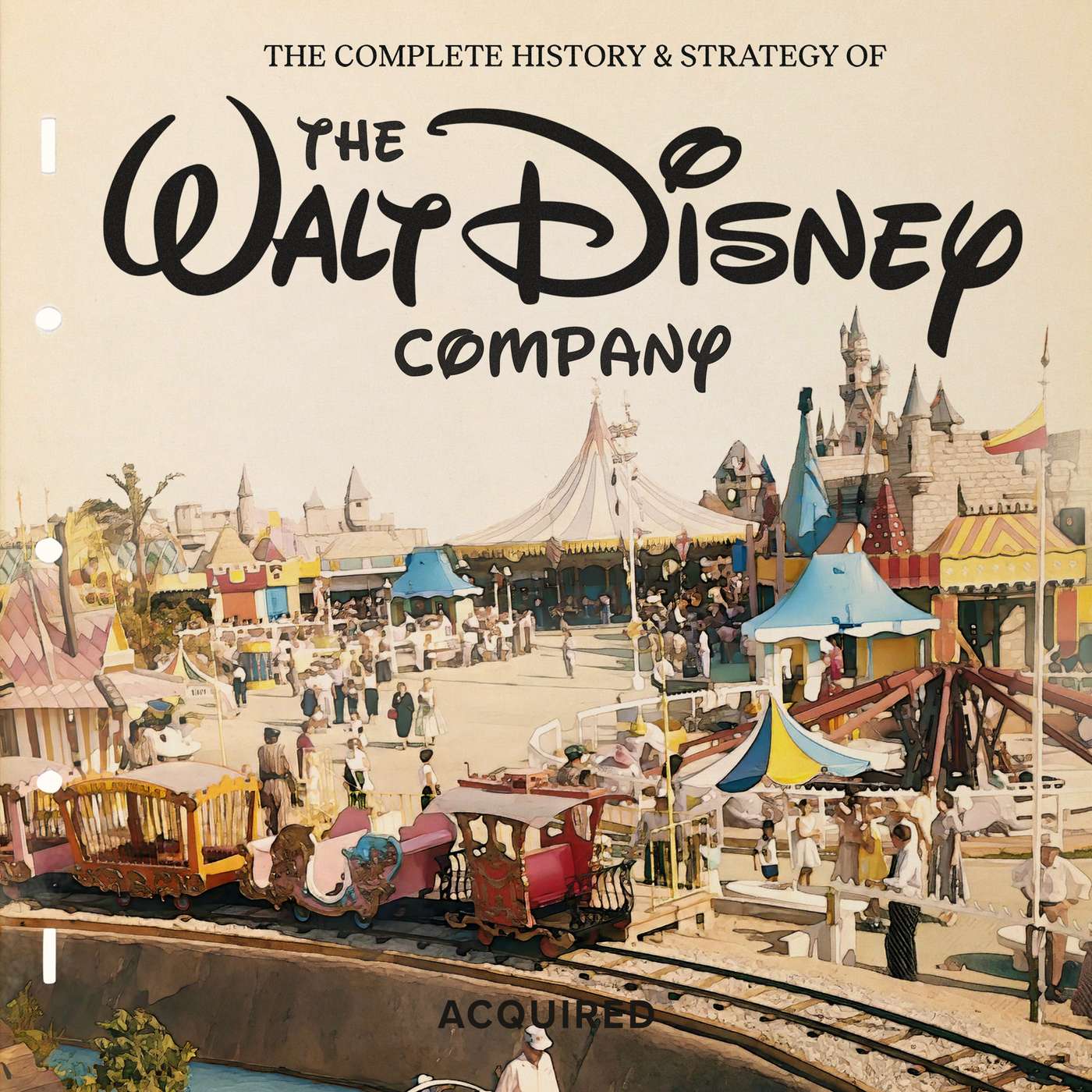
Disneyland was not a planned corporate initiative. It originated as Walt Disney's personal obsession with trains and miniatures. When the company's board rejected the risky idea, he founded a separate personal company, WED Enterprises, to pursue the project, poaching talent from his own studio.
While other studios feared TV as a threat to theaters, Walt Disney embraced it as a strategic tool. He leveraged a partnership with the struggling ABC network, trading a weekly TV show for the crucial financing and nationwide marketing needed to launch the ambitious Disneyland park.
The popular business term "flywheel," used to describe self-reinforcing business models like Disney's, is technically inaccurate. A flywheel stores and releases energy. The concept actually describes a positive feedback loop, where each component of the system amplifies the energy and output of the others.
The relentless push for artistic perfection on films like "Pinocchio" and "Fantasia" created immense financial pressure, leading to pay cuts for many. This culminated in a massive animators' strike in 1941, an event so shattering that it permanently fractured Walt's relationship with his employees and the studio.
The creation of early animated films was a highly technical and physical process. Operating complex machinery like the 15-foot-tall multiplane camera required engineering skills, creating a cultural and technical foundation for Disney's artists to evolve into the "Imagineers" who would later build theme parks.
In the decades after the deaths of Walt and Roy Disney, the company's creative core rotted. By 1984, the once-dominant film and TV division was barely breaking even, while parks and consumer products generated a quarter-billion in profit. Disney had become a company that simply harvested its past successes.
Disney's creative success was fundamentally a technology story. Innovations like synchronized sound in "Steamboat Willie" were risky, company-betting endeavors. This technology transformed cartoons from a novelty into a medium capable of creating characters with personality, enabling deeper audience connection.
When a distributor rejected Mickey Mouse for its lack of brand recognition, he held up a pack of Lifesavers candy as an example of a trusted product. This moment crystalized for Walt the need to make his own name synonymous with uncompromising quality, ensuring audiences would always seek out a "Walt Disney" production.