Get your free personalized podcast brief
We scan new podcasts and send you the top 5 insights daily.
To mitigate risks of sharing sensitive data with cloud AI, use tools like LM Studio. These applications allow you to download and run powerful open-source models directly on your laptop, ensuring that your financial statements or insurance policies are analyzed without ever leaving your device.

Related Insights
Relying on third-party APIs for AI is becoming unsustainable due to high token costs and the inherent security risk of uploading sensitive data. This will force a market shift toward powerful local hardware for running private, cost-effective models.

Using public AI models leaks sensitive corporate data, as prompts and agent traces are sent to model providers. To protect proprietary information and maintain control, enterprises may revert to costly but secure on-premise infrastructure, reversing a 20-year trend of cloud migration.
By running AI models directly on the user's device, the app can generate replies and analyze messages without sending sensitive personal data to the cloud, addressing major privacy concerns.

Sending proprietary enterprise data to external foundational models is a critical mistake that 'leeches' value and intellectual property. The correct, secure approach is to bring AI models into a company's own air-gapped or on-premise environment to maintain data sovereignty and control.

For security-conscious organizations, using external LLMs to process confidential data poses inherent risks. Building a walled-off, in-house LLM provides a secure alternative for internal knowledge management and AI tooling, as AvePoint did with its "Chat AVPT."

To prevent an AI agent from accessing personal data if compromised, set it up on a separate computer (like a Mac mini) with its own unique accounts, passwords, and even a virtual credit card for APIs. This creates a secure, sandboxed environment.

Enterprises are increasingly concerned about sending sensitive data to the cloud via AI agents. The rise of local models, exemplified by platforms like OpenClaw, allows users to run agents on their own devices, ensuring private data never leaves their control and creating a more secure future.

For AI to function as a "second brain"—synthesizing personal notes, thoughts, and conversations—it needs access to highly sensitive data. This is antithetical to public cloud AI. The solution lies in leveraging private, self-hosted LLMs that protect user sovereignty.

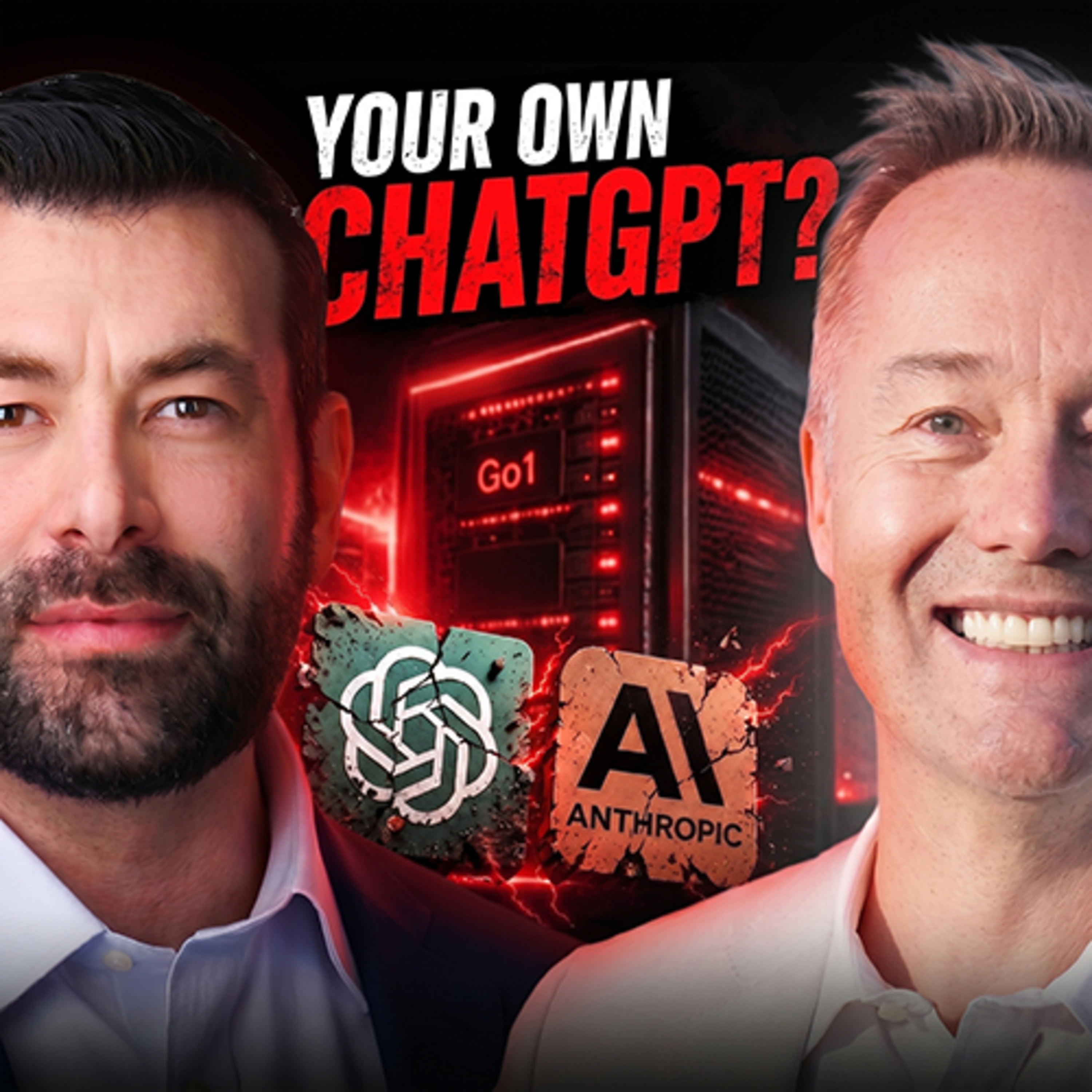
Companies in finance and healthcare are hesitant to use public AI providers due to data privacy concerns. On-premise solutions like GoAbacus's "Go One" box allow them to leverage AI locally, ensuring no data leaves their infrastructure and providing cost predictability.
The primary driver for running AI models on local hardware isn't cost savings or privacy, but maintaining control over your proprietary data and models. This avoids vendor lock-in and prevents a third-party company from owning your organization's 'brain'.