Get your free personalized podcast brief
We scan new podcasts and send you the top 5 insights daily.
Pulsia represents a new paradigm where AI doesn't just assist users but autonomously runs their businesses. It wakes up daily to perform tasks like coding, marketing, and ad management. This "company-in-a-box" model, with a subscription plus revenue share, makes entrepreneurship more accessible.

Related Insights
Platforms like Nebula allow founders to move beyond simple automation. By providing a high-level directive and connecting services, AI agents can run entire business functions, like a content blog that researches, writes, and publishes daily with minimal human intervention.

The business model is shifting from selling software to selling outcomes. Instead of creating a tool and inviting users, create pre-trained agents that perform valuable work. Then, invite companies to a workspace where this 'team' of AI employees is ready to start delivering value immediately.
Simply adding a generative AI co-pilot is now table stakes for SaaS companies. The founder argues the next evolution is 'agentic AI' — systems that don't just provide insights but autonomously perform tasks and make decisions for the user, like qualifying and actioning a sales lead.

By automating core startup functions like GTM strategy, social media marketing, and ad creation, platforms like Pulsia are effectively productizing the curriculum of a startup accelerator. This suggests a future where AI could replace or augment traditional incubators by providing autonomous execution instead of just education.
The transition from AI as a productivity tool (co-pilot) to an autonomous agent integrated into team workflows represents a quantum leap in value creation. This shift from efficiency enhancement to completing material tasks independently is where massive revenue opportunities lie.

The most forward-thinking founders are exploring whether AI enables the entire concept of a company to be redefined. The ultimate goal is a 'super-powered individual' who oversees an army of AI bots to handle coding, marketing, sales, and support, creating a billion-dollar outcome with a single human employee.

A company called Pulsia, run by a sole founder, is using AI agents to operate and grow its business, reportedly jumping from $100k to $700k ARR in a week. This points to a future of highly automated, capital-efficient companies that may not require traditional VC.

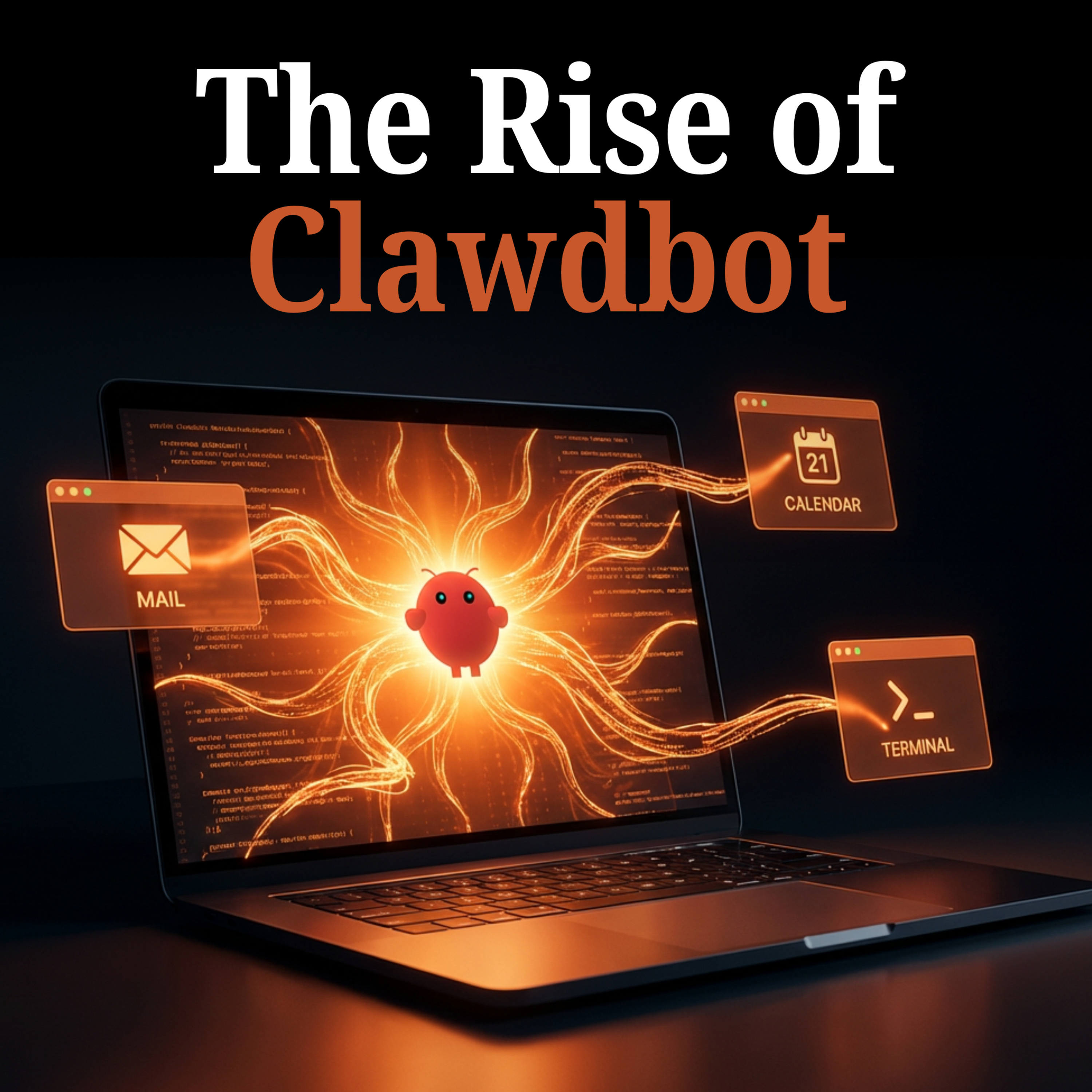
Clawdbot can autonomously identify market trends (like X's new article feature), propose new product features, and even write the code for them, acting more like a chief of staff than a simple task-doer.
Unlike typical AI coding assistants that act as pair programmers, Codex's cloud agents allow a single founder to operate like a CEO. You can delegate concurrent tasks—coding, marketing, product roadmapping—to different AI 'employees', maximizing productivity even while you sleep.
YC Partner Harsh Taggar notes a strategic shift where new AI companies are not just selling software to incumbents (e.g., an AI tool for insurance). Instead, they are building "AI-native full stack" businesses that operate as the incumbent themselves (e.g., an AI-powered insurance brokerage).
