Get your free personalized podcast brief
We scan new podcasts and send you the top 5 insights daily.
Advanced coding models dramatically reduce development time, making it feasible to create playable mini-games based on niche jokes or memes. What once took days of work for a small laugh can now be done in minutes, unlocking a new form of interactive, ephemeral entertainment that was previously uneconomical.
Related Insights
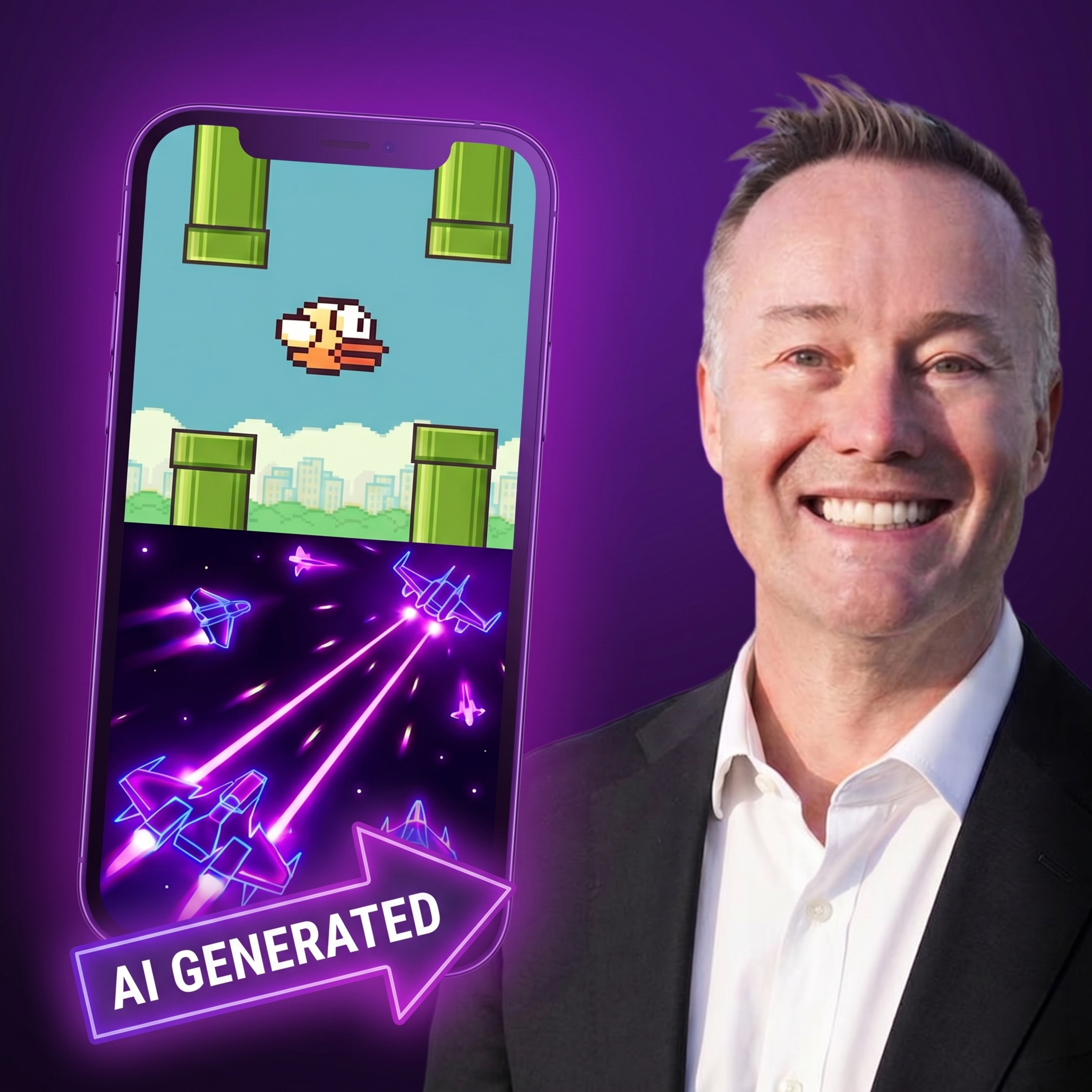
Nanogram, a 'TikTok for games' app, uses AI agents and a custom engine to allow users to generate fully playable 3D games from simple text prompts. What once took a programmer a week can now be accomplished in about 90 seconds, dramatically lowering the barrier to game creation.
Historically, building software or video games was too costly for a simple joke. Now, tools have democratized development to the point where functional software, like a simple simulator, can be created and shared as a meme. This represents a new, interactive frontier for humor and commentary beyond images and videos.
Google's Project Genie can generate playable game worlds from text prompts, a feat that would have seemed like AGI recently. However, users' expectations immediately shift to the next challenge: demanding AI-generated game mechanics like timers, scoring, and complex interactions.

The true potential of consumer AI lies not just in generating text or images, but in creating functional, shareable applications. OpenAI's Codex update, which allows users to generate and share a link to an interactive website, signals a critical shift towards AI as a tool for product creation and virality.

As development tools become more accessible, the evolution of memes is shifting from static images and videos to interactive software. Comedic or satirical video games and applications, like the TBPN simulators, are emerging as a new medium for cultural commentary and humor.

Brands can use AI coding tools like Gemini to quickly build simple, themed games. These games act as engaging, shareable content for social media marketing campaigns, offering a fresh way to capture audience attention beyond traditional ads and posts.

Just as punk rock enabled people with strong ideas but limited musical training to form bands, AI-driven coding allows non-technical individuals to build software. It democratizes creation by shifting the focus from technical expertise to vision and intent.

While AI promises significant cost reductions in game development, its most transformative potential lies beyond efficiency. The technology will likely unlock entirely new forms of interactive entertainment and gameplay mechanics that were previously unimaginable or economically unfeasible to create.

BuzzFeed is using AI-powered toolkits that allow creative staff, like writers, to design and launch interactive products such as games. This dramatically increases the speed and volume of new product experimentation without relying on traditional engineering resources.

AI tools enable "vibe coding," where you describe a desired outcome or feeling (e.g., "make the crowd go wild") rather than technical specifications. This decouples taste (what you want) from skill (how to make it), opening creative fields to non-experts.
