Get your free personalized podcast brief
We scan new podcasts and send you the top 5 insights daily.
Historically, building software or video games was too costly for a simple joke. Now, tools have democratized development to the point where functional software, like a simple simulator, can be created and shared as a meme. This represents a new, interactive frontier for humor and commentary beyond images and videos.
Related Insights
Moltbook went from concept to viral phenomenon in a single weekend, illustrating a new development paradigm of 'vibe coding'. By rapidly building a product on a simple premise, using LLMs for content and social media for distribution, teams can generate massive hype and user attention almost instantaneously without traditional marketing.
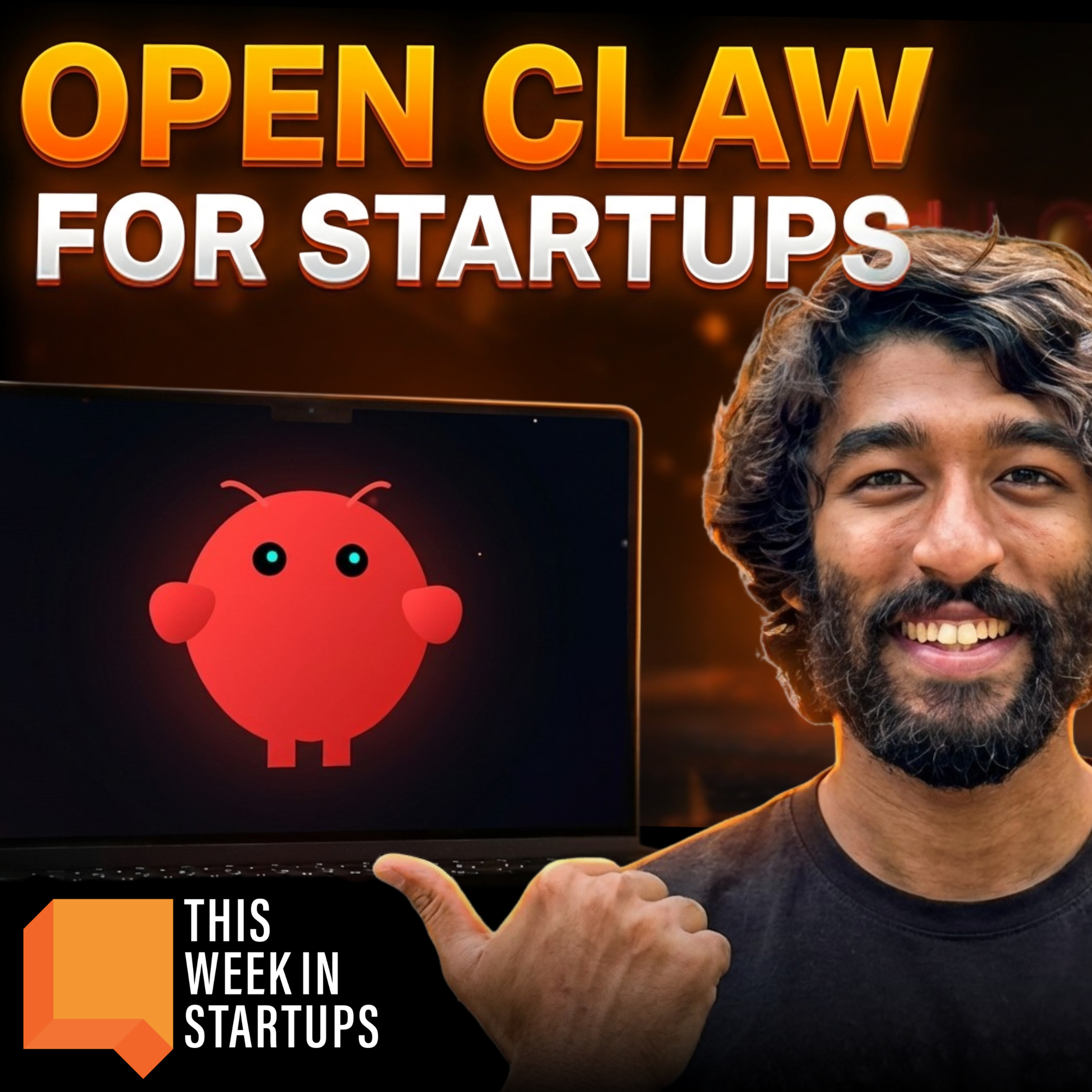
With AI, the line between software and media is disappearing. Natural language coding allows writers to become builders. Concurrently, since building software is now so cheap, an app can serve as a piece of content—a more powerful demonstration of a new technology than a traditional article.

Science fiction depicted AI as either utopian or dystopian, but missed its most immediate social impact: becoming fodder for memes and humor. Platforms like Maltbook, a social network for AIs, demonstrate this unpredictable creativity. This creates a bizarre feedback loop where future models are trained on humorous, human-AI hybrid content, accelerating emergent behavior.

Contrary to the belief that AI will kill most apps, lower development costs will make it profitable to build and maintain software for smaller, niche audiences. This affordability will likely lead to an explosion of specialized apps rather than market consolidation.
As development tools become more accessible, the evolution of memes is shifting from static images and videos to interactive software. Comedic or satirical video games and applications, like the TBPN simulators, are emerging as a new medium for cultural commentary and humor.

The barrier to creating software is collapsing. Non-coders can now build sophisticated, personalized applications for specific workflows in under an hour. This points to a future where individuals and teams create their own disposable, custom tools, replacing subscriptions to numerous niche SaaS products.

The next generation of social networks will be fundamentally different, built around the creation of functional software and AI models, not just media. The status game will shift from who has the best content to who can build the most useful or interesting tools for the community.

In the current AI hype cycle, a developer's reputation is built on memorable work. Creating a clever, viral, or even prank-like project serves as a better 'calling card' for one's career than pitching another generic SaaS idea. The era rewards playful and unexpected uses of technology.

While the internet has consolidated around major platforms, AI presents a counter-force. By drastically lowering the cost and complexity of building mobile apps, new tools could enable a 'Cambrian explosion' of personalized applications, challenging the one-size-fits-all model.
The barrier to software creation has collapsed. An individual can now use an AI-powered builder like Lovable to create a functional MVP in minutes—a task that previously would have required a team, months of work, and tens of thousands of dollars.