Get your free personalized podcast brief
We scan new podcasts and send you the top 5 insights daily.
In China's military, groups would collectively fund a promising officer's promotion, essentially "investing" in them. This gave the funders an option on a future revenue stream from corrupt activities and control over budgets once the officer was in power, with the CIA even allegedly participating to gain influence.

Related Insights
Contemporary China, with its maniacal building, corrupt systems, and creation of immense entrepreneurial wealth, strongly resembles America's late 19th-century Gilded Age. This historical parallel suggests China may be heading towards its own "Progressive Era" of technocratic reform and civil service improvements.

The ongoing purges in China's military are likely more than just power consolidation. Bill Bishop suggests Xi Jinping may be intentionally removing entire generations of senior officers who rose by buying their promotions. This radical "decapitation" aims to clear the way for a younger, more meritocratic officer class.
A massive foreign investment package is not just an economic transaction; it's a strategic tool. By embedding itself in a nation's economy through land and real estate, a foreign power buys political leverage and can subtly shape policy to its own advantage, corrupting the country from within.

Unlike in many countries where corruption derails projects, in China it often functions as an extra cost or "tax." Major infrastructure projects, like the high-speed rail system, are successfully completed even when overseen by corrupt officials, who ensure functionality to keep their illicit revenue streams flowing.
The PLA is the armed wing of the Chinese Communist Party, not the state. Xi Jinping is the only civilian on the Central Military Commission, making it the sole locus of party (and civilian) control, unlike Western models with extensive civilian oversight.
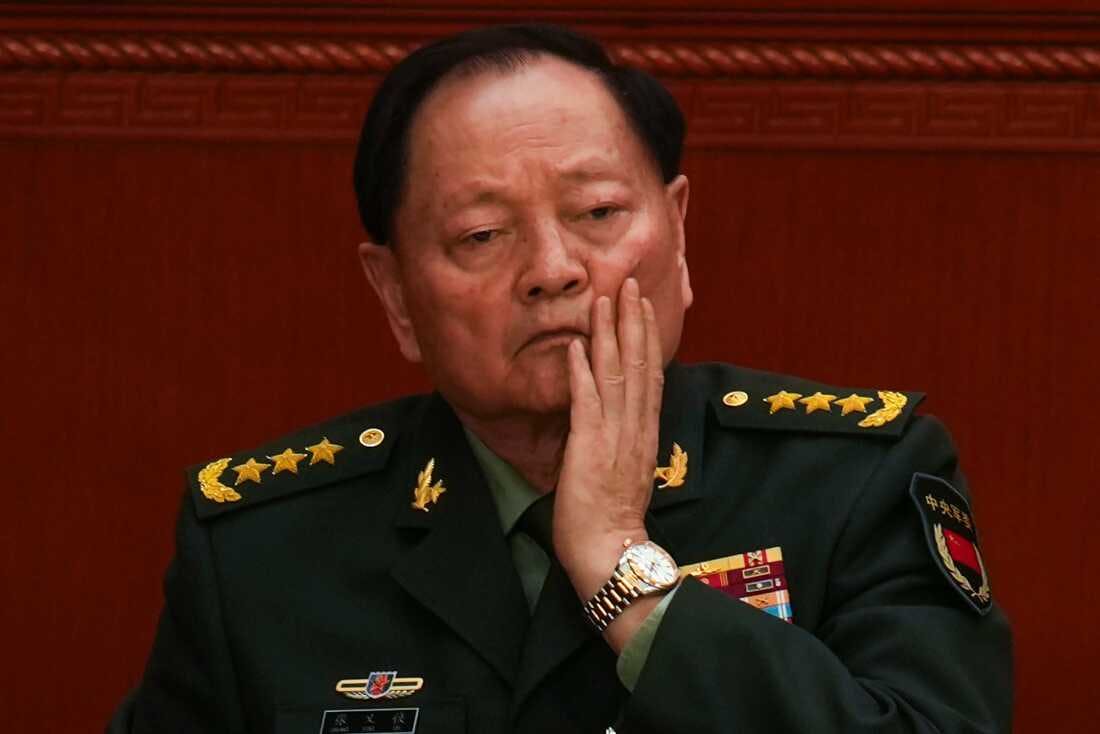
The recent purges have wiped out an entire generational cohort of PLA leaders, not just individuals. This creates a significant succession crisis and leadership vacuum, forcing Xi to promote a new, untested generation of officers with whom he has no established trust.
China's government sets top-down priorities like dominating EVs. This directive then cascades to provinces and prefectures, which act as hundreds of competing, state-backed venture capital funds, allocating capital and talent to achieve the national strategic goal in a decentralized but aligned way.
Widespread corruption within the PLA means nearly every senior officer has a usable 'dossier.' This provides Xi Jinping with a permanent, justifiable pretext to eliminate anyone for political reasons, with corruption charges acting as the public-facing justification.
China's PLA was so corrupt that a system emerged where groups would collectively 'invest' in a rising officer's promotion. They would pool capital to help the officer buy their position, anticipating a return on their investment from the future stream of corrupt opportunities the officer would control.

In authoritarian regimes like China, companies must prioritize state interests over shareholder value. Perth Toll argues this means foreign investors are not just taking on risk, but are actively subsidizing the cost of a company's compliance with a government agenda that may oppose their own financial goals.