Get your free personalized podcast brief
We scan new podcasts and send you the top 5 insights daily.
Larry Cheng met Mark Zuckerberg and Eduardo Saverin when Facebook had only 6,000 users at Harvard. His firm's investment committee passed because they couldn't get comfortable investing in a college sophomore. This demonstrates the institutional bias against young, non-traditional founders, even when they are building something with high engagement.

Related Insights
Silicon Valley's pro-youth bias is amplified in AI because the field is so new. Founders unburdened by "old world" industry practices can develop more contrarian, and often correct, theses. Experience in legacy systems becomes a liability when the entire paradigm is shifting.

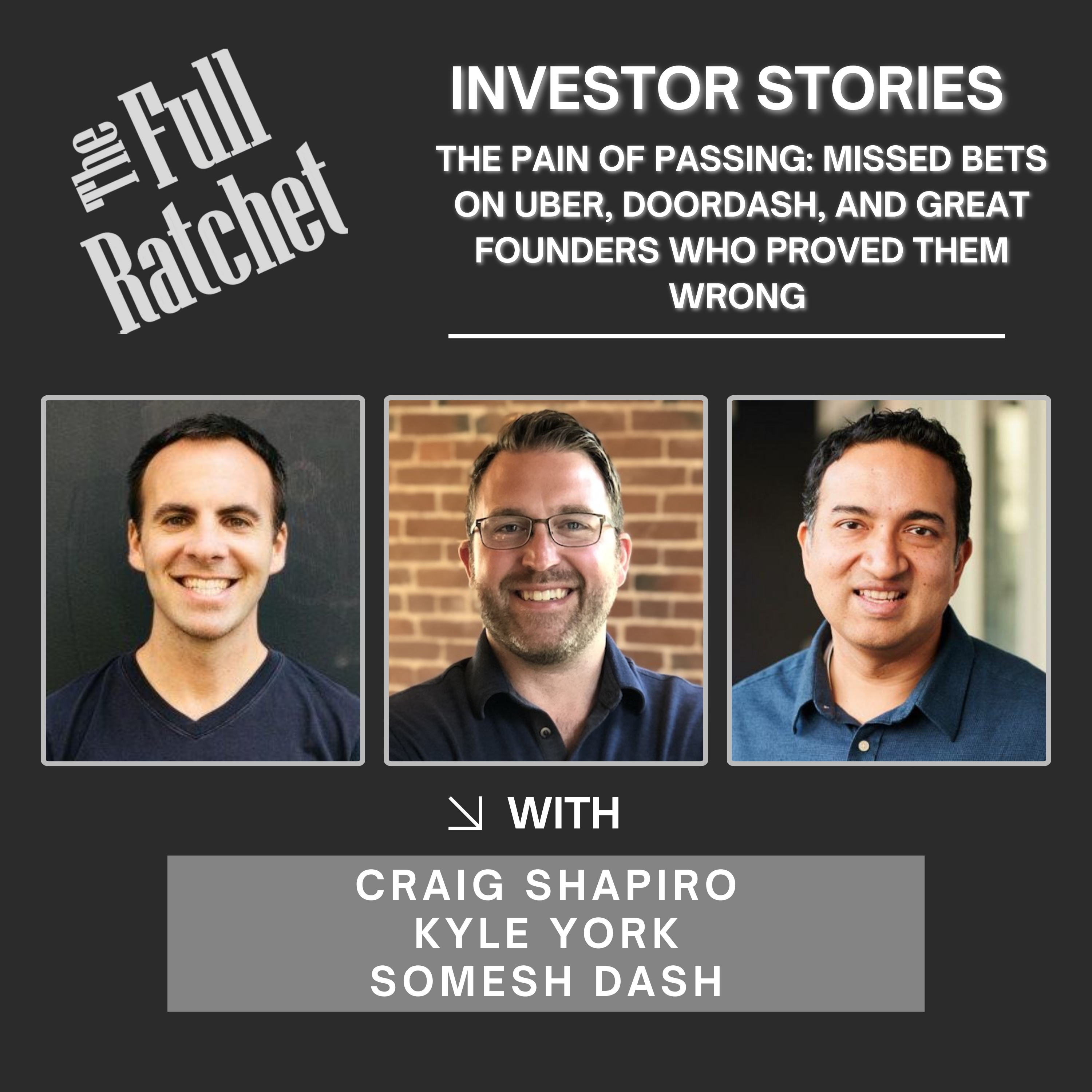
Collaborative Fund's Craig Shapiro passed on Uber's seed round ($4M valuation) because he perceived it as a 'black car' service for the rich. This highlights the common investor mistake of underestimating a market by failing to see how a premium service can eventually democratize an entire industry.
An investor passed on Chime's seed round despite a strong founding team. The reason: he personally thought the product "makes no sense" and couldn't see himself building it. This illustrates a common early-stage trap where VCs substitute their own product ideas for the founder's vision, rather than betting on the team.

Startups that are 6-7 years old but have only recently hit an inflection point struggle to get funded. VCs fixate on the long timeline to achieve modest revenue, overlooking strong recent growth. The same company, rebranded as a 2-year-old, would be considered a hot deal.
![Jeremy Giffon - The Billion Dollar PDF - [Invest Like the Best, EP.481] thumbnail](https://megaphone.imgix.net/podcasts/639efb30-79ab-11f1-9457-e7c50e832f59/image/3fd42f5fd8ef85cc50b51718c44c4172.jpg?ixlib=rails-4.3.1&max-w=3000&max-h=3000&fit=crop&auto=format,compress)
David Ulovich of a16z admits he was dissuaded from investing in ClickUp because the founder's casual attire (flip-flops, shorts) and story (moving for better burritos) made him hard to take seriously. This surface-level bias overrode strong underlying business metrics.

In early-stage investing, the quality of the founder can be more important than the initial business concept. A strong founder is seen as someone who will eventually find success, even if the first idea requires a pivot.

There's a growing belief in venture that experienced, second-time founders may be at a disadvantage in the AI era. Younger founders who grew up natively with new tools can move faster because they don't have to unlearn established, but now obsolete, ways of working.

When passing on a deal, VCs often cite external factors like market size or competition. Trae Stephens reveals this is often a fabrication to avoid the difficult, personal feedback that they simply don't have conviction in the founder's ability to succeed.

Nnamdi Okike's fund passed on an early Skype investment due to the founders' controversial past with the file-sharing company Kazaa. This 'hair on the deal' created legal and reputational concerns that, combined with the deal being too early for the fund's stage, overshadowed the promising internet telephony thesis.

VCs often correctly identify a special founder but then pass due to external factors like competition or perceived market size. Reflecting on missing Scale AI, Benchmark concludes this is a critical error; the person is the signal that should override other concerns.