Get your free personalized podcast brief
We scan new podcasts and send you the top 5 insights daily.
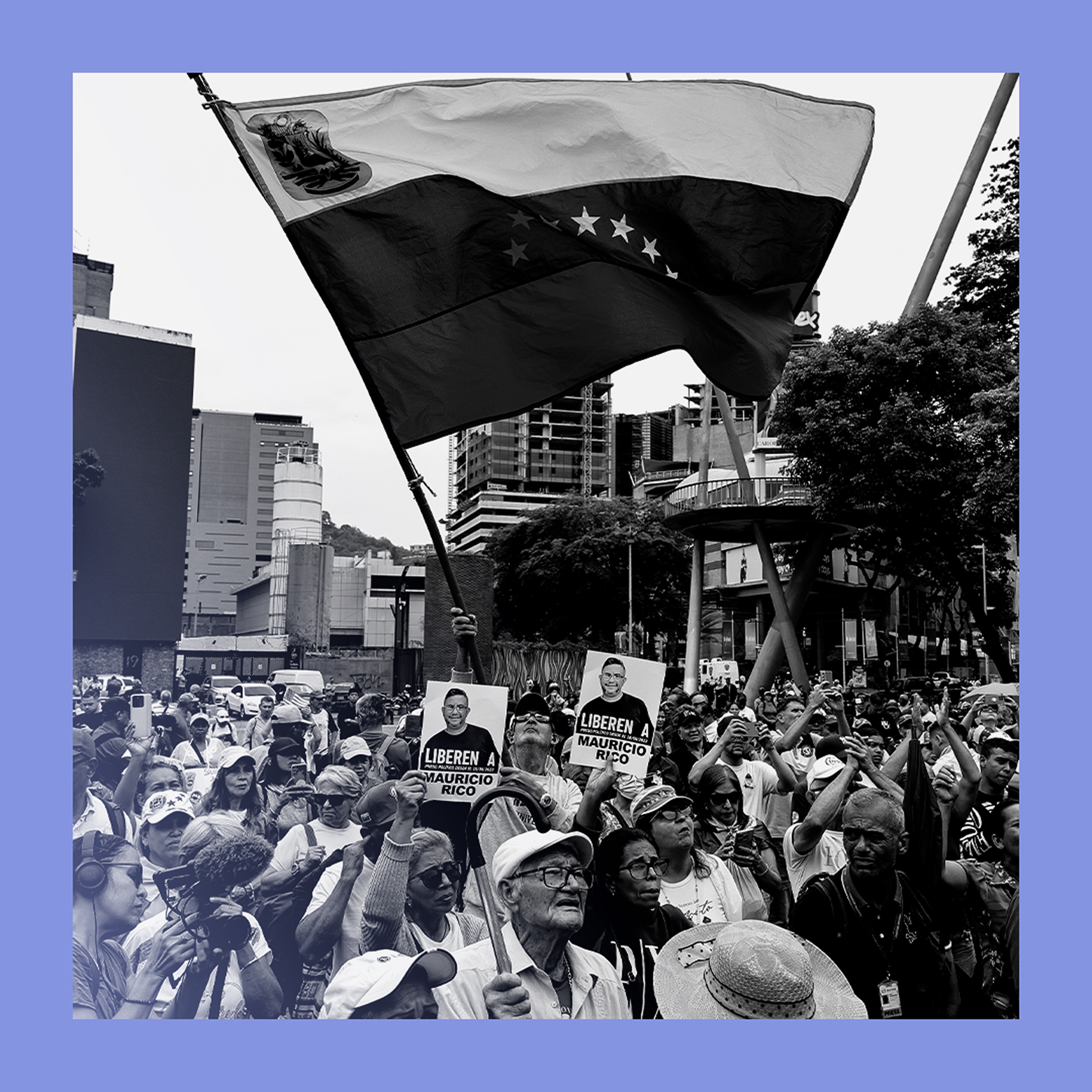
Venezuela's transition showcases a dual reality. While citizens now feel free enough to hold mass protests and political rallies, the state continues to hold hundreds of political prisoners and subject released individuals to intense surveillance, like house arrest with 24/7 guards. Freedom is not monolithic.
Related Insights
To maintain power, the Venezuelan government uses a separate secret police, the DGCIM, specifically to police its own military. This unit monitors, tortures, and imprisons hundreds of military officers, revealing deep internal distrust and serving as a key mechanism to prevent any organized dissent from within the armed forces.

Despite growing public demand for elections in Venezuela, the new leadership is playing for time by insisting on a 'big agreement' covering economic and social issues first. This positions economic stability as a prerequisite for democracy, creating a recipe for indefinite procrastination on ceding political power.
Authoritarian leaders like Hugo Chavez systematically dismantle democracy from within after winning elections. They replace competent individuals in the military and government with those who are absolutely loyal, destroying meritocracy to ensure the state apparatus serves the regime, not the people.
Contrary to perceptions of a deeply divided country, Ricardo Hausmann argues Venezuela has a massive political majority unified for change. He cites recent election results where the opposition won 70-30 even in military bases, framing the conflict as a small, repressive clique versus a united populace, unlike a fractured state like Iraq.
The goal of modern populist movements has shifted from winning elections to establishing permanent dominance. This is achieved by creating a mandate to prosecute and imprison political opponents, dismantling the norm of peaceful power transitions in favor of winner-take-all retribution.

Dictatorships can tolerate individual criticism but actively suppress mechanisms that create common knowledge, like public assemblies or organized online groups. They understand that power rests on preventing citizens from realizing that their grievances are shared. Once dissent becomes common knowledge, coordinated revolt is possible, which no regime can withstand.
To crush popular dissent after losing an election, the Maduro regime escalated to what international bodies label "state terrorism." This included imprisoning not just activists but also their family members and even citizens who merely posted a supportive picture online, aiming to terrify the entire population into silence.
Rebuilding a nation after decades of repressive rule is a monumental task, often taking a decade or more. In the modern era, social media exacerbates the challenge by amplifying divisive voices and making the national consensus required for a stable transition nearly impossible to achieve.

The US raid seizing Nicolás Maduro created a striking feeling of optimism and reduced fear in Venezuela. Citizens began attending opposition rallies openly, despite Maduro's deputy and the broader Chavismo movement remaining in power. This highlights the immense symbolic power of removing a dictator.
A key element of Venezuela's economic paralysis is that the country's vast human capital—the eight million people who left—will not return without fundamental changes. The regime's survival depends partly on this stalemate, as a mass return of talent and investment requires a restoration of freedom, safety, and property rights that would threaten its power.