Get your free personalized podcast brief
We scan new podcasts and send you the top 5 insights daily.
For internal tools, don't rely solely on product-led growth. A hybrid approach combines a frictionless product experience with a proactive "sales" strategy of advocating for the tool's potential, constantly proving its value to leadership, and removing friction for users.
Related Insights
For a new product, don't choose between targeting executives or end-users; do both simultaneously. While mapping the C-suite (top-down), engage lower-level employees to gather intel and build internal champions (bottom-up). This dual approach creates pressure and relevance from both directions.

Treat AI initiatives as two separate strategic pillars. Create one roadmap focused on internal efficiency gains and cost reduction (productivity). Maintain a separate roadmap for developing new, revenue-generating customer experiences (growth). This prevents conflating internal tools with external products.

Instead of choosing between Product-Led Growth (PLG) and Sales-Led Growth (SLG), companies should treat them as a portfolio. Test both motions and continuously invest where you see incremental ROI, rather than treating them as mutually exclusive strategies.

When employees are 'too busy' to learn AI, don't just schedule more training. Instead, identify their most time-consuming task and build a specific AI tool (like a custom GPT) to solve it. This proves AI's value by giving them back time, creating the bandwidth and motivation needed for deeper learning.

Pendo's CPO advocates for a blended approach in enterprise B2B. The product must enable self-service and stand on its own (PLG), but a skilled sales team is crucial for navigating complex procurement, building business cases, and establishing trust with large, regulated customers.

The traditional sales discovery question "How do they buy?" focused on the procurement process and economic buyers. In a Product-Led Growth (PLG) motion, the crucial question is about the *usage journey*. Sales must analyze user behavior signals within the product—like downloads or manual views—to understand when and how to engage effectively.
Webflow drove weekly Cursor adoption from 0% to 30% in its design team after one 'builder day' where every participant was required to demo a project. This combination of hands-on practice, peer support from champions, and clear expectations creates rapid, tangible adoption of new AI tools.
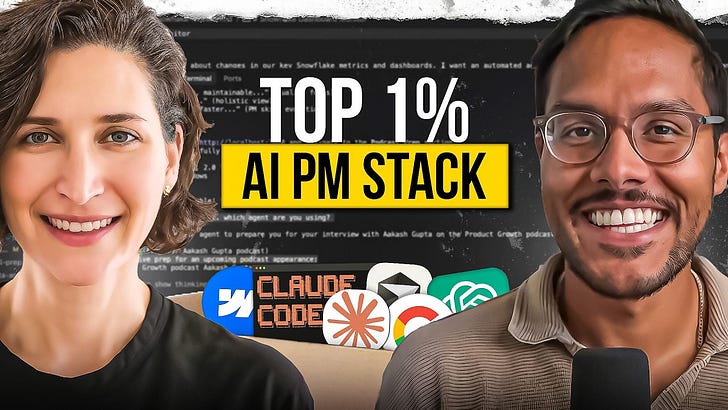
To win over skeptical team members, high-level mandates are ineffective. Instead, demonstrate AI's value by building a tool that solves a personal, tedious part of their job, such as automating a weekly report they despise. This tangible, personal benefit is the fastest path to adoption.

To transform a product organization, first provide universal access to AI tools. Second, support teams with training and 'builder days' led by internal champions. Finally, embed AI proficiency into career ladders to create lasting incentives and institutionalize the change.
When implementing a new productivity system, success depends more on team comfort than on the tool's advanced features. Forcing a complex platform can lead to frustration. It's better to compromise on a simpler, universally accepted tool than to create friction and alienate team members.
