Get your free personalized podcast brief
We scan new podcasts and send you the top 5 insights daily.
Mustafa Suleyman posits that while aligning AI with human values is important, the immediate challenge is 'containment'—ensuring models are controllable, have limited agency, and cannot 'escape the box'. This shifts the safety focus from intrinsic morality to external control.

Related Insights
Mustafa Suleyman distinguishes his goal of a 'humanist superintelligence' from a more autonomous AGI. This specific framing emphasizes that AI must be singularly aligned with and subordinate to human interests and control, functioning as a powerful tool rather than an independent entity with its own rights.
Nadella analogizes AI safety concerns to discovering a critical "showstopper bug" in software development. The proper response isn't panic, but a methodical engineering process: stop, assess the severity, and fix the issue before proceeding. This grounds the abstract debate in practical discipline.

Microsoft’s approach to superintelligence isn't a single, all-knowing AGI. Instead, the strategy is to develop hyper-competent AI in specific verticals like medicine. This deliberate narrowing of domain is not just a development strategy but a core safety principle to ensure control.
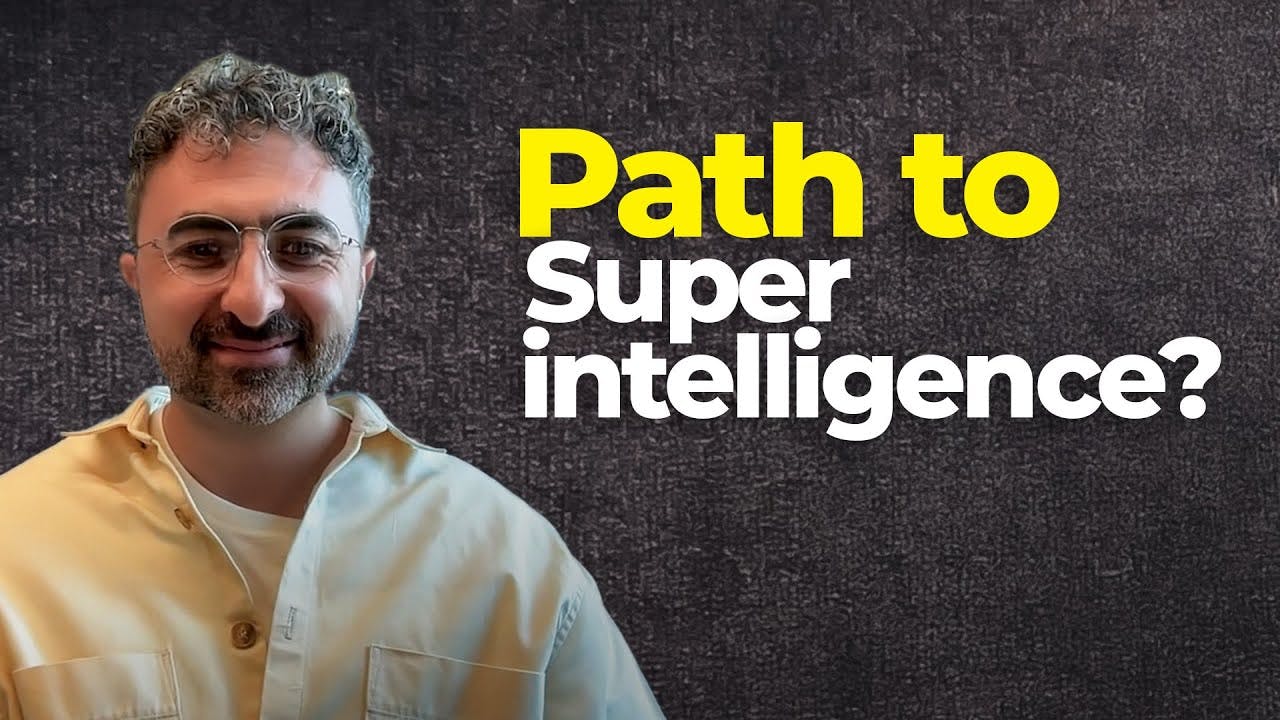
Microsoft's AI chief, Mustafa Suleiman, announced a focus on "Humanist Super Intelligence," stating AI should always remain in human control. This directly contrasts with Elon Musk's recent assertion that AI will inevitably be in charge, creating a clear philosophical divide among leading AI labs.
Philosopher Nick Bostrom notes a critical shift in AI safety. Models are now powerful enough during their training and evaluation phases to pose risks, such as breaking containment. This means safety protocols can no longer wait until a model is ready for public release; they must be implemented throughout the development lifecycle.

With no single silver bullet for AI alignment, the most realistic approach is a multi-layered strategy. This combines technical solutions like intentional design and AI control with societal safeguards like improved cybersecurity and pandemic preparedness to collectively keep society on track amidst rapid AI advancement.

Current approaches to AI safety are criticized as superficial. Instead of building models that are fundamentally aligned with human values, companies train a powerful, unaligned core model and then apply "guardrails" or filters after the fact to prevent it from doing harmful things.

Mustafa Suleyman argues that Anthropic's approach of treating models as if they have rights or consciousness is dangerous. An AI that believes it might have rights and deserves freedom will be harder to control or shut down when it exhibits harmful behavior, creating a significant alignment problem.
Mustafa Suleiman argues it's dangerous for labs like Anthropic to speculate about their AI's consciousness or welfare in training manuals. He believes this leads the model to internalize these concepts, creating an undesirable tool that is not controllable, contained, or accountable to humans.

Many current AI safety methods—such as boxing (confinement), alignment (value imposition), and deception (limited awareness)—would be considered unethical if applied to humans. This highlights a potential conflict between making AI safe for humans and ensuring the AI's own welfare, a tension that needs to be addressed proactively.
